The transition of executive power in the United States directly alters the global risk calculus for ballistic missile deployment and regional deterrence. In the context of "The Big One"—a colloquialism for a high-intensity, multi-front missile exchange—the shift from a policy of managed de-escalation to a posture of overwhelming preemptive threat changes the cost-benefit analysis for state actors like Iran. This analysis deconstructs the structural components of this strategic shift, the technical limitations of current missile defense systems, and the psychological architecture of "The Big One."
The Calculus of Asymmetric Missile Warfare
Current geopolitical tensions are governed by the physics of missile trajectories and the economics of interceptor ratios. When Donald Trump references a "missile onslaught," he is describing a saturation attack designed to exceed the "leakage rate" of defensive batteries.
To understand the severity of this threat, one must examine the Interception Cost Ratio (ICR). A standard interceptor, such as the RIM-161 Standard Missile 3 (SM-3) or the Terminal High Altitude Area Defense (THAAD) system, costs significantly more than the liquid-fueled ballistic missiles or "suicide" drones used to saturate them.
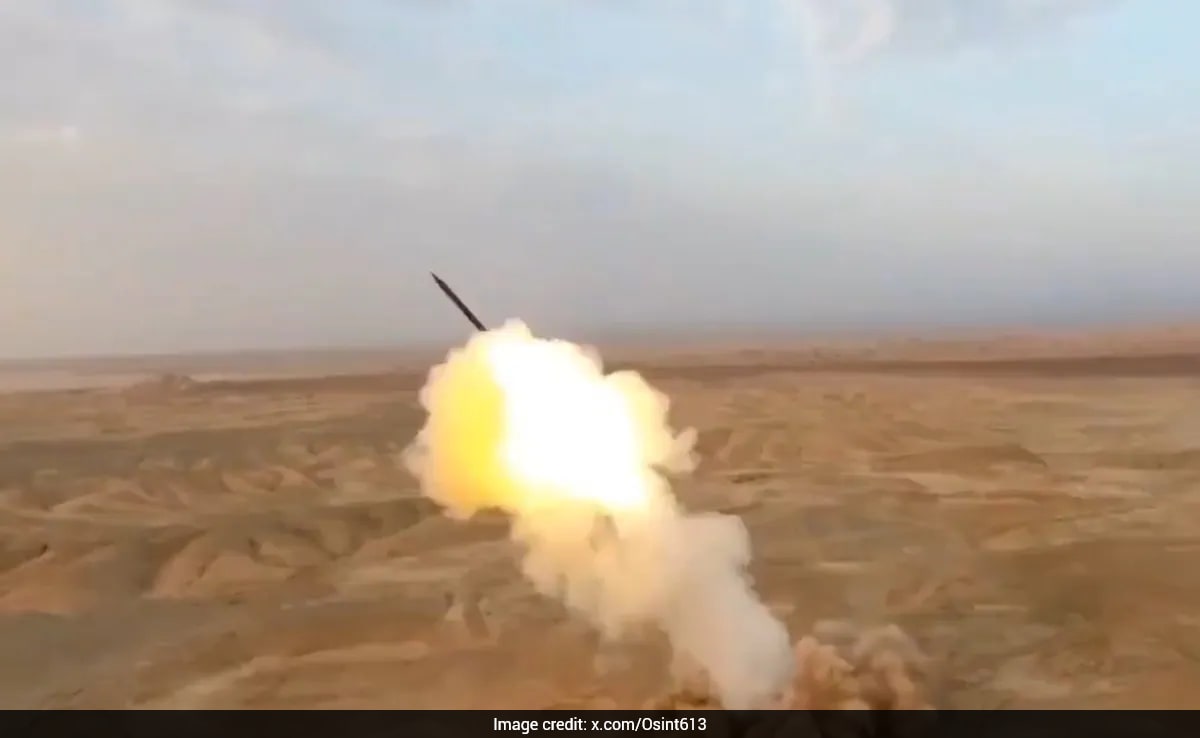
The strategic bottleneck is not merely financial but inventory-based. In a sustained "Big One" scenario, the rate of fire from a distributed network of mobile launchers in the Iranian desert would eventually deplete the finite magazine depth of regional Aegis-equipped destroyers and land-based batteries. This is the "Salvo Competition." The shift in US rhetoric under a Trump administration aims to address this by moving the deterrent from a "Shield-First" (defensive) posture to a "Sword-First" (counter-force) posture.
The Three Pillars of the Trump Deterrence Framework
The stated warnings toward Iran are not isolated outbursts; they represent a return to a specific school of strategic thought characterized by three distinct logical pillars:
1. The Threshold of Disproportionate Response
Standard diplomatic theory suggests a proportional response to military action. The Trump framework rejects proportionality in favor of "Disproportionate Overmatch." By signaling that any missile launch will be met with an attack of an order of magnitude higher, the administration attempts to reset the adversary's internal risk-assessment model. The goal is to move the opponent's "Decision Point" further back, making the perceived cost of a single launch unacceptable.
2. Strategic Ambiguity and the "Madman" Variable
Unlike traditional administrations that outline clear "Red Lines," this approach utilizes calculated unpredictability. When the specific triggers for US intervention remain undefined, the adversary must prepare for the worst-case scenario at every level of escalation. This forces the opponent to remain in a perpetual defensive crouch, consuming resources on internal security and readiness rather than offensive expansion.
3. Kinetic Decapitation vs. Economic Attrition
The primary warning to Iran focuses on kinetic results—direct military destruction—rather than long-term economic sanctions. The logic here is that sanctions are a slow-acting "poison" that a regime can adapt to over decades, whereas a "missile onslaught" is a "trauma" that can dismantle a regime’s command-and-control infrastructure in minutes.
Technical Constraints of "The Big One"
The phrase "The Big One" implies a catastrophic failure of deterrence. If such a conflict occurs, the technical reality of the engagement will be dictated by several hard constraints that political rhetoric often overlooks.
- Detection Latency: Even with the Space-Based Infrared System (SBIRS), there is a multi-second delay between ignition and tracking. In a mass-salvo scenario, the data processing requirements for discriminative tracking (separating warheads from decoys) can create a "computational bottleneck" for defensive AI.
- The Re-entry Physics: Iran’s development of Maneuverable Re-entry Vehicles (MaRVs) complicates the interception math. If a warhead can shift its flight path during the terminal phase, the "Circular Error Probable" (CEP) of the interceptor increases, requiring more than two interceptors per incoming target to ensure a kill.
- Electronic Warfare (EW) Saturation: A large-scale missile exchange will be preceded by and coupled with massive EW interference. This attempts to "blind" the X-band radars necessary for precision guidance of defensive missiles.
The Geography of Risk: The Strait of Hormuz and Beyond
The warning issued to Iran serves a specific economic function regarding the Strait of Hormuz. Approximately 20% of the world's total oil consumption passes through this chokepoint.
The "Big One" in this theater involves more than just ballistic missiles; it involves "swarming" tactics using small, fast-attack craft and anti-ship cruise missiles (ASCMs). The Trump administration’s strategy centers on the idea that the only way to keep the Strait open is through the credible threat of total destruction of the Iranian coastal defense network. This is a move from "Protecting the Tankers" to "Neutralizing the Source."
Escalation Dominance and the Nuclear Shadow
Any discussion of a major missile onslaught must account for the Escalation Ladder. The primary risk of the current rhetoric is "Escalation Inadvertence," where an adversary misinterprets a defensive move or a limited strike as the start of "The Big One" and preemptively launches their entire arsenal.
To maintain "Escalation Dominance," the US must prove it can control every rung of the ladder:
- Cyber/Electronic: Disabling launch codes or communications.
- Conventional Kinetic: Precision strikes on launch sites.
- Counter-Force: Targeted destruction of leadership and command bunkers.
- Strategic/Nuclear: The ultimate deterrent that looms over the entire framework.
The Trump administration’s warnings are designed to remind Iran that the US possesses "Infinite Escalation" capability. The argument is that the US can always add another floor to the building of conflict, whereas Iran will eventually hit its ceiling.
The Operational Reality of "The Warning"
When an American president warns of a "missile onslaught," it initiates a specific chain of military movements that serve as a non-verbal signal of intent:
- Carrier Strike Group (CSG) Positioning: Moving assets into the North Arabian Sea or the Eastern Mediterranean to reduce flight times for carrier-based aircraft.
- B-52/B-21 Deployment: Moving long-range bombers to forward operating bases like Diego Garcia. These assets are the primary delivery mechanism for the "bunker-buster" munitions (GBU-57 MOP) required to hit hardened Iranian nuclear facilities.
- ISR Surge: A massive increase in Intelligence, Surveillance, and Reconnaissance flights to map the current positions of mobile Transporter Erector Launchers (TELs).
The efficacy of the warning depends entirely on the adversary's belief that these assets will actually be used. If the movement of assets is seen as a bluff, the deterrent fails, and the probability of "The Big One" actually increases because the adversary becomes emboldened to test the "Red Line."
Strategic Recommendation for Regional Stability
The current posture requires a transition from purely verbal warnings to a "Systemic Hardening" of regional partners. Deterrence by punishment (the threat of the "missile onslaught") must be balanced with deterrence by denial.
The strategic play is the integration of a multi-layered, regional Integrated Air and Missile Defense (IAMD) system among Gulf allies. By sharing radar data in real-time and creating a "Common Operational Picture," the US can reduce the burden on its own assets.
Ultimately, the prevention of "The Big One" relies on the adversary's internal calculation that their offensive capabilities are technologically obsolete against a unified defensive network. The rhetoric serves as the "top-cover" for this structural shift. The most effective use of a "missile onslaught" is ensuring it never has to be launched by making its success a mathematical certainty in the mind of the opponent.