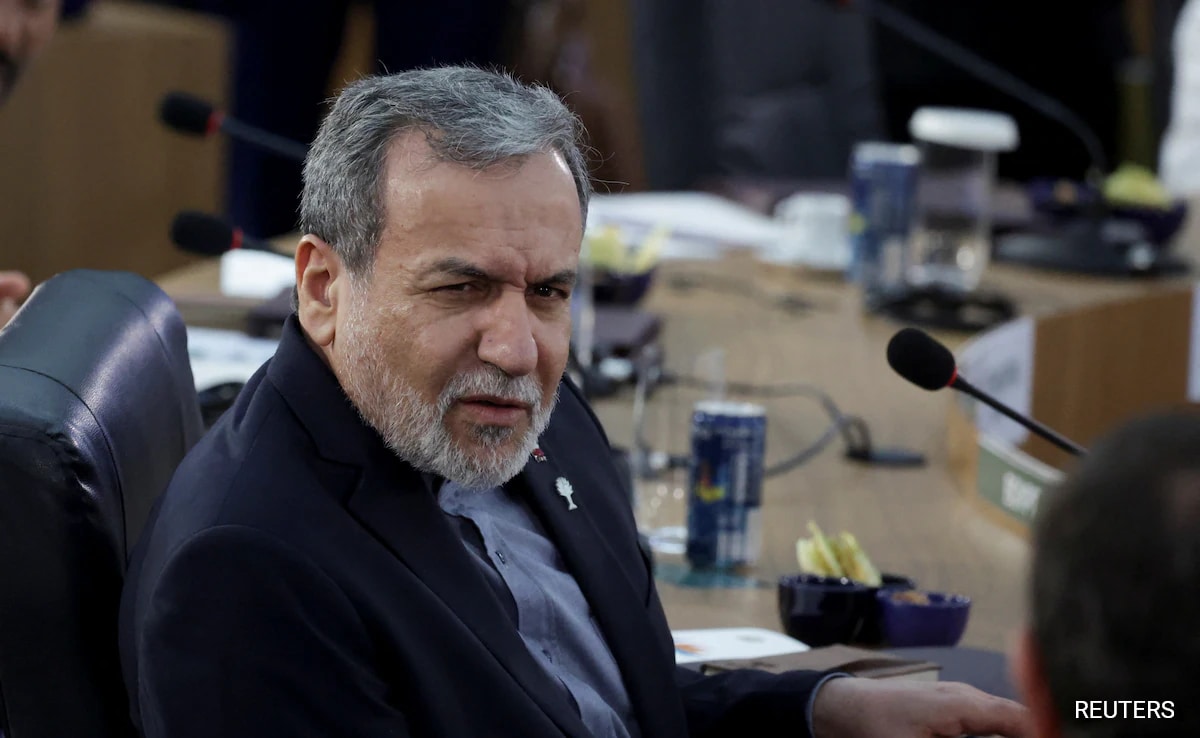
On March 7, 2026, the fragile line between military necessity and humanitarian catastrophe dissolved on Qeshm Island. Iran’s Foreign Ministry, led by Abbas Araghchi, officially accused the United States of launching a targeted strike against a critical freshwater desalination plant on the island, a move that has effectively severed the water supply to 30 surrounding villages. This isn't just about a broken pipe or a scorched turbine. It represents a calculated shift in the ongoing Operation Epic Fury, moving the crosshairs from missile silos and leadership compounds directly onto the life-support systems of the civilian population.
The United States has remained largely silent on the specific tactical details of the Qeshm strike, but the implications are deafening. For decades, the "water war" in the Middle East was a theoretical nightmare discussed in academic circles. Now, it is the morning reality for thousands of Iranians. By targeting desalination, the strike hits at the most acute vulnerability of the Gulf: the total reliance on processed seawater for survival.
The Architecture of Vulnerability
To understand why this attack is a watershed moment, one must look at the geography of the Persian Gulf. Qeshm Island is a strategic jagged tooth sitting at the mouth of the Strait of Hormuz. While much of the world's attention has been fixed on the 20% of global oil that flows through these waters, the people living on the coast worry about a different liquid. In a region where groundwater is almost non-existent, desalination plants are not just "infrastructure"—they are the only thing standing between the population and a mass exodus.
The Qeshm plant wasn't a military base, yet it was treated as a high-value target. From a military analyst’s perspective, the "why" is brutal but logical. By crippling the water supply, an aggressor creates an immediate, localized humanitarian crisis that forces the Iranian Revolutionary Guard Corps (IRGC) to divert resources, manpower, and logistics away from the front lines to manage internal stability. It is a textbook application of "cost imposition," albeit one that skirts the very edges of international law regarding civilian infrastructure.
The Weaponization of the Thirst Threshold
There is a grim math to this type of warfare. A city can survive without electricity for weeks; it can survive without the internet indefinitely. It cannot survive without water for more than three days. By hitting the desalination units, the attacking force is testing the "thirst threshold" of the Iranian domestic front.
The IRGC responded almost immediately, launching retaliatory strikes from their "Electronic Operations Room" and physical missile batteries against the U.S. Fifth Fleet base in Bahrain. This tit-for-tat escalation confirms that the desalination plant was not an accidental casualty of a stray missile. It was a deliberate signal. Iran’s subsequent warning—that the U.S. has "set a precedent"—is a thinly veiled threat to the 400-plus desalination plants that dot the coastlines of U.S. allies like Saudi Arabia, Kuwait, and the UAE.
A Precedent of Total Infrastructure War
The Qeshm incident marks the end of the "gentleman's agreement" that previously kept life-sustaining utilities out of the line of fire. Since the conflict began on February 28, 2026, we have seen the destruction of the Grand Bazaar in Tehran and the assassination of Supreme Leader Ali Khamenei. However, those were political and symbolic targets. The water plant is different. It is biological.
- Regional Ripple Effects: Kuwait already reported drone strikes on fuel storage tanks at its international airport.
- The Saudi Dilemma: Saudi Arabia, which produces 70% of its drinking water through desalination, now finds its most vital assets categorized as "legitimate" retaliatory targets in the eyes of Tehran.
- The Cyber Layer: While physical missiles hit Qeshm, a shadow war of data-wiping malware is simultaneously attempting to brick the logic controllers of water plants across the GCC.
The technical reality of modern desalination makes it an easy target. These facilities are massive, stationary, and highly sensitive to both physical shock and cyber intrusion. You don't need to level the entire building; you only need to destroy the high-pressure pumps or the reverse osmosis membranes to render the entire multi-million dollar facility a useless husk.
The Fog of Attribution and Tactical Greed
The Trump administration’s current stance—a mix of "maximum pressure" and a demand for unconditional surrender—suggests a willingness to accept high levels of collateral damage if it accelerates regime collapse. But tactical greed often leads to strategic failure. When you take away a village's water, you don't necessarily inspire them to overthrow their government; you often radicalize them against the hand that cut the flow.
Evidence from the ground suggests the Qeshm strike used precision-guided munitions launched from the Jufair base area in Bahrain. This level of precision removes the "fog of war" excuse. It was a choice. If the goal was to disrupt IRGC naval operations, there are plenty of docks and fuel depots. Choosing the water plant indicates a desire to make the cost of the war felt in every household, not just every barracks.
Beyond the Strait
This is no longer a localized skirmish. We are witnessing the first "Total Infrastructure War" of the 21st century. The global community has watched as internet connectivity in Iran plummeted to 1%, effectively blinding the nation. But you cannot download water.
The immediate next step for any analyst or observer is to watch the GCC’s reaction. If Saudi Arabia or the UAE perceive that the U.S. has opened a door they cannot close—the targeting of water—we may see a sudden and sharp pivot in their willingness to host the very American assets that launched the strike. They are the ones who will have to live with the "precedent" long after the carriers sail home.
The Qeshm plant is currently a smoking ruin, and the 30 villages it served are now counting down their remaining bottled supplies. This wasn't an attack on a regime; it was an attack on the basic requirements of human life. Whether this forces a surrender or ignites a century of water-based insurgency remains the defining question of this war.