The air in the arrivals terminal at Heathrow is a specific, recycled cocktail of jet fuel, expensive perfume, and the collective anxiety of three hundred people waiting for a stamp. For most of us, the Border Force officer behind the plexiglass is a ghost in a navy uniform. We see the hands, the scanner, and the mechanical nod that signals our re-entry into the world. We don’t see the person. We certainly don’t see the war being fought over the data in their palm.
But in a quiet courtroom at the Old Bailey, that anonymity has been stripped away.
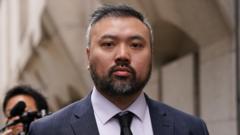
Kevin Knight, a 47-year-old man who spent his days guarding the threshold of the United Kingdom, now stands accused of a betrayal that feels like a relic of the Cold War, updated for the era of big data. The prosecution's case isn't just about a man breaking his oath. It is about how a single point of failure in a massive, digital bureaucracy can become a goldmine for a foreign power. In this case, that power is China.
The Value of a Digital Footprint
To understand why a mid-level officer in a fluorescent vest matters to a superpower, you have to look past the physical gates. Modern borders are not made of stone. They are made of bits. Every time a passport slides across a reader, a cascade of information triggers. Travel history. Linked associates. Visa status. Watchlists.
Imagine a hypothetical scenario where an intelligence agency wants to track a dissident or a high-value corporate target. They don't need a high-speed car chase. They just need to know when that person touches the ground in London. If you have an "inside man" with access to the Home Office systems, the "invisible" becomes a glowing neon sign.
The court heard that Knight allegedly used his position to access sensitive information that had nothing to do with his daily duties. This wasn't a clerical error. It was, according to the Crown, a systematic harvest. When we talk about national security, we often think of satellites and intercepted emails. We rarely think about the guy who checked our bags last Tuesday.
The Grooming of a Gatekeeper
Spies are rarely born in the shadows; they are built through a slow, agonizing process of compromise. While the full details of Knight’s alleged recruitment remain the subject of intense legal scrutiny, the pattern described by investigators is hauntingly familiar to anyone who studies counter-intelligence.
It often starts with "small favors." A request for a document that seems harmless. A payment that feels like a gift. By the time the target realizes they are walking a tightrope, the people holding the rope have already moved the net.
The prosecution alleges that Knight was operating under the influence of Chinese intelligence services for years. During this time, he wasn't just a cog in the machine; he was a window. Through him, the Ministry of State Security in Beijing could potentially see who was coming, who was going, and—perhaps most importantly—who the UK was watching.
The Weight of the Breach
The sheer scale of the vulnerability is what keeps security chiefs awake at night. A Border Force officer has a level of "low-level" clearance that provides a "high-level" view of the state's nervous system.
Consider the implications of a compromised border. If a foreign intelligence service knows exactly which of their "students" or "businessmen" are being flagged by UK authorities, they can pull them back before they are caught. If they know which of their enemies are seeking asylum, they can apply pressure to families back home. The data isn't just numbers on a screen. It is leverage. It is a weapon.
The digital infrastructure of the UK border is a marvel of efficiency, but it lacks the one thing humans possess: suspicion. The software trusts the login credentials. It doesn't know if the person typing at 3:00 AM is doing it to protect the realm or to pay off a debt.
A Culture of Quiet Vigilance
This trial has sent a tremor through the halls of the Home Office. It forces a painful question: How do you police the police?
We live in a time where the "insider threat" is the most potent tool in the arsenal of asymmetric warfare. You don't need to hack a firewall if you can buy the person who has the password. It’s cheaper, more effective, and much harder to trace until the damage is already done.
The defense will argue its side, and the jury will weigh the evidence of Knight’s intent. But regardless of the verdict, the narrative of our security has changed. We are no longer just looking out for the "bad guy" trying to slip through the gate. We are now looking at the person holding the key.
The courtroom is cold, a stark contrast to the humid, bustling terminals where Knight once worked. There are no suitcases here. No duty-free bags. Just the slow, methodical reading of logs and timestamps—the digital breadcrumbs of a life allegedly lived in two worlds at once.
As the trial continues, the public is left to wonder how many other shadows are moving through the halls of our institutions. The border is more than a line on a map. It is a promise of safety. When that promise is bartered, the cost isn't measured in pounds or yuan. It is measured in the sudden, sharp realization that the person standing between us and the world might actually be working for the other side.
The next time you stand in that line at Heathrow, and you look at the officer behind the glass, you might find yourself looking a little closer. You’ll look at the eyes, searching for a flicker of something other than boredom. You’ll wonder if they are seeing you, or if they are seeing a data point to be sold.
The gates are still there. The scanners still beep. The stamps still thud onto the paper. But the silence in the terminal feels different now, heavy with the weight of things unseen and the ghosts of secrets that walked right through the front door.