The escalation of conflict involving Iran and its regional proxies acts as a stress test for Arab economies, exposing a structural divergence between rentier states and debt-laden republics. While the global focus remains on the headline volatility of Brent crude, the true economic risk lies in the systemic degradation of fiscal space and the flight of foreign direct investment (FDI) from non-oil sectors. The current regional instability does not impact all Arab states equally; instead, it accelerates a multi-speed economic reality where the Gulf Cooperation Council (GCC) maneuvers through liquidity management while the Levant and North Africa face a total breakdown of their macroeconomic foundations.
The Triad of Economic Exposure
The impact of prolonged conflict in the Middle East functions through three primary transmission mechanisms. Understanding these pillars is necessary to quantify the long-term damage beyond immediate kinetic destruction.
- The Risk Premium Escalation: Sovereigns with high debt-to-GDP ratios see their borrowing costs spike as investors price in regional instability. This creates a feedback loop where interest payments consume a larger share of the national budget, hollowing out public investment.
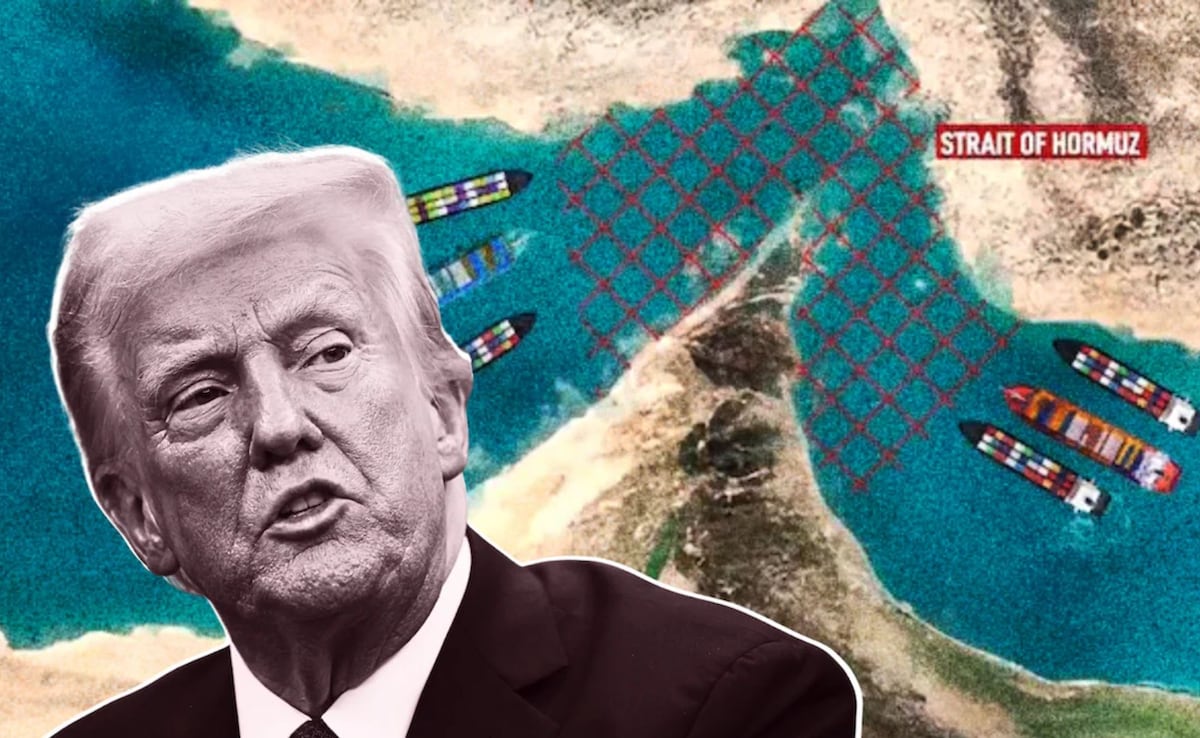
- Logistical and Maritime Disruption: The militarization of the Bab el-Mandeb and the Red Sea creates a permanent tax on trade. For states like Egypt, which relies on Suez Canal tolls, this is a direct revenue hit. For others, it is an inflationary pressure driven by rerouted shipping and increased insurance premiums.
- The Tourism-Investment Inverse: Tourism, a vital component of the GDP for Jordan, Egypt, and Lebanon, functions as the "canary in the coal mine." A decline in arrivals precedes a broader withdrawal of long-term capital, as institutional investors view the entire geography as a single risk zone, regardless of a specific country’s proximity to the fighting.
The Revenue Collapse of Transit Economies
Egypt serves as the primary case study for how a localized conflict—specifically the disruption of maritime trade by Houthi forces—triggers a national fiscal crisis. The Suez Canal historically generates approximately $9 billion annually, representing a critical source of hard currency. When traffic diverts around the Cape of Good Hope, the loss is not merely deferred; it is extinguished.
This revenue loss occurs simultaneously with a surge in the cost of essential imports. Egypt is one of the world's largest wheat importers. As maritime insurance rates climb and shipping lanes lengthen, the landing price of grain increases. This forces the state to choose between expanding its fiscal deficit to maintain bread subsidies or risking internal social unrest by passing costs to the consumer. The conflict effectively narrows the "policy corridor" available to the Egyptian government, leaving them dependent on emergency bailouts from the IMF or Gulf allies, which often come with stringent austerity requirements.
The Petrodollar Buffer and the GCC Strategy
In contrast to the Levant, the GCC states—led by Saudi Arabia and the UAE—possess a unique fiscal insulation mechanism. However, it is a mistake to assume they are unaffected. Their exposure is not one of survival, but of strategic delay.
Saudi Arabia’s "Vision 2030" requires massive, sustained FDI and a stable regional environment to attract global talent and capital. Kinetic conflict involving Iran threatens the "stability premium" that Riyadh has worked for a decade to establish. The economic fault line here is the gap between oil revenue and the breakeven price required to fund diversification. If regional war drives oil prices up, the GCC gains short-term liquidity. Yet, if that same war scares off the international tech and finance partners needed for Neom or the Dubai Economic Agenda (D33), the long-term structural goal of the state fails.
The GCC's primary objective is now "de-risking" through diplomacy, not because of a shift in ideology, but because their economic models have become too complex to survive a regional conflagration. They are transitioning from "oil-guaranteed" economies to "stability-required" economies.
The Levant as a Failed Economic Buffer
Lebanon, Syria, and Jordan represent the most vulnerable tier of the Arab world’s economic fault lines. These states lack the sovereign wealth funds of the north and the demographic scale of Egypt.
In Jordan, the debt-to-GDP ratio exceeds 100%. The economy is highly sensitive to shifts in regional sentiment. When conflict intensifies, the first casualty is the "Near East" investment thesis. The second is the energy security infrastructure. Jordan’s reliance on regional gas and water agreements makes it physically dependent on the very borders that are currently the most volatile.
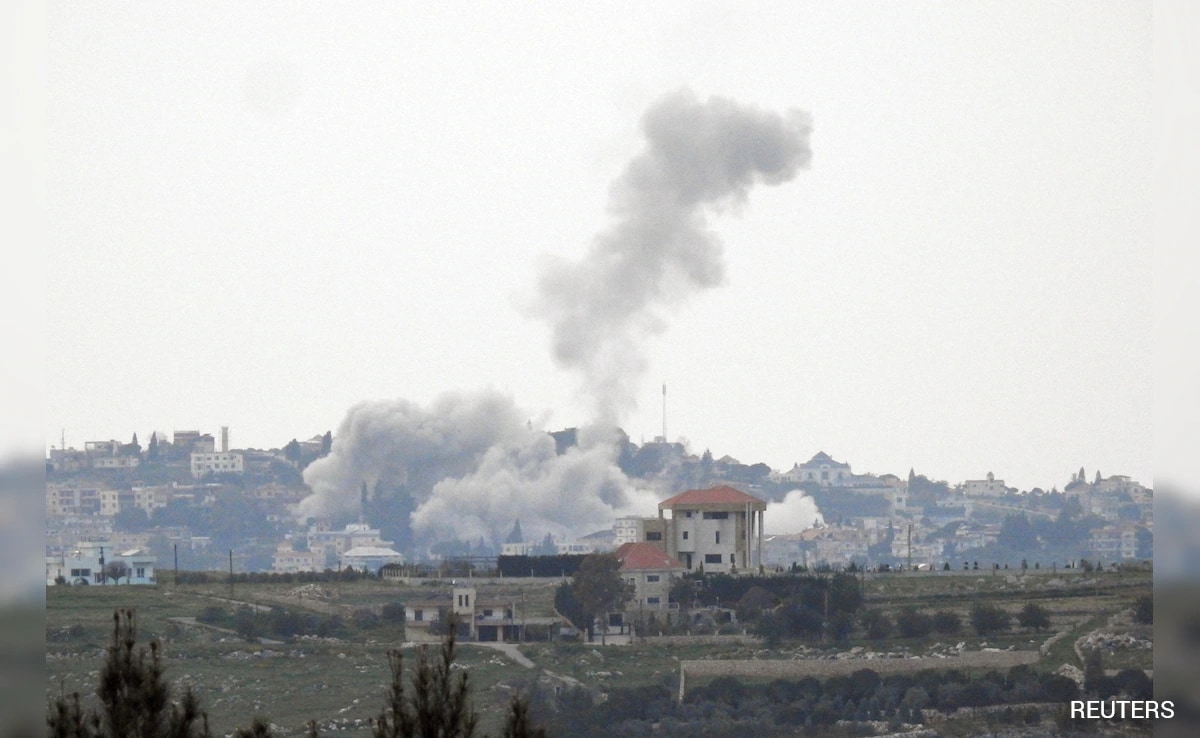
Lebanon, already enduring one of the worst financial collapses in modern history, faces a "ruin-on-ruin" scenario. The potential for a full-scale front between Israel and Hezbollah would not just damage infrastructure; it would finalize the exit of the Lebanese diaspora’s capital—the last remaining lifeline for the local economy.
The Mechanism of Capital Flight and "Risk Contagion"
Investors rarely distinguish between the "stable" and "unstable" Middle East during a period of active warfare. This is known as geographic risk contagion. Even if a country like Morocco is thousands of miles from the Persian Gulf, its cost of capital can rise as "Emerging Market Middle East" funds face redemptions.
We can quantify this through the Credit Default Swap (CDS) spreads of regional actors. As the probability of a direct Iran-Israel engagement increases, CDS spreads for non-belligerent neighbors widen. This is a direct tax on sovereignty. It means that every school, hospital, and road built in the Arab world today is more expensive because of the security architecture's failure.
Structural Divergence: The New Economic Map
The conflict is cementing a permanent divide in the Arab world. We are seeing the emergence of two distinct zones:
- The Fortress Economies (GCC): High-surplus states that use financial reserves to buy security and influence, attempting to insulate their domestic markets from regional chaos.
- The Fragile States (Levant/North Africa): Economies with high populations, low reserves, and high debt that act as the shock absorbers for regional violence.
This divergence is dangerous because it creates a migration pull. The brain drain from Egypt, Jordan, and Lebanon toward the GCC and the West is accelerating. This leaves the "Fragile States" with a diminishing tax base and a shrinking pool of skilled labor, further eroding their ability to recover once the kinetic conflict subsides.
The Energy Paradox
A common misconception is that a regional war is an unalloyed "win" for oil exporters. This ignores the internal consumption metrics of these states. As populations grow, more domestic oil is diverted to power desalination plants and cooling systems. High prices driven by war also accelerate the global transition to renewables in the West and China, potentially destroying long-term demand for the very product these states rely on. A "war spike" in oil prices is a tactical gain but a strategic threat to the longevity of the hydrocarbon era.
Strategic Realignment Requirements
To navigate this landscape, regional players and international investors must move beyond traditional "emerging market" analysis. The current environment demands a framework that accounts for "Geopolitical Beta"—the portion of an asset's risk that is entirely derived from regional security shifts rather than company or country fundamentals.
The only viable path for the fragile economies in the region is a radical restructuring of their debt-to-GDP ratios through "Debt-for-Climate" or "Debt-for-Stability" swaps with the GCC and international lenders. However, this requires a level of regional cooperation that currently does not exist.
The final strategic reality is that the Arab world’s economic fault lines are no longer just about oil. They are about the ability to provide a predictable environment for capital. As Iran and its proxies challenge the existing security order, they are simultaneously dismantling the fiscal viability of the neighboring Arab states. The long-term winner will not be the side with the most missiles, but the side that can prevent its currency and credit rating from collapsing under the weight of perpetual tension.
Immediate reallocation of capital toward "Fortress" assets in the GCC is the only logical move for private equity, while public policy must focus on the creation of a regional "Interdependence Fund" to prevent the total fiscal evaporation of the Levant. Failure to do so will result in a permanent "lost decade" for the non-oil Arab world, characterized by hyperinflation, mass migration, and the total erosion of the middle class.