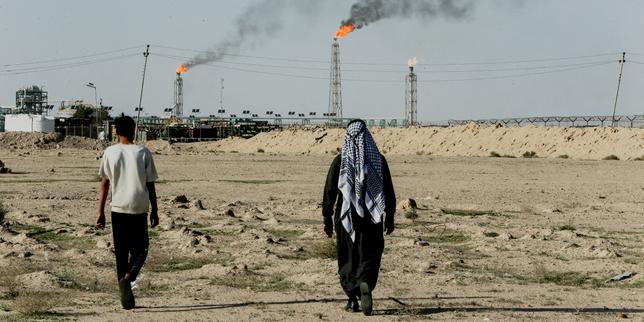
A thousand miles from the air-conditioned skyscrapers of Dubai or the frantic trading floors of Manhattan, a single point of light blooms against the indigo sky of the Empty Quarter. To a casual observer, it might look like a falling star. To a radar operator, it is a blip. But to the global economy, that flicker is the sound of a heartbeat skipping.
When an energy facility in the Middle East is targeted, the impact is not confined to the twisted metal of a storage tank or the black smoke billowing into the stratosphere. The shockwave travels at the speed of light through fiber-optic cables, manifesting seconds later as a red digit on a monitor in London. It translates into a frantic phone call between a logistics manager in Rotterdam and a shipping captain in the Indian Ocean. Eventually, it arrives at a gas station in a quiet suburb of Ohio, where a mother stares at the rising numbers on a pump, wondering if she can afford the extra gallon.
We often talk about "market volatility" as if it were a weather pattern—something abstract, swirling above our heads, disconnected from the earth. It is a sterile term. It hides the reality that our entire modern existence is built upon a fragile, high-pressure translucent thread of energy that stretches across the most volatile geography on the planet. When that thread is nicked, the world holds its breath.
The Invisible Architecture of Anxiety
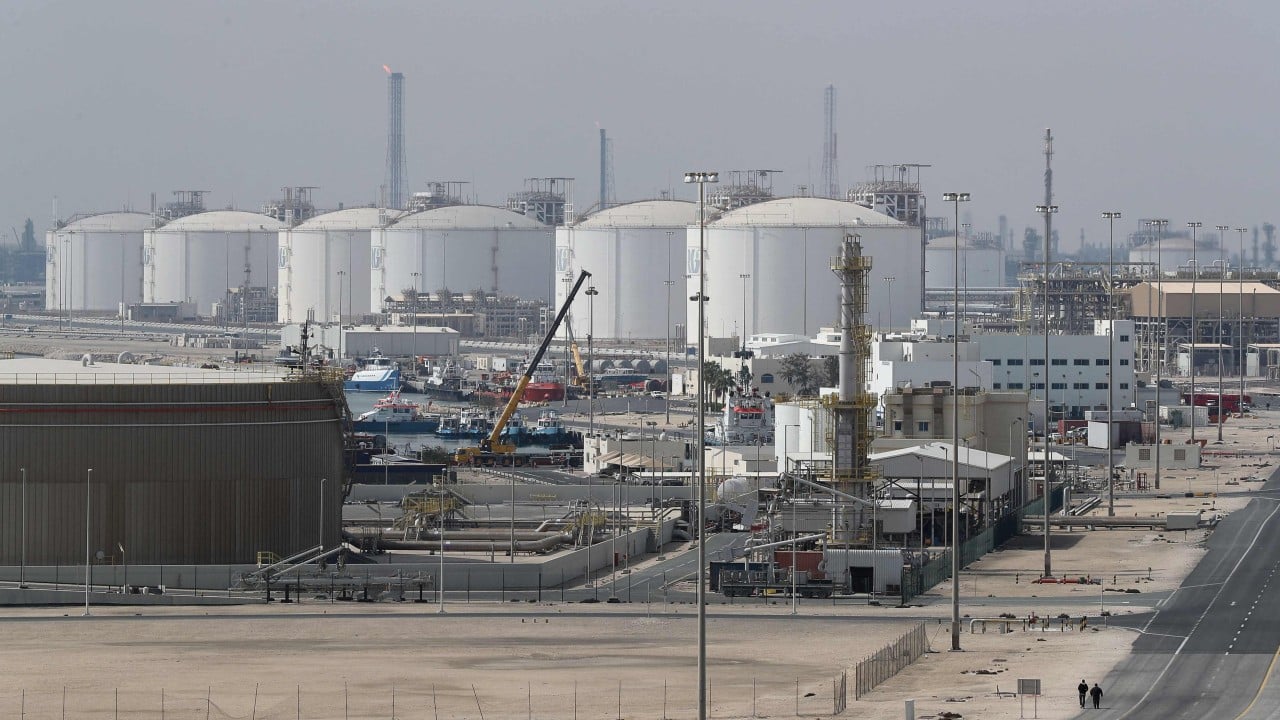
Consider a hypothetical engineer named Elias. He works at a processing plant near the coast of the Persian Gulf. Elias knows every valve, every sensor, and every hum of the turbines that keep the oil flowing. For him, the threat of an attack is not a headline; it is a physical weight. He knows that if the sky lights up for the wrong reason, the ripple effect will dismantle the plans of millions of people he will never meet.
The "recession fears" currently gripping the markets are not just about the loss of physical barrels. We are currently producing enough energy to meet global demand, technically. The fear is about the premium of uncertainty. It is the cost of "what if."
When a drone strikes a stabilizer or a missile sparks a fire at a terminal, the market doesn't just calculate the lost inventory. It calculates the vulnerability. Investors begin to price in a future where the Strait of Hormuz—a narrow choke point through which a fifth of the world’s oil passes—might become a gauntlet.
When that happens, the cost of insurance for tankers skyrockets. Shipping companies reroute vessels around the Cape of Good Hope, adding weeks to voyages and burning millions of dollars in extra fuel. This is the hidden tax of instability. It is a tax paid by everyone, from the manufacturer of semiconductors to the farmer waiting for a delivery of fertilizer.
The Mathematics of the Breaking Point
The global economy is a machine designed for efficiency, not for resilience. We have spent decades perfecting "just-in-time" supply chains. We keep inventories low to maximize profit. This works beautifully when the world is at peace. It fails catastrophically when the gears are jammed.
The current anxiety is rooted in a specific, terrifying math. Inflation has already bruised the consumer’s wallet. Central banks have raised interest rates to the highest levels in a generation, trying to cool the engine without stalling it. It is a delicate balancing act, like trying to perform surgery on a moving train.
Now, add an energy shock to that equation.
If energy prices spike because of a regional conflict, the cost of producing everything rises. A loaf of bread requires fuel for the tractor, natural gas for the fertilizer, and diesel for the truck. If the central bank raises rates to fight this "energy-driven" inflation, they risk crushing the consumer. If they don't, the currency devalues. There are no good choices left on the table. Only less-bad ones.
The markets see this trap. That is why a single fire in a desert facility can trigger a sell-off in technology stocks half a world away. The investors aren't afraid of the fire; they are afraid of the trap.
The Human Toll of the Red Line
To understand the stakes, we have to look past the "crude oil" tickers and look at the kitchen table.
Imagine a small business owner in a town where the primary industry is manufacturing. For three years, she has navigated a pandemic, labor shortages, and shifting consumer habits. She is exhausted. Her margins are razor-thin. She watches the news and sees the footage of a burning refinery in the Middle East.
She knows what comes next. Her electricity bill will rise. The cost of her raw materials, which are delivered by freight, will increase by fifteen percent. She has two choices: raise prices and lose customers who are already struggling, or absorb the cost and go out of business.
This is how a recession actually happens. It isn't a sudden crash; it is a million small decisions to stop spending, to stop hiring, and to wait for the storm to pass. When enough people decide to wait, the economy stops moving.
The Middle East is the world’s power station. When the power station is under siege, the world moves into a defensive crouch.
The Myth of Independence
There is a common misconception that certain regions are "energy independent" and therefore immune to these tremors. It is a comforting thought, but it is a lie.
Energy is a global commodity. If a facility in Saudi Arabia or the UAE is taken offline, the global supply drops. Buyers who can no longer get their oil from the Gulf will look elsewhere—to the North Sea, to West Africa, to the Permian Basin in Texas. They will bid up the price of every available barrel on earth.
You cannot be independent of a global price. Even if every drop of oil you use is pumped from your own backyard, you will still pay the "fear premium" dictated by the events in the desert. We are all connected by the same liquid gold, whether we like it or not.
The Psychology of the Ledger
Why does the market react so violently to these events? Because the market is not a computer. It is a collection of human beings driven by two primary emotions: greed and fear.
For a long time, greed was in the driver's seat. We assumed that the era of "great power conflict" was over. We assumed that global trade was so interconnected that no one would dare disrupt the energy flow because it would be economic suicide. We were wrong.
We are now entering an era where geopolitical goals often override economic logic. A non-state actor or a regional power might decide that the symbolic value of an attack is worth the economic chaos it causes. Once that realization sinks in, the "risk-free" world we thought we lived in disappears.
Every time a drone enters the airspace of a major energy hub, it reminds the world that our prosperity is contingent on a peace that is increasingly fragile. The "recession" everyone is talking about is just the name we give to the collective realization that the future is no longer guaranteed.
The Weight of the Silence
Back in the desert, the fire is eventually extinguished. The engineers like Elias work through the night to patch the pipes and reset the sensors. The smoke clears, and the sand settles.
But the damage is done.
The data has been recorded. The insurance premiums have been adjusted. The "uncertainty" has been baked into the price of a gallon of milk in London and a bus ticket in Nairobi. The world has been reminded that it is vulnerable.
We live in a world of incredible complexity, where we can order a product from another continent with a thumbprint and have it arrive at our door in forty-eight hours. It feels like magic. But that magic is fueled by the steady, uninterrupted flow of energy from some of the most contested land on the planet.
When that flow is threatened, the mask of the modern world slips. We see the gears and the grease. We see the fragility of the systems we take for granted. We realize that our comfortable lives are tethered to a desert horizon where the light of a single explosion can change everything.
The fear in the markets is not about a lack of resources. It is about a lack of trust. Trust that the tankers will arrive. Trust that the pipes will hold. Trust that the world we built yesterday will still be there tomorrow.
The shadow of the next downturn is not cast by a graph or a chart. It is cast by the smoke of a distant fire, rising into a sky that no longer feels quite so empty.
A single spark is all it takes to remind us that we are all shivering in the dark, waiting for the lights to stay on.
Would you like me to research the current status of global oil reserves or provide an analysis of the specific shipping routes most affected by recent regional tensions?