Germany is currently caught in a fiscal straitjacket of its own making. The Schuldenbremse, or debt brake, was once hailed as the gold standard of Teutonic prudence, a constitutional guardrail designed to prevent future generations from drowning in interest payments. Today, it has morphed into a structural chokehold. As the nation's infrastructure crumbles and its industrial giants eye the exit, the debate over this fiscal rule is no longer about accounting. It is about survival.
For years, Berlin operated under the delusion that a balanced budget was synonymous with a healthy economy. That illusion shattered when the Federal Constitutional Court in Karlsruhe ruled in late 2023 that the government could not simply repurpose unused pandemic-era emergency loans for climate and industry subsidies. This ruling didn't just create a €60 billion hole in the budget; it exposed the fundamental rigidity of a system that treats investment and consumption as the same kind of "spending."
The Architecture of Stagnation
To understand the current gridlock, one must look at how the debt brake actually functions. Written into the Basic Law in 2009, it limits the federal structural deficit to a mere 0.35% of GDP. While there is an "escape clause" for natural disasters or exceptional emergencies, the bar for triggering it is high and legally precarious.
The mechanism was designed for a world that no longer exists. It was drafted in an era of cheap Russian gas, a booming Chinese market for German cars, and a relatively stable geopolitical environment. Germany could afford to neglect its internal investment because its export engine was running on high-octane fuel. Now, with energy costs skyrocketing and global trade fragmenting, the lack of modernized rail networks, digital infrastructure, and a green energy grid is a glaring liability.
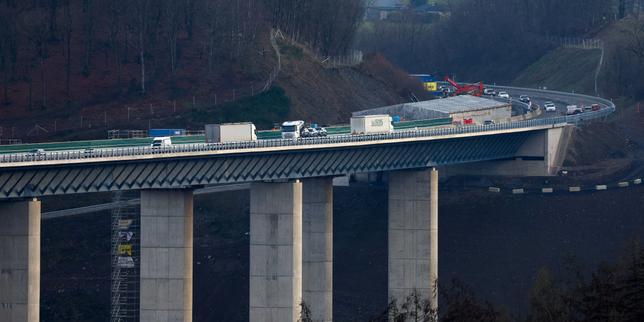
Critics of the reform often point to "intergenerational equity." They argue that borrowing today is a theft from the children of tomorrow. This logic is flawed. If a bridge collapses in 2030 because it wasn't repaired in 2024, the "savings" achieved today represent a massive future liability. By failing to invest, Germany is handing its youth a decaying museum instead of a functioning economy.
The High Cost of Fiscal Purity
The tangible effects of this austerity are visible in every sector of the German economy. The Deutsche Bahn is a punchline. Trains are delayed not by minutes, but by hours, due to a backlog of repairs that stretches back decades. Schools are literally losing their plaster. Most critically, the "Mittelstand"—the small and medium-sized enterprises that form the backbone of German prosperity—is struggling to digitize.
When the government is forced to cut spending to meet an arbitrary numerical target, the first thing to go is always long-term investment. It is politically easier to delay a fiber-optic rollout than it is to cut pensions or social welfare. Consequently, Germany has one of the lowest public investment rates among advanced economies.
Consider the energy transition. Germany wants to be a leader in green technology, yet it lacks the capital flexibility to de-risk massive hydrogen or battery projects. While the United States uses the Inflation Reduction Act to pour hundreds of billions into new industries, German ministers are bickering over crumbs in a basement in Berlin. The result? German capital is flowing to South Carolina and Ohio, where the fiscal environment is more welcoming.
The Karlsruhe Shadow
The 2023 court ruling changed the game. It turned a political disagreement into a legal minefield. Every attempt by the governing coalition to find a "workaround"—such as special funds or off-budget vehicles—now faces the threat of a lawsuit from the opposition. This has created a state of permanent fiscal uncertainty.
Businesses do not invest in environments where the rules of the game might change because of a judicial decree six months down the line. The debt brake has moved from being a stabilizer to a source of profound volatility. It prevents the government from acting as a counter-cyclical force during downturns, forcing cuts exactly when the economy needs a boost.
The Myth of the Frugal Swabian Housewife
The cultural root of the debt brake is the often-cited "Swabian Housewife" (schwäbische Hausfrau), a metaphorical figure who only spends what she earns. It is a powerful image, but it is fundamentally bad macroeconomics. A household is not a sovereign state. A state can issue debt in its own currency, and more importantly, a state’s spending is a private citizen’s income.
When the German state stops spending, the private sector feels the contraction. In a period of low growth, the debt-to-GDP ratio can actually increase even if you don't borrow more, simply because the denominator (the GDP) is shrinking. This is the "austerity trap." By trying to save money, Germany is making itself poorer, which in turn makes its debt burden harder to carry in the long run.
Proposed Paths Forward
There is no shortage of ideas on how to fix this, but the political will is fragmented. The Free Democrats (FDP) view the debt brake as a sacred pillar of their identity. The Greens and Social Democrats (SPD) see it as an anchor dragging the country down.
One viable solution is the "Golden Rule" of public investment. This would involve amending the constitution to allow borrowing specifically for capital expenditures—things that create future value, like bridges, schools, and power grids—while keeping the strict limits on structural consumption spending.
Another option is to reform the cyclical adjustment component. Currently, the formula for how much Germany can borrow during a downturn is based on a complex and often inaccurate estimation of "potential output." If this calculation were modernized to be more generous during periods of stagnation, it would provide the government with more breathing room without requiring a full constitutional overhaul.
The most radical, yet perhaps most necessary, move would be a wholesale rethink of European fiscal rules. If Germany, the largest economy in the eurozone, is trapped in a cycle of under-investment, the entire continent suffers. German demand drives European growth. When Berlin tightens its belt, the shockwaves are felt from Warsaw to Lisbon.
The Real Risk of Inaction
We are witnessing the slow-motion deindustrialization of a superpower. BASF is cutting jobs at its home base in Ludwigshafen. Volkswagen is contemplating plant closures on German soil for the first time in its history. These are not just corporate pivots; they are screams for help from an industrial base that can no longer compete when its own government is legally barred from supporting the necessary infrastructure.
The debt brake was intended to protect the future. Instead, it is consuming it. The "black zero" (a balanced budget) has become a fetish that outweighs the reality of a crumbling rail network and a lagging tech sector. If Germany does not find a way to break its own fiscal chains, it will find itself with a perfectly balanced ledger and an empty industrial heart.
The era of the "low-cost, high-export" German model is dead. A new model requires massive upfront capital. The money is there—private wealth in Germany is at record highs—but the state’s ability to mobilize and partner with that wealth is being stifled by a rule written for a different century.
Governments must choose between maintaining a rigid accounting rule or maintaining their status as a global economic leader. You cannot have both. The current path leads to a very specific kind of stability: the stability of a graveyard. It is time to treat the debt brake as a policy tool rather than a religious dogma.
Demand a reform that distinguishes between "spending" and "investing" before the nation's industrial core moves abroad permanently.