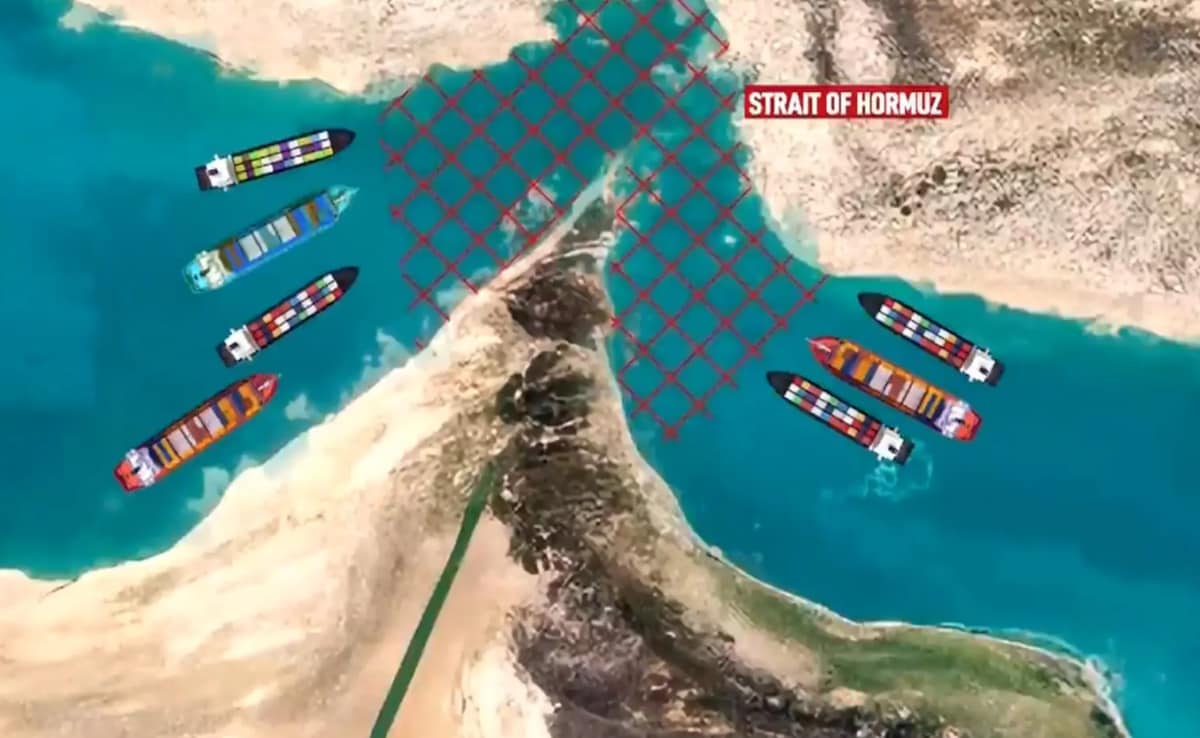
The utilization of thermonuclear devices for civil engineering projects—specifically the creation of sea-level canals—represents a radical intersection of atomic physics and global logistics. While the Strait of Hormuz remains the world’s most sensitive energy bottleneck, the historical blueprint for bypassing such chokepoints lies in the United States’ Project Plowshare and its 1960s feasibility studies for a second Panama Canal. This was not a fringe concept; it was a formal federal initiative seeking to replace traditional mechanical dredging with the controlled release of nuclear energy. To understand the viability of such a solution for modern maritime crises, one must analyze the three structural constraints that derailed the Panama experiments: radiological containment, seismic disruption, and the collapse of the "Plowshare Cost Curve."
The Physics of Nuclear Excavation
Traditional excavation relies on the mechanical displacement of earth. Nuclear excavation operates on the principle of cratering. When a nuclear device is detonated at a calculated depth, the resulting energy release creates a high-pressure plasma bubble. This bubble expands, lifting the "overburden" (the earth above the device) and ejecting it radially.
The success of a trans-isthmian canal project depends on Linear Crater Interconnection. This requires a series of overlapping detonations to form a continuous, navigable trench. The technical challenge lies in the "mounding" effect. If the charges are spaced too far apart, ridges form between craters; if they are too close, the energy is wasted in vertical displacement rather than lateral clearing. During the 1960s, the Atomic Energy Commission (AEC) projected that nuclear methods could reduce excavation costs by 65% to 90% compared to conventional methods for a sea-level canal through the Darien Gap.
The Three Pillars of Project Feasibility
The U.S. government’s push for a nuclear canal was driven by a specific logic of "Scale-Dependency." As the size of the required channel increases, the efficiency of nuclear explosives increases relative to diesel-powered machinery. The feasibility of any modern bypass (such as a Hormuz alternative or a Panamanian expansion) rests on these variables:
1. The Radiological Mass-Balance
The primary technical failure of Project Plowshare was the inability to eliminate "venting." For a canal to be safe for transit, the radioactive isotopes—specifically Tritium ($^3H$), Strontium-90 ($^{90}Sr$), and Cesium-137 ($^{137}Cs$)—must be trapped within the "fallback" or the glass-like melt at the bottom of the crater.
The 1962 Sedan test in Nevada demonstrated the scale of the problem. While it moved 12 million tons of earth, it released significant fallout into the atmosphere. To make a canal through Panama or any other sensitive region viable, the "cleanliness" of the device would need to reach 99.9%—a threshold the AEC never achieved. The engineering requirement is a device where the fusion-to-fission ratio is heavily skewed toward fusion, minimizing long-lived fission products.
2. Seismic Attenuation and Structural Integrity
Nuclear excavation creates a seismic pulse proportional to the yield. In the Panama studies, the "Limit of Damage" radius was a critical bottleneck. Large-scale detonations required to move mountain ranges would have shattered the foundations of existing infrastructure in nearby cities. This creates a trade-off:
- High-Yield/Low-Frequency: Fewer detonations, but higher risk of destroying nearby urban centers.
- Low-Yield/High-Frequency: Thousands of small detonations, which increases the total cost and the cumulative risk of a "hangfire" (a device failing to detonate in a live sequence).
3. The Geopolitical Friction Coefficient
The 1963 Limited Test Ban Treaty (LTBT) remains the single greatest legal barrier to nuclear excavation. It prohibits any nuclear explosion that causes "radioactive debris to be present outside the territorial limits of the State under whose jurisdiction or control such explosion is conducted." Because a canal, by definition, is a maritime gateway, any fallout would inevitably enter international waters or neighboring territories. Bypassing a chokepoint like Hormuz via nuclear means would require a total revocation of current international non-proliferation frameworks.
Quantification of the Suez and Hormuz Alternatives
To apply the Panama logic to modern chokepoints, we must look at the "Throughput-to-Excavation Ratio." The Strait of Hormuz handles roughly 21 million barrels of oil per day (bpd). Any terrestrial bypass—such as a canal across the Arabian Peninsula—would require a channel depth of at least 25-30 meters to accommodate Very Large Crude Carriers (VLCCs).
If we apply the AEC's "Route 17" (Panama) data to a hypothetical 100-mile desert canal:
- Device Density: Approximately 25 devices per mile.
- Cumulative Yield: Hundreds of megatons.
- Displaced Material: Upwards of 5 billion cubic yards.
The cost function of such a project is no longer dominated by fuel or labor, but by the "Insurance and Liability Premium." The risk of contaminating a global energy artery with long-lived isotopes creates a negative ROI. This is the "Nuclear Paradox": the technology is most efficient at scales where its environmental and political costs become infinite.
Structural Failures in the Historical Strategy
The Panama studies failed not because the math was wrong, but because the "Externalities Model" was incomplete. The analysts of the 1960s prioritized "Instantaneous Earthmoving" over "Long-Term Site Access."
The first limitation was the re-entry timeline. Following a nuclear excavation, the site remains thermally and radiologically "hot" for months. Conventional machinery cannot enter the area to perform the necessary stabilization of the crater walls. Without stabilization, the steep slopes of a nuclear-carved trench are prone to massive landslides—a problem that has plagued the existing Panama Canal for a century. In a nuclear scenario, a landslide doesn't just block the canal; it redistributes contaminated material into the water column.
The second limitation was the Hydrological Contamination Path. Excavating a canal involves cutting through aquifers. Nuclear detonations create a "fracture zone" far beyond the visible crater. This creates a permanent conduit for radioactive isotopes to migrate into the regional groundwater supply. In the Panama context, this would have poisoned the freshwater sources for the entire Isthmus.
The Abandonment of the Technological "Silver Bullet"
By 1970, the "Plowshare" dream was effectively dead. The realization was that nuclear explosives are a "blunt force" tool in a world that requires "surgical" infrastructure. The cost-savings of the explosions were outweighed by the astronomical costs of:
- Evacuation: Moving hundreds of thousands of people from the "exclusion zone."
- Decontamination: Scrubbing the final channel to make it safe for civilian sailors.
- Political Capital: Negotiating the violation of the LTBT.
The transition from nuclear enthusiasm to abandonment provides a masterclass in "Hard-Tech Realism." It highlights the danger of optimizing for a single metric (cost per cubic yard of earth moved) while ignoring the systemic risks (radiological and geopolitical stability).
Strategic Framework for Chokepoint Mitigation
If the nuclear option is structurally unviable, the strategy for bypassing maritime bottlenecks must shift from "Physical Excavation" to "Distributed Logistics." The "Panama Lesson" teaches us that high-density, high-risk infrastructure is less resilient than low-density, redundant systems.
The move toward bypassing Hormuz or Panama today does not involve megatons; it involves:
- Pipeline Redundancy: Converting the "Single-Point Failure" of a canal into a "Networked Flow" of pipelines (e.g., the Habshan–Fujairah pipeline).
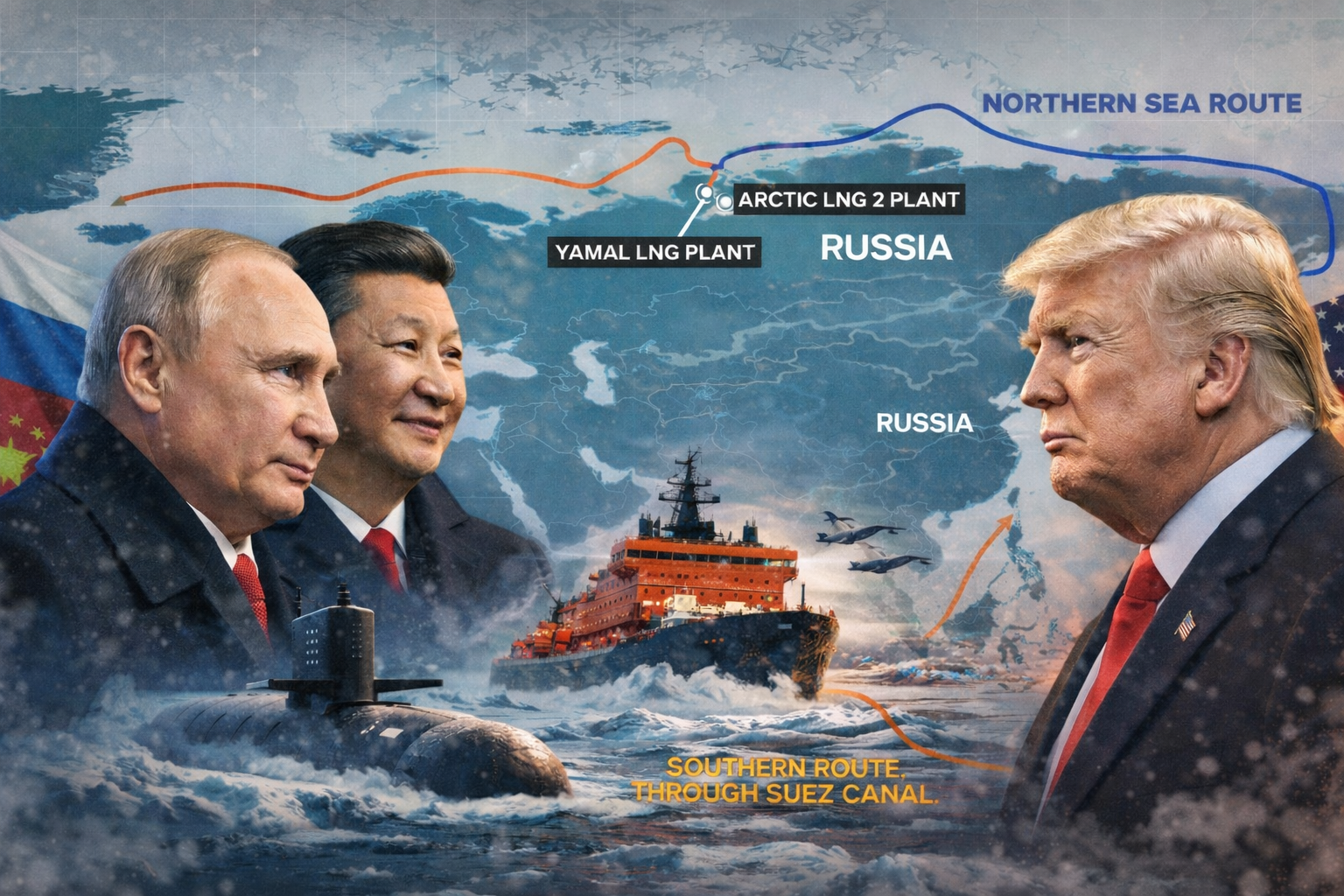
- Intermodal Arctic Routes: Utilizing the Northern Sea Route as a seasonal "Pressure Valve" for global trade.
- Energy Decentralization: Reducing the "Geopolitical Weight" of the chokepoint by shifting the energy mix away from long-haul liquid hydrocarbons.
The historical obsession with nuclear canals was a symptom of "Gigantism"—the belief that any problem can be solved by increasing the scale of the energy input. Modern strategic analysis suggests the opposite: the most effective way to bypass a chokepoint is to render its transit unnecessary through technological substitution and modular infrastructure.
Any nation attempting to revive the nuclear excavation model would find themselves trapped in the same "Logistical Dead End" as the AEC in 1969: possessing the power to move mountains, but lacking the environment to put them anywhere safe. The strategic play is not to build a bigger canal, but to build a smaller dependency.