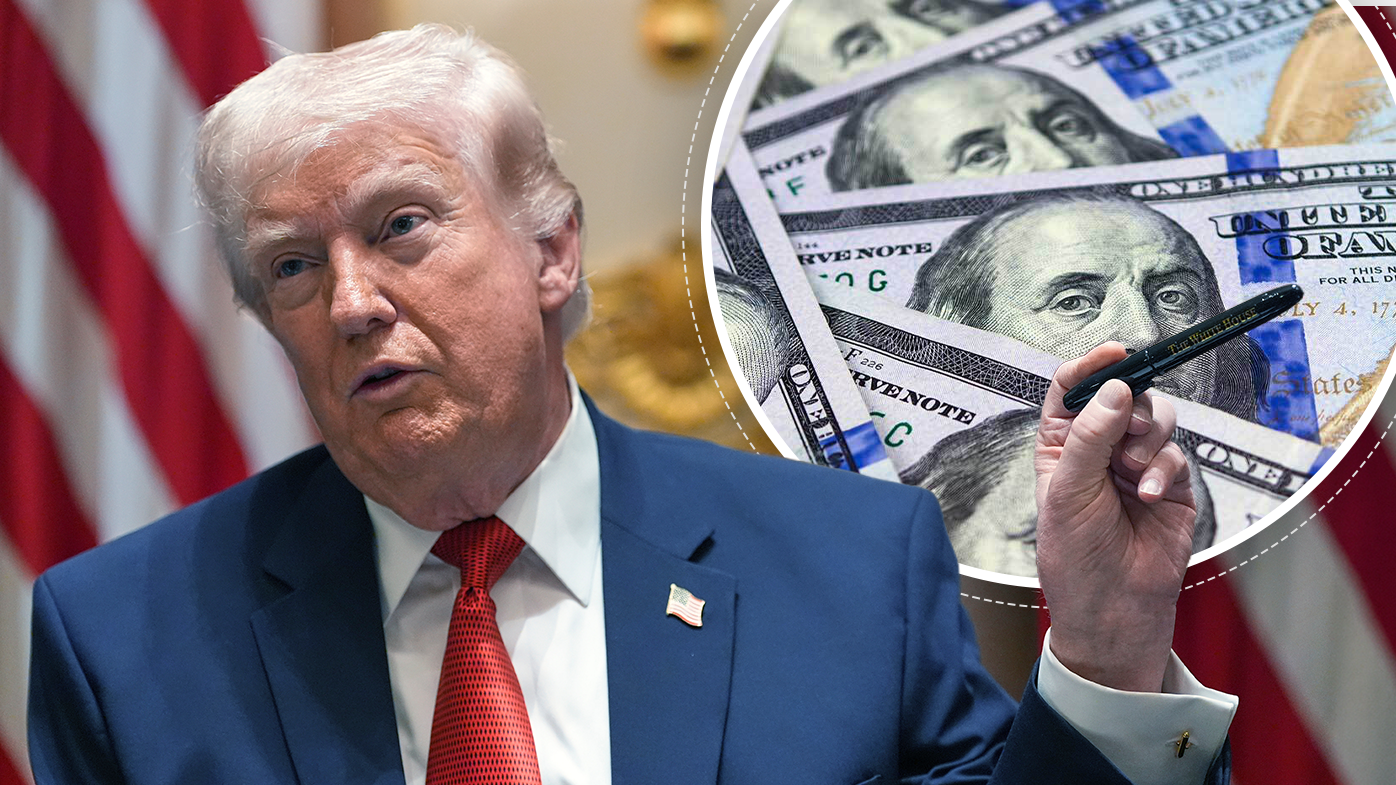
The proposal to emblazon Donald Trump’s signature or likeness across every denomination of U.S. paper currency is not merely a design change; it is a calculated assault on the institutional anonymity of American fiscal policy. For over a century, the faces on our money have served as static symbols of a shared national history, curated by the Treasury Department with a deliberate, glacial caution. By attempting to insert a living political brand into this space, the movement challenges the fundamental principle that the dollar belongs to the Republic, not the executive.
This is about more than aesthetics. It is about the psychology of the "Full Faith and Credit" of the United States. When people hold a hundred-dollar bill, they are holding a contract. Historically, that contract has been signed by the Treasurer and the Secretary of the Treasury—functionaries of the state. Moving toward a personalized currency model shifts the perception of the dollar from a sovereign asset to a corporate-style issued note. It is a shift that carries profound implications for international trust and domestic stability. Also making headlines in this space: The Jurisdictional Boundary of Corporate Speech ExxonMobil v Environmentalists and the Mechanics of SLAPP Defense.
The Architecture of Financial Branding
The Bureau of Engraving and Printing (BEP) operates under strict legal mandates. Since the mid-19th century, the portraits on our bills have been selected to represent "deceased persons whose places in history are well-known." This isn't just tradition. It is a safeguard. It ensures that the currency remains decoupled from the volatile, day-to-day cycles of partisan politics.
If a sitting or former president succeeds in placing their name on the currency, they break a century of precedent designed to keep the dollar neutral. We have seen this play out in other nations. In authoritarian or highly personalized regimes, the leader's face is a fixture of the local bank note. When the regime falls or the leader is discredited, the currency often undergoes a crisis of legitimacy. For the U.S. dollar, which serves as the world’s primary reserve currency, even the appearance of personalization could signal a move toward instability to foreign central banks. Additional details on this are covered by Bloomberg.
Current law, specifically 31 U.S.C. § 5114(b), prohibits the portrayal of a living person on any U.S. security. This is the primary roadblock. To put a name or face on the money while the subject is alive requires more than an executive order; it requires an act of Congress.
The Cost of a Global Rebrand
Changing the design of U.S. currency is one of the most expensive and logistically complex undertakings in the federal government. The "New Design Series" launched in the 1990s and 2000s took years of research to combat counterfeiting. Every time a bill is updated, billions of dollars are spent on:
- Redesigning the intaglio plates used for high-pressure printing.
- Updating high-speed sorting machines at the Federal Reserve.
- Reconfiguring millions of ATMs and vending machines worldwide.
- Global education campaigns to ensure that people from London to Luanda recognize the new bill as legal tender.
If the Treasury were forced to include a political name as a branding exercise, the cost would run into the hundreds of millions. This doesn't include the potential "political tax"—the loss of value if certain segments of the population or foreign investors view the new bills as a political statement rather than a store of value.
Counterfeiting and the Trust Gap
The primary driver of currency design is security. Features like the 3D Security Ribbon on the $100 bill and the color-shifting ink are the result of intense engineering. Critics of the personalization movement argue that distracting the BEP with political mandates could compromise the focus on anti-counterfeiting measures.
The dollar is the most counterfeited currency in the world. Its power lies in its ubiquity and its predictability. When you change the visual cues of the money, you create a window of opportunity for counterfeiters. During the transition period, when both old and new bills are in circulation, confusion reigns. If that confusion is tied to a divisive political figure, the social friction only increases.
Imagine a retail environment where customers refuse to accept certain bills because of the name printed on them. While "legal tender" laws technically require the acceptance of the currency for debts, private businesses in many jurisdictions still have the right to refuse certain denominations or versions of cash. We have already seen "currency protests" in other countries where specific notes were boycotted for political reasons. Introducing that level of volatility into the American checkout line is a recipe for micro-economic chaos.
The Reserve Currency Dilemma
Foreign central banks hold trillions in U.S. Treasuries and physical cash. They do this because the U.S. system is seen as a "machine"—a predictable, rule-based environment. The moment the currency starts looking like the promotional material for a specific political faction, the "machine" starts looking like a "regime."
Central bankers in Beijing, Brussels, and Tokyo value the dollar's boringness. The moment it becomes interesting, it becomes risky. If the dollar loses even 1% of its share as a reserve currency due to perceived political instability or "branding" shifts, the borrowing costs for the U.S. government would spike. The interest on the national debt would climb, leading to a direct hit on the American taxpayer.
The Legal and Logistical Firewall
Even if the political will existed to bypass 31 U.S.C. § 5114, the logistical hurdles are massive. The Federal Reserve, which technically issues the notes, operates with a degree of independence. While the Treasury prints the money, the Fed distributes it. If the Federal Reserve Board of Governors determined that a specific design change threatened the "stability and integrity of the financial system," they could theoretically push back.
Then there is the issue of the "living person" rule. This rule was established in the wake of the Civil War to prevent the deification of political leaders. It was a conscious choice to move away from the monarchical traditions of Europe, where the King’s head was the stamp of value. To reverse this now would be to reverse a core tenet of American anti-monarchism.
The Psychology of Cash in a Digital World
We are living through a period where physical cash is already under threat from digital payments and cryptocurrencies. For many, the physical bill is the last tangible link to the state. If that link is politicized, it accelerates the flight toward decentralized or private forms of money.
Younger generations, already skeptical of traditional institutions, might see "branded" money as the final proof that the fiscal system is a game played by elites for ego rather than a public utility. This could push more capital into the "shadow" economy or into digital assets that are immune to the whims of any single politician’s signature.
Historical Precedents of Ego in Minting
History is littered with examples of leaders who used the mint to cement their legacy. Julius Caesar was the first living Roman to put his own portrait on a coin. It was a move that signaled the end of the Republic and the beginning of the Empire. Within months of the coins entering circulation, he was assassinated. The Romans understood that the money belonged to the Senatus Populusque Romanus (The Senate and People of Rome), and putting a living man’s face on it was an act of supreme hubris.
In modern times, we see this in hyper-inflationary environments. In the later years of Mobutu Sese Seko in Zaire, his face was on every note. As the economy collapsed, people would literally cut his face out of the bills as a form of protest, rendering the money useless. While the U.S. is a far cry from a failing state, the mechanics of symbol-destruction are the same. You do not want the physical representation of your wealth to be a lightning rod for social anger.
The Path Forward for the Treasury
The Treasury Department’s current focus is on the delayed redesign of the $20 bill, intended to feature Harriet Tubman. This project has already been stalled by political headwinds for years. Adding a "Trump Note" to the mix would essentially paralyze the BEP's design department for a decade.
The process of choosing who goes on our money is supposed to be a consensus-building exercise. It is meant to reflect values that have stood the test of time, not the current polling data. If the goal is truly to honor American greatness, the current system of waiting until a figure has passed into the history books remains the only viable filter for the passions of the present.
The dollar is the ultimate "quiet" power. It doesn't need to shout. It doesn't need to sell itself. It doesn't need a spokesperson. Its value is derived from the fact that it is backed by the labor, the military, and the legal consistency of 330 million people. To put a single name on it is to suggest that the name is bigger than the nation. That is a trade-off that the American economy cannot afford to make.
The next time you pull a bill from your wallet, look at the signature. It is likely a name you barely recognize. That is by design. That anonymity is the shield that protects the dollar from the volatility of the people who spend it. Breaking that shield for the sake of a brand would be the most expensive marketing mistake in human history.
Start following the Federal Reserve’s "Currency Education Program" updates to see how they manage the rollout of new security features, and you will see just how much effort goes into keeping the dollar "the dollar" rather than a billboard.