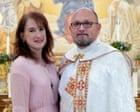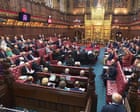
In the grand, red-leathered expanse of the House of Lords, there are those who shape the future of the United Kingdom and those who simply hold a golden ticket to the club. As of March 2026, the data confirms a stark reality: two of the most high-profile appointments of the last decade, Evgeny Lebedev and Ian Botham, have effectively treated the second-highest legislative chamber in the land as an optional social credit. Records reveal that both men recorded an identical, abysmal attendance rate of 1.12% over the last four years, attending just seven out of 625 possible sessions. This is not merely a story of two busy men; it is a clinical diagnosis of a patronage system that awards life-long lawmaking powers to individuals who have no intention of actually making laws.
The Patronage Trap
The presence of Baron Lebedev of Hampton and Siberia and Baron Botham of Ravensworth in the House of Lords is a direct legacy of Boris Johnson’s premiership. While the House of Commons is currently undergoing a radical shift toward a more representative demographic, the Lords remains a fortress of the old guard.
For Lebedev, the newspaper tycoon and son of a former KGB agent, the peerage was controversial from the start. Intelligence services reportedly raised red flags about his appointment in 2020, yet he was pushed through by a Prime Minister who valued personal loyalty over security consensus. Since then, Lebedev has been a ghost. He didn't vote at all for his first six years. While he has recently shown a flicker of life—voting twice in early 2026 and delivering a speech on press freedom—his presence is so infrequent that his absence has become his defining legislative characteristic.
Ian Botham, a titan of English cricket, followed a different trajectory but arrived at the same destination of irrelevance. He started with a burst of 26 sessions in 2021 before his participation plummeted. He has not spoken in the chamber since November 2020. While Botham was a fierce competitor on the pitch, his performance in the Lords suggests he has retired from the field of public duty entirely, preferring the golf courses and cricket functions of Australia and the UK to the scrutiny of the Grand Committee.
A Legal Minimum of Effort
Under current rules, a peer only needs to attend one sitting per year to retain their seat. This "one-day-a-year" threshold is the only thing keeping Lebedev and Botham in the building. It is a loophole large enough to drive a Bentley through.
- Evgeny Lebedev: Managed one attendance in 2022, and two each in 2023, 2024, and 2025.
- Ian Botham: Managed two in 2022, one in 2023, and two in 2024 and 2025.
The defense often mounted for such "part-time" peers is that they provide outside expertise. However, this argument collapses under the weight of the data. Neither man has ever served on a Lords committee—the engine room where actual policy work happens. Expertise that is never shared is functionally non-existent.
The Cost of Silence
While these "absent lords" may not always claim their daily £361 attendance allowance, their presence—or lack thereof—clogs the machinery of government. The House of Lords is now the second-largest legislative body in the world, surpassed only by China's National People's Congress. With 868 members, the chamber is bloated, yet the work falls on a shrinking core of active peers.
The financial optics are equally grim. Even if a peer does not speak or vote, simply walking through the door and swiping their card entitles them to a tax-free payment. While Lebedev and Botham are wealthy enough to ignore the cash, other "silent" peers have claimed hundreds of thousands of pounds over the last parliament while contributing effectively nothing to the Hansard records.
The Breaking Point for Reform
The timing of these revelations is toxic for the upper house. Just this month, on March 10, 2026, the Hereditary Peers Bill finally passed, stripping the final 92 hereditary members of their right to sit and vote. It was hailed as the biggest democratic update in a generation. But the focus is now shifting from how someone gets into the Lords to what they do once they are there.
Baroness Smith of Basildon and the current government have signaled that "participation requirements" are the next battleground. There is a growing movement to enforce a minimum attendance record far stricter than the current "once a year" farce. If a peer fails to participate in a set percentage of votes or debates, they should be forced into retirement or a mandatory leave of absence.
The argument that the Lords should be a house of "experts" is also being re-evaluated. If the experts—like a media mogul or a sporting legend—are too busy with their primary careers to attend, then the system is failing the public. We are left with the worst of both worlds: political appointees who owe their seats to patronage and part-time celebrities who treat the Mother of Parliaments like a private members' club.
The Persistence of the Old Boys Network
Despite the removal of hereditary peers, the "life peer" system remains a tool for prime ministerial patronage. Since taking office, Keir Starmer has already created 96 peers. While the government claims these appointments are necessary to balance the chamber, it merely continues a cycle where the size of the House expands indefinitely.
The Sutton Trust's 2025 report on the UK elite highlights that 52% of the House of Lords were privately educated, compared to just 7% of the current Cabinet. This cultural disconnect is exacerbated when the most privileged members of the House are also the ones who show up the least. It reinforces a perception that the House of Lords is not a working legislative body but a retirement home for the well-connected.
The End of the Free Ride
The public's patience for "Barons of Absence" has evaporated. The Identical 1.12% attendance rate of Lebedev and Botham is not a coincidence; it is a symptom of a system that asks for nothing and gives away everything.
True reform cannot stop at the removal of the Dukes and Earls. It must address the life peers who treat their titles as trophies rather than responsibilities. If the House of Lords is to survive as a credible revising chamber, it must implement a "use it or lose it" policy.
The era of the ornamental peer is over. Either show up and work, or hand back the ermine. The British taxpayer is no longer interested in funding a 1.12% democracy.
Would you like me to analyze the specific voting records of other high-profile crossbenchers to see if this trend extends beyond Lebedev and Botham?