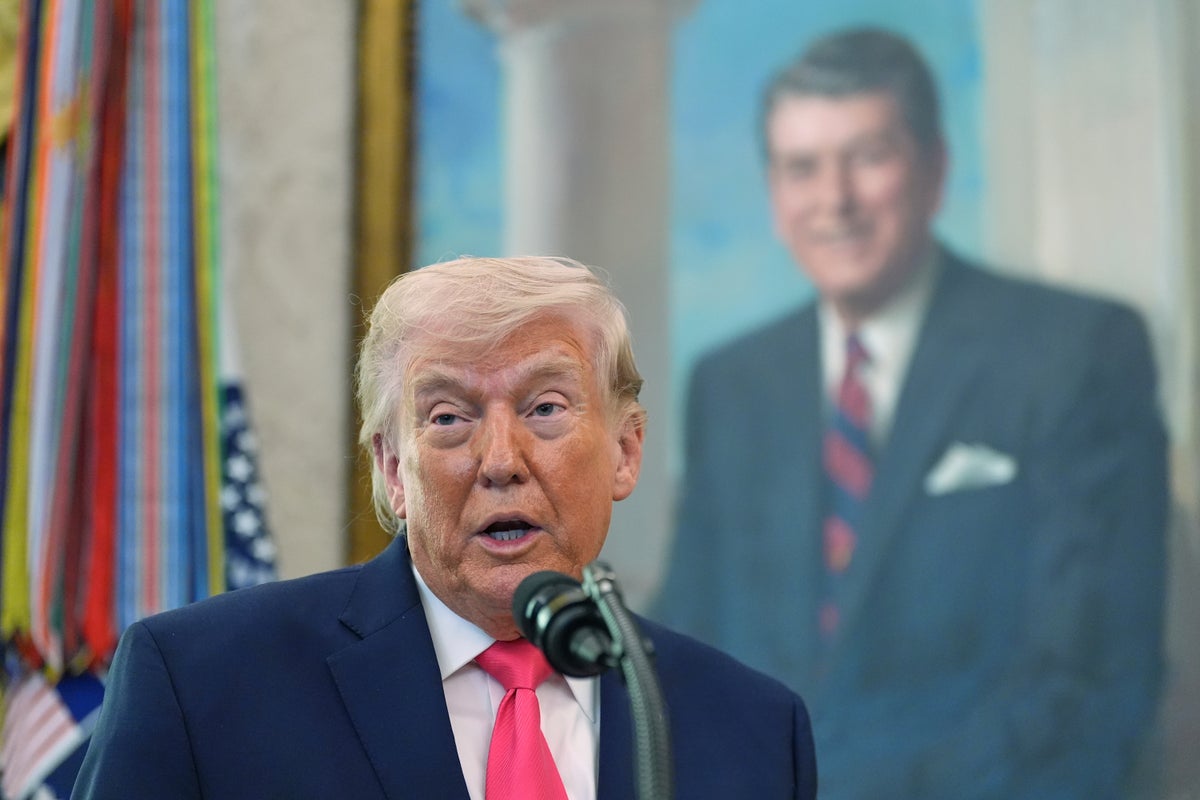
The headlines are currently obsessing over the aesthetics of diplomacy. Media outlets are busy quoting Iranian officials who claim Donald Trump’s latest peace proposal is not "beautiful on paper." This focus on optics is exactly why Western analysts keep losing the plot.
Diplomacy in the Middle East is not a beauty pageant. It is a high-stakes commodities trade. While the world watches the rhetorical sparring, the real game is being played in the shadow banking systems of East Asia and the drone manufacturing hubs of Isfahan.
The "lazy consensus" suggests that Iran is backed into a corner, desperate for sanctions relief, and lashing out at a deal that doesn't offer enough. This is a fundamental misunderstanding of Tehran's current leverage. They aren't pushing back because the deal is "ugly." They are pushing back because, for the first time in forty years, they might not actually need a deal with the United States to survive.
The Sanctions Buffer is Now a Fortress
For decades, the Washington playbook was simple: squeeze the oil, starve the treasury, wait for the collapse. It worked when the world was unipolar. It is failing now because the "maximum pressure" campaign inadvertently forced Iran to build the world’s most sophisticated sanctions-evasion architecture.
I have watched analysts track "ghost armadas" of tankers for years. What they miss is the scale. Iran has transitioned from a besieged economy to a central node in a parallel global market. They aren't just selling oil at a discount to China; they are building a financial rail system that bypasses SWIFT entirely.
When an Iranian official calls a peace plan "ugly," they are signaling to their domestic hardliners and their Eastern partners that the Western financial system is no longer the only game in town. The leverage of the dollar is at an all-time low in the Persian Gulf. If you don't believe me, look at the growth of the "BRICS Plus" framework. Iran didn't join that for the photo ops; they joined it for the clearinghouse.
The Myth of the "Rational Actor" Peace Plan
Western diplomats love to draft "rational" plans. They offer X amount of investment for Y amount of nuclear compliance. They assume the Iranian leadership wants to be "normal," as if Tehran’s ultimate goal is to have a Starbucks on every corner in Tajrish.
This is a category error.
The Islamic Revolutionary Guard Corps (IRGC) is not a military; it is a conglomerate. It owns construction companies, telecommunications firms, and ports. For the IRGC, a "beautiful" peace plan that opens Iran to Western competition is actually a direct threat to their balance sheet.
Imagine a scenario where the U.S. lifts every single sanction tomorrow. Global corporations like Total, Eni, and Siemens would rush back in. They would bring transparency, international accounting standards, and competitive bidding. For the men who currently run the Iranian economy, that isn't "peace"—it's a hostile takeover.
They prefer the status quo. They prefer the shadows. A "messy" geopolitical environment allows them to maintain a monopoly on the black market. The "peace" being offered is a product they aren't buying because it ruins their business model.
The Drone Diplomacy Pivot
If you want to understand why Iran feels comfortable mocking a U.S. president’s proposal, stop looking at nuclear centrifuges and start looking at cheap, plywood drones.
The Shahed-136 changed the math of Middle Eastern power dynamics. For the cost of a luxury SUV, Iran can now project power across continents. They have turned asymmetric warfare into a high-margin export business.
- Low Entry Cost: You don't need a billion-dollar air force when you have ten thousand loitering munitions.
- Combat Proven: These systems are being tested in real-time in Ukraine and the Red Sea.
- Geopolitical Barter: Iran is no longer just a "rogue state"; they are a defense contractor for a new axis of powers.
This provides them with "strategic depth" that no piece of paper can match. When Trump offers a "deal," he is offering a return to a world where Iran is a mid-tier power subject to U.S. whims. Why would they go back to that when they are currently a primary hardware provider for a global shift in military doctrine?
The Flaw in the "Art of the Deal" Applied to Teocratic States
The common critique of the Trump approach is that it’s too aggressive. The contrarian truth is that it’s too transactional.
Transactional diplomacy works with real estate developers in Manhattan or casino owners in Macau. It does not work with a revolutionary government that views its entire existence through the lens of a "resistance economy."
People often ask: "Can Iran be bought?"
The answer is yes, but not with dollars. They require the one thing the U.S. cannot give without losing its own soul: a total recognition of their regional hegemony.
The current peace plan is being rejected because it treats Iran like a failing business that needs a bailout. Tehran views itself as a rising venture capital firm that just secured a massive Series B round from Beijing and Moscow. They aren't looking for a "fair price." They are looking for a seat at the head of the table.
The Brutal Reality of Sanctions Fatigue
We need to stop pretending that sanctions are a permanent solution. They are a wasting asset. The longer a country is under sanctions, the more it learns to live without the sanctioning body.
Look at the data on Iran’s non-oil exports. They have surged. Why? Because when you can't buy German machinery, you learn to build your own or you find a Chinese equivalent that is 80% as good for 50% of the price.
By the time we offer them a "beautiful" deal to come back to the Western fold, the domestic supply chains in Iran have already shifted. The engineers have adapted. The banks have rerouted. The "deal" is trying to sell a map of a world that no longer exists.
Stop Asking if the Deal is "Good"
The media is asking: "Is this a good deal for peace?"
The real question is: "Does Iran even want peace in the Western sense of the word?"
Peace, as defined by a U.S. peace plan, usually means disarmament, transparency, and integration into a Western-led order. For the Iranian leadership, that is a death sentence. It invites the very cultural and economic "soft power" that they have spent four decades fighting.
They want deterrence, not peace.
They want access, not integration.
Every time a Western leader presents a plan that requires Iran to open its doors, it will be met with the same derision. It’s not about the font, the language, or the "beauty" of the document. It’s about the fact that the document assumes the U.S. still holds the remote control.
The Actionable Truth
If you are an investor, a policy-maker, or a citizen trying to make sense of this, ignore the "beauty" of the rhetoric.
Watch the oil flows to the refineries in Shandong.
Watch the joint naval drills in the Gulf of Oman.
Watch the price of the Iranian Rial on the open market—not the official government rate.
The Iranian leadership is playing a game of "wait out the clock." They believe the West is fractured, tired, and increasingly irrelevant to the "Global South."
Every time we offer a deal that doesn't acknowledge this shift in the tectonic plates of power, we aren't negotiating. We are just talking to ourselves in an empty room while the door is being locked from the outside.
The deal isn't ugly on paper. The reality is just too ugly for the architects of the deal to admit they've lost their grip on the table.
Don't wait for a signature that is never coming.
Build your strategy around a world where Iran remains an unintegrated, defiant, and increasingly connected node in a non-Western circuit. That is the only version of the future that isn't a fairy tale.
Stop looking for beauty in a room full of ghosts.