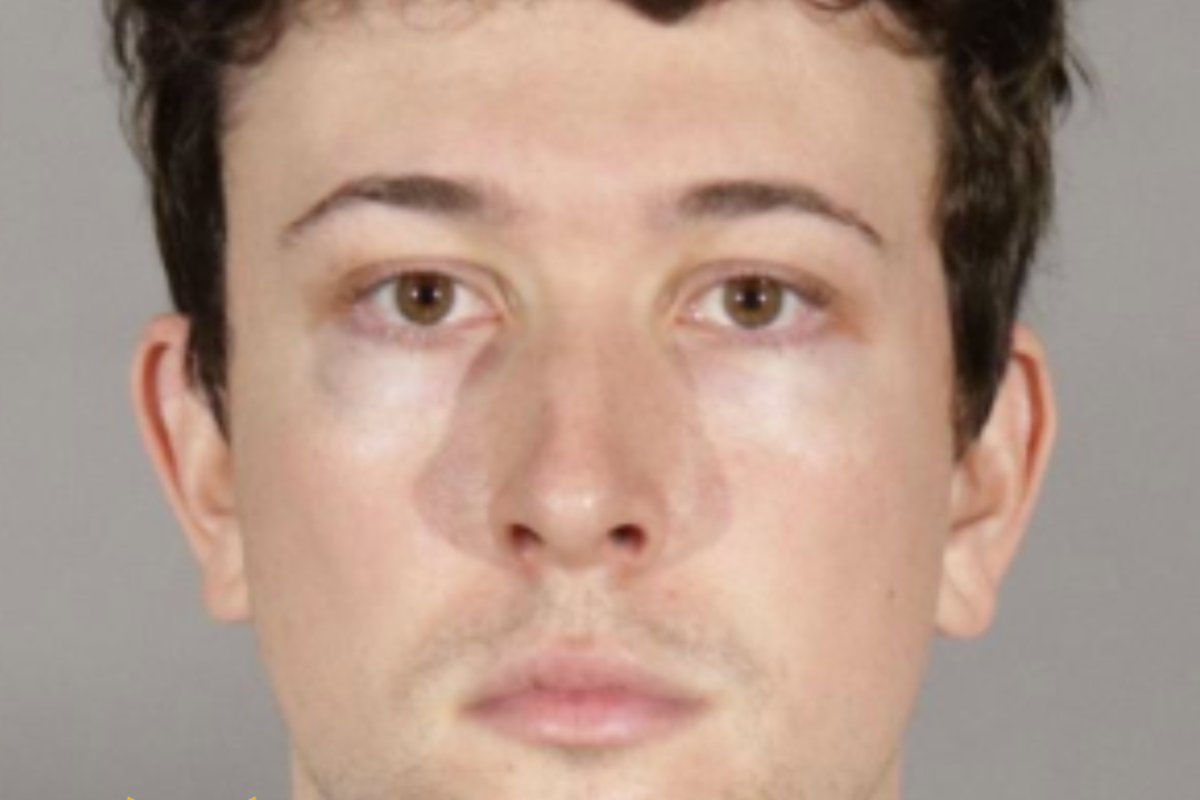
The irony is heavy enough to sink a campaign. Mark Burkhalter, a prominent voice in the movement claiming the 2020 election was stolen from Donald Trump, now faces a definitive legal reckoning for the very crime he claimed to be fighting. A jury recently found the activist guilty on multiple counts of election fraud, including illegally casting ballots in a 2020 primary and general election. This conviction transforms a fringe narrative into a case study of projection. It reveals a specific, dangerous pattern where the loudest warnings about systemic vulnerability are often used to mask personal subversion of the democratic process.
Burkhalter’s legal downfall did not happen in a vacuum. It is the culmination of a multi-year investigation that peeled back the layers of an activist identity built on the premise of "election integrity." While he spent his days appearing on local broadcasts and social media livestreams to warn that the system was rigged, investigators were busy tracking his own paper trail. The evidence presented in court was not based on high-level conspiracy theories or digital ghosts in the voting machines. It was based on the mundane, physical reality of a man who thought the rules he was defending did not apply to him. In similar news, we also covered: The Sabotage of the Sultans.
The Mechanics of the Deception
To understand how a self-styled patriot ends up in handcuffs for the very acts he decries, you have to look at the specific methods used to bypass standard safeguards. Burkhalter did not hack a server. He did not bribe a precinct captain. Instead, he exploited the residency requirements that form the bedrock of local voting.
The prosecution successfully argued that Burkhalter maintained multiple registrations and cast ballots in jurisdictions where he no longer lived. This is the "retail" level of election fraud. It is small-scale, tedious, and generally ineffective at changing a national outcome, but it is a direct violation of the law. He essentially gambled on the idea that election boards are too overwhelmed with data to cross-reference every name against property records or moving notices. The New York Times has provided coverage on this critical subject in great detail.
He lost that gamble because of the very scrutiny he helped invite. When activists demand a "deep dive" into voter rolls, they often forget that those rolls include their own names. The investigators tasked with cleaning up the lists found his discrepancies first. It turns out that the system’s safeguards, while not always instantaneous, are remarkably persistent.
A Career Built on a False Foundation
Burkhalter was not just a casual voter who made a mistake at the polling place. He was a professional agitator. He used his platform to organize rallies, lobby local officials for "forensic audits," and spread the idea that the 2020 election results were a coordinated fiction.
In the world of professional activism, credibility is the only currency. By positioning himself as an expert on how elections are stolen, Burkhalter gained access to high-level political circles and donor money. He wasn't just a witness to the movement; he was an architect of the local infrastructure that kept the "Stop the Steal" narrative alive long after the courts had dismissed dozens of lawsuits for lack of evidence.
This conviction shatters that credibility. It suggests that for some leaders in this movement, the outcry over fraud is not an attempt to fix a broken system. It is a smokescreen. If you can convince enough people that the entire process is a sham, you create a moral justification for breaking the rules yourself. It is the "they’re doing it, so I have to do it too" defense, and it has become a recurring theme in post-2020 political trials.
The Cost of the Projection Strategy
The broader impact of the Burkhalter case stretches far beyond one man’s jail time. It highlights the severe damage done to public trust when the calls for "integrity" come from those actively undermining it. Every time a high-profile activist is caught committing the crimes they accuse their opponents of, the barrier for civil discourse gets higher.
Consider the resources wasted. Thousands of man-hours were spent investigating Burkhalter’s claims of widespread malfeasance in his home state. State officials were forced to defend their work against his public attacks. Meanwhile, the actual fraud was happening in his own backyard, committed by his own hand.
This isn't an isolated incident. Across the country, several other "integrity" advocates have faced similar charges or investigations. From individuals caught voting for deceased relatives to those attempting to breach voting machine software in a misguided quest for proof of a conspiracy, the pattern is consistent. The obsession with the "Big Lie" has created a subclass of voters who believe they are soldiers in a war, and in war, they believe the law is a secondary concern.
The Vulnerability of Local Jurisdictions
The trial also exposed a genuine weakness in how we manage voter rolls, though not the one Burkhalter claimed. The "how" of his crime relied on the lack of real-time communication between different county election offices.
If a voter moves from County A to County B, there is often a significant lag before County A realizes the voter is no longer a resident. This is the gap where Burkhalter operated. He stayed on the rolls in his old district while registering in a new one. In a digital age, this seems like a simple fix, but the decentralized nature of American elections—where each of the thousands of counties has its own process—makes it a logistical nightmare.
The fix isn't more audits of past results. It is the modernization of the "backend" of the election system. We need better data-sharing agreements and faster processing of change-of-address forms. These are boring, technical solutions that don't make for good rally speeches, but they are the only way to prevent the kind of retail fraud that Burkhalter committed.
Why the Narrative Persists Despite the Facts
You might think a conviction like this would end the conversation. It won't. The "Stop the Steal" movement has become a matter of identity rather than a debate over facts. For his most ardent followers, Burkhalter will likely be seen as a martyr—a man targeted by a "deep state" for getting too close to the truth.
This is the central challenge for the American judicial system in 2026. When the truth is treated as a partisan weapon, even a jury verdict based on clear physical evidence is dismissed as "persecution."
Burkhalter’s defense team tried to frame the illegal voting as a misunderstanding of the law. They argued he was a "confused" citizen trying to navigate a complex system. The jury didn't buy it. They saw a man who was an expert in election law when it suited his public persona, but suddenly became "confused" when his own actions were under the microscope.
The Erosion of the Activist Economy
There is also a financial angle to this story that often goes unreported. The election-denial industry is a multi-million dollar business. It funds legal defense funds, speaking tours, and media startups. When a figurehead like Burkhalter is convicted, it threatens the flow of capital to these organizations.
Donors who thought they were funding a fight for the Constitution are now realizing their money supported someone who was actively breaking it. We are starting to see a cooling effect in some of the more extreme corners of the movement as the legal consequences become too high for the average participant to ignore. The "investigative journalist" persona that Burkhalter cultivated was a tool for fundraising, and that tool is now broken.
A Warning for the 2024 and 2026 Cycles
As we move deeper into the current election cycle, the ghost of the 2020 fraud claims continues to haunt the process. This conviction serves as a necessary reality check. It proves that the system is capable of policing its own, even if the process is slower than many would like.
The most dangerous players in politics are not the ones who disagree with the rules. They are the ones who claim to be the only true defenders of the rules while they quietly dismantle them. Burkhalter spent years telling his followers that the house was on fire. The trial proved he was the one holding the matches.
The path forward requires a return to a shared reality. We cannot have a functioning republic if one side believes that the law is merely a suggestion when they are "fighting for the right cause." The conviction of a prominent fraud-accuser for actual fraud is a harsh, necessary lesson in the dangers of political fanaticism. It reminds us that "election integrity" is not a slogan or a weapon to be used against enemies. It is a standard of behavior that must start with the person in the mirror.
Check your own registration today and ensure your information is current in only one jurisdiction.