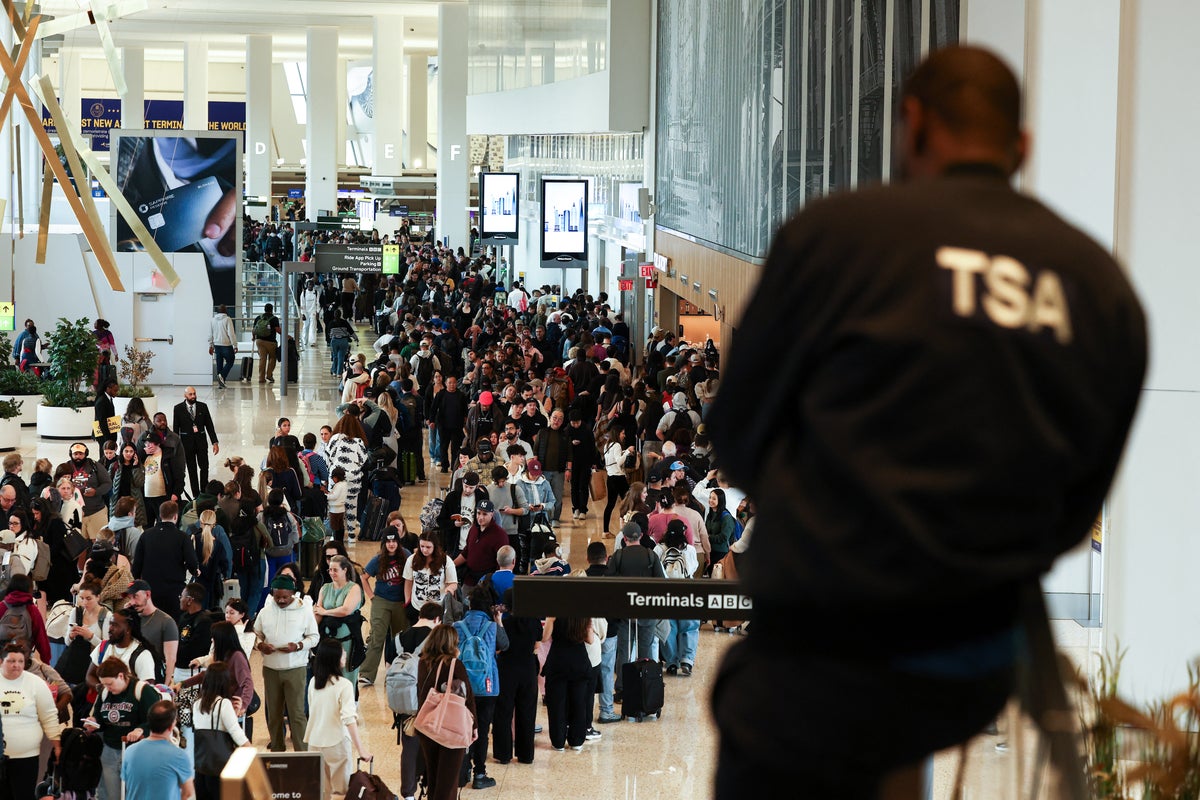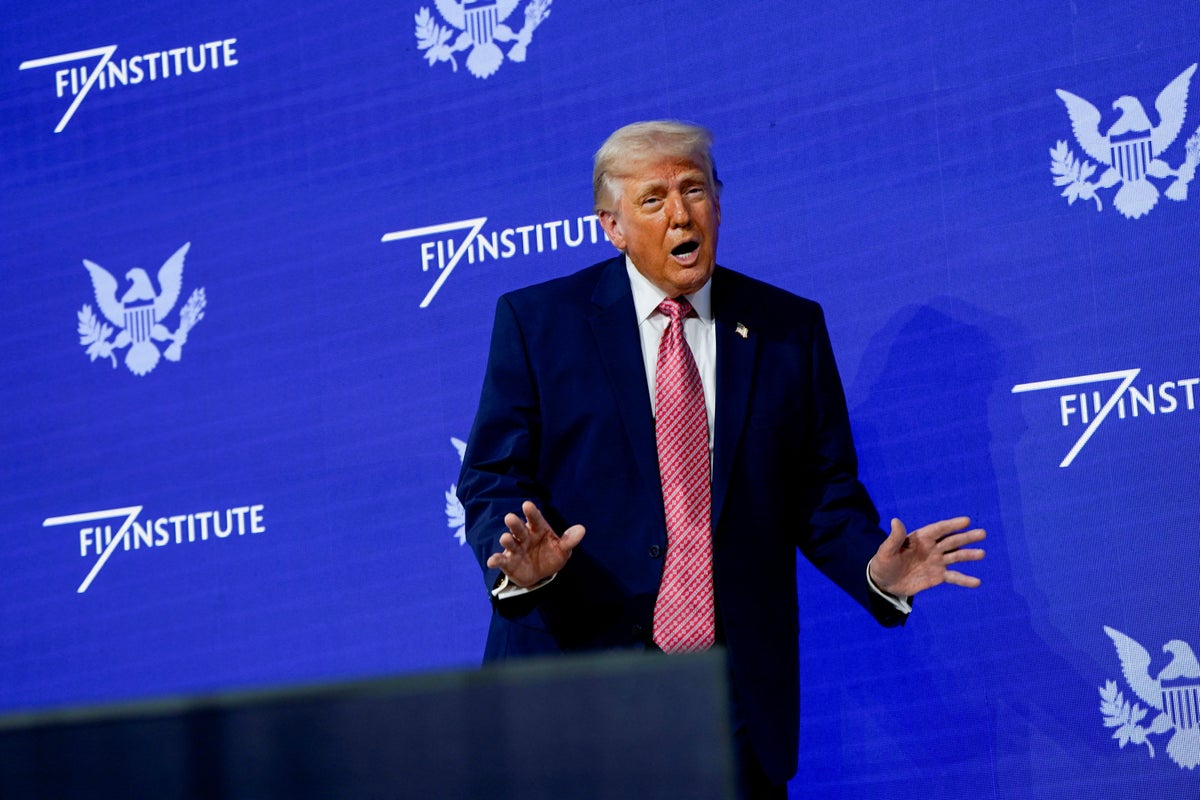
The plastic bin at an ICE detention center is not a casket, but it functions like one. It holds the remnants of a life paused: a belt, a wallet, a set of keys that no longer open anything, and perhaps a small bottle of pills. For a man like Binyam, a refugee who fled a different kind of war only to find himself trapped in a bureaucratic one, that bin became the graveyard of his future.
Binyam’s story isn’t just about a missed appointment. It is about the specific, agonizing mechanics of how a human body unspools when the gears of the law grind against the gears of medicine. Don't miss our previous coverage on this related article.
The Mathematics of a Miracle
Cancer treatment is a symphony of timing. It is not a suggestion; it is a rigid, unforgiving calendar. To treat Stage IV lymphoma, doctors rely on a concept called dose density. You hit the cancer hard, then you wait for the patient’s healthy cells to catch their breath, and then you hit it again before the malignancy can learn how to fight back.
If you miss a week, the cancer breathes. If you miss a month, the cancer wins. If you want more about the background here, TIME offers an excellent summary.
Binyam was halfway through this biological war when he was detained. He had a schedule. He had a team of oncologists who knew the exact shade of grey his skin turned when his white blood cell count plummeted. He had a family who counted the days between infusions like beads on a rosary. Then, the handcuffs clicked. The calendar stopped. The cancer didn't.
The Invisible Wall
Imagine standing in a room where the air is slowly being pumped out. You can see the oxygen tank through a thick glass window. You point at it. You scream. You explain that your lungs are collapsing. The person on the other side of the glass nods, checks a clipboard, and tells you that your request for air is currently under administrative review.
That is the reality of medical care within the American immigration detention system. It is not always an overt act of cruelty. Often, it is something far more terrifying: indifference.
When a prisoner requires specialized care—like chemotherapy—the logistics are a nightmare. You need a transport team. You need armed guards to sit in a sterile oncology ward. You need a paper trail that satisfies a dozen different departments. In Binyam’s case, his family watched from the outside as the dates for his vital sessions flickered by on the calendar. One missed session. Then two. Then a month of silence.
The body is a fragile thing, but a refugee’s body is often forged in the fires of survival. Binyam had survived the trek across borders. He had survived the uncertainty of displacement. But the body cannot survive the interruption of its lifeline. Without the chemicals designed to kill the poison inside him, the poison simply took over. It colonizes the lymph nodes. It crowds the lungs. It turns the simple act of breathing into a labor of Herculean proportions.
The Cost of a Signature
We often talk about the "system" as if it is an atmospheric condition, like the weather. It isn't. The system is a series of desks. It is a series of pens held by people who are tired, or overworked, or simply following a manual that doesn't have a chapter for "What to do when a man is dying in Cell Block C."
Binyam’s family didn't ask for a pardon. They didn't ask for a bypass of the law. They asked for a car ride. They asked for a hospital bed. They offered to pay for the treatment themselves, to provide the logistics, to do anything to ensure that the man who had sought safety in this country didn't find a grave instead.
But the law is a blunt instrument. It does not possess a scalpel’s precision. When Binyam was finally released—not because of a change in heart, but because his condition had become a liability—he was no longer the man who had entered. He was a ghost draped in skin.
The Deathbed and the Ledger
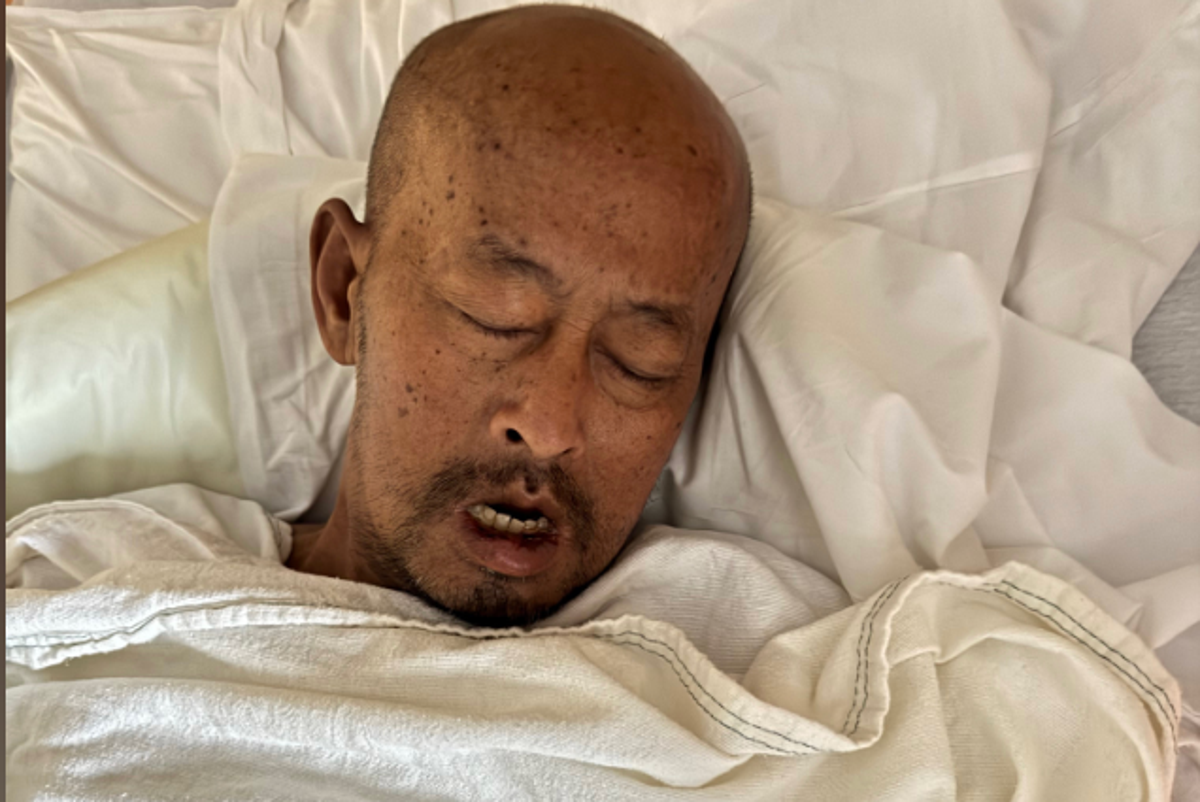
He lies now in a bed that smells of antiseptic and grief. The machines around him hum a steady, rhythmic pulse that mocks the stuttering rhythm of his own heart. His children sit by his side, watching the man who was once their fortress crumble into the mattress.
There is a specific kind of silence in a room where a preventable death is occurring. It is heavy. It feels like a physical weight on the chest of everyone present. It is the silence of "too late."
The irony is that the detention was meant to protect the integrity of a border. Instead, it eroded the integrity of a human life. We are told that these measures are necessary for the functioning of a civil society. Yet, one has to wonder about the civility of a society that watches a man’s hair fall out, watches his strength fail, and watches his eyes go dull, all while holding the keys to the pharmacy in its pocket.
Binyam’s case is not an anomaly. It is a data point. But for his wife, it isn't data. It’s the way his hand feels—cold and papery—in hers. It’s the sound of his ragged breath in the middle of the night. It’s the realization that the country they thought would be a sanctuary turned out to be a cage with a very slow-acting executioner.
The Weight of the Keys
There is a metaphor often used in these circles: the "cogs in the machine." We like this metaphor because it absolves everyone. If you are a cog, you aren't responsible for where the machine is going. You just turn when the teeth hit you.
But machines can be stopped. They can be recalibrated.
The human element of Binyam’s story is found in the gaps. It’s found in the moments where a phone call could have been made but wasn't. It’s found in the moments where a guard looked at a prisoner and saw a file number instead of a father. It’s found in the cold facts of a medical report that lists "detention" as a primary factor in the acceleration of a terminal illness.
As the sun sets outside his hospital window, the gold light hits the glass and reflects back into the room. It’s a beautiful, cruel reminder of the world continuing to turn outside. People are ordering coffee. They are catching trains. They are worrying about the mundane stresses of a Friday afternoon.
Inside, the inventory is being taken.
The plastic bin at the detention center will soon be emptied. The belt will be handed to a widow. The wallet will be tucked into a drawer. The keys will be passed to a son who no longer has a father to teach him how to use them.
The ledger will be balanced. The file will be closed. The "problem" of Binyam’s medical care will be resolved by the most permanent solution the system has to offer.
The lights in the ward flicker. A monitor lets out a long, sustained tone. In the hallway, a nurse sighs and reaches for a clipboard. The machine continues to turn, unbothered by the grit of a single, shattered life caught between its teeth.
The man who fled for his life finally found the peace he was looking for, though it was delivered by the very hands that promised to keep him out.
Would you like me to analyze the specific legal precedents regarding medical care for detainees to see how they applied in this case?