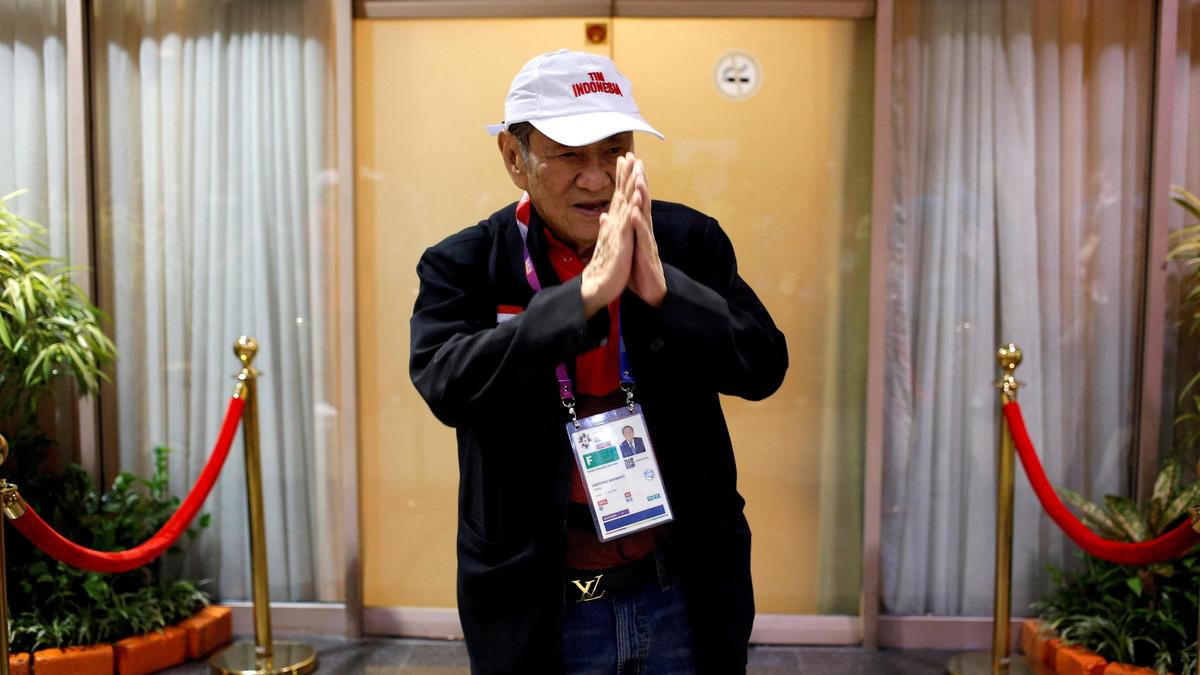
The passing of Michael Bambang Hartono at 86 marks more than the end of a personal era. It signals a profound shift in the Indonesian power structure. As the elder half of the duo that controlled the Djarum Group and Bank Central Asia (BCA), Michael was a primary architect of a private empire that accounts for a massive slice of the nation’s stock market value. His death forces a critical look at how the next generation will manage a conglomerate that is essentially a proxy for the Indonesian middle class.
Michael Hartono did not just run a tobacco company. He built a financial fortress. While the world knew him and his brother Robert Budi Hartono as the "clove cigarette kings," their real genius lay in their 2002 acquisition of Bank Central Asia. They took a bank battered by the 1997 Asian financial crisis and turned it into the most valuable lender in Southeast Asia. This wasn't luck. It was a calculated bet on the growth of the Indonesian consumer.
The Tobacco Foundation and the Pivot to Banking
The wealth began with Djarum, a company founded by their father, Oei Wie Gwan. When the factory burned down in 1963 and their father died shortly after, the brothers inherited a wreck. They didn't just rebuild; they industrialized. They moved from hand-rolled kretek to machine-made cigarettes, capturing a market that remains stubbornly loyal to nicotine despite global health trends.
But tobacco is a sunset industry. Michael knew this decades before his peers. The move into BCA was the pivot that secured the family’s dominance. By controlling the pipes through which Indonesian commerce flows, the Hartonos ensured they would profit regardless of whether people were buying cigarettes, cars, or data plans.
The BCA Monopoly and Consumer Data
BCA is not like other banks. It is a technology company with a banking license. Under the Hartonos' quiet guidance, it became the gold standard for digital transactions in Indonesia. The bank’s "sticky" deposit base—low-cost funds from millions of everyday checking accounts—provided the cheap capital that fueled the rest of the Djarum Group’s expansions into electronics, e-commerce, and telecommunications.
Michael’s strategy was invisible but omnipresent. If you live in Jakarta, you likely shop at a mall they own, use a phone network they have a stake in, and pay for it all using a BCA app. This vertical integration is the reason the family stayed at the top of the rich list for nearly two decades. They didn't just compete in the market; they owned the infrastructure of the market itself.
Professionalization Over Nepotism
One of Michael Hartono’s most significant contributions was his refusal to let the Djarum Group become a typical, bloated family business. He was famously frugal, often spotted eating at humble street stalls. This lack of pretension translated into a corporate culture that prioritized professional management over family ties.
While the "third generation" is now firmly in place—led by figures like Victor Hartono—the transition has been decades in the making. Unlike many other Indonesian tycoons whose empires crumbled once the patriarch died, the Hartonos spent thirty years hiring the best banking and tech talent from around the globe. They understood that to survive the 21st century, the family had to be the board of directors, not the day-to-day managers.
The Challenges of a Post Michael Era
The road ahead is not without friction. Indonesia is tightening its grip on the tobacco industry through annual excise tax hikes. Global ESG (Environmental, Social, and Governance) standards are making it harder for cigarette-linked wealth to find international partners. The Hartono family must now decouple their public image from tobacco entirely if they want to maintain their status as the preferred partners for Western and Chinese tech giants.
Furthermore, the competition in the digital payment space is fierce. While BCA remains the king, "super-apps" and fintech startups are nibbling at the edges of their transaction fees. Michael’s successor must decide if the bank will remain a defensive fortress or if it will take more aggressive risks in the volatile venture capital space.
Diversification into Global Sports and Media
Michael’s interests weren't limited to balance sheets. His passion for bridge—where he won a bronze medal at the 2018 Asian Games—reflected his approach to business: high-stakes, analytical, and patient. This same patience is visible in the family’s acquisition of the Italian soccer club Como 1907.
This wasn't a vanity project. It was a branding exercise and a gateway into the European market. By diversifying into global sports and media, the group is shielding itself from the sovereign risks associated with having all their assets in a single emerging market.
The Economic Shadow
We must acknowledge the sheer scale of the void left behind. The Hartono family’s net worth often fluctuated between $40 billion and $50 billion. To put that in perspective, that is roughly 4% of Indonesia’s entire GDP. When a single family holds that much sway over a nation’s liquidity, their internal succession becomes a matter of national security.
The Indonesian government has historically had a complex relationship with the Hartonos. They are too big to fail, yet their dominance limits competition in the private sector. Michael acted as a stabilizing force, a man who survived the transition from the Sukarno era to the Suharto years, and finally into the modern democracy of today. He knew how to navigate the murky waters of Indonesian patronage without getting swallowed by them.
Real Estate and Telecommunications
Beyond banking and tobacco, the family's footprint in real estate via the Grand Indonesia complex and their massive investment in towers through Sarana Menara Nusantara (TOWR) shows a preference for "toll-road" style businesses. These are businesses where they collect a fee for essential services. Whether it's a tenant paying rent or a telecom provider leasing space on a cell tower, the revenue is predictable and recurring.
This "toll-collector" mindset is Michael's true legacy. He moved the family away from the volatility of manufacturing and into the stability of rent-seeking on a massive, modernized scale.
The Transition has Already Happened
Investors often fear the "key man risk" when a founder dies. In the case of Michael Hartono, that risk was mitigated long ago. The market’s reaction to his passing has been muted because the institutionalization of his companies is complete. The systems he put in place are designed to function without him.
The real test will be the family’s unity. History is littered with the carcasses of dynasties that fought over the spoils once the patriarch was gone. Michael and his brother Robert were famously inseparable in their business dealings. If the third generation can maintain that same level of cohesion, the Djarum-BCA machine will continue to dominate the archipelago for another fifty years. If they don't, we are looking at the most significant corporate breakup in Southeast Asian history.
Watch the capital flows out of BCA over the next twenty-four months. That is where the real story of Michael Hartono’s legacy will be written.