Two lives ended on the M1 motorway this week in a way that feels like a nightmare scenario for any driver. It wasn't just a collision between vehicles. This was a "car leaves bridge" event. That specific phrase carries a weight that standard traffic reports don't. It suggests a loss of control so absolute that the physical barriers designed to keep us safe simply failed or were bypassed by physics.
When you hear about two teenagers dying in a crash like this, the immediate reaction is a mix of grief and a desperate need to know why. Early reports from Derbyshire Police and emergency services confirm the vehicle veered off the road near the bridge section of the M1, resulting in the deaths of two young people. It's a gut punch for the local community and a grim reminder that motorways, while statistically our safest roads, leave zero room for error when things go wrong at high speeds.
The Reality of What Happened on the M1
Emergency crews responded to a scene that was describe as "complex" and "devastating." The car didn't just hit a barrier; it left the elevated section of the road entirely. This happened on a stretch of the M1 that thousands of people traverse every hour without a second thought. But for these two teenagers, that routine journey turned fatal.
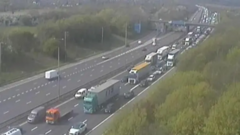
The road was closed for a significant amount of time. People stuck in the resulting gridlock often get frustrated by delays, but the length of these closures tells you something about the severity of the investigation. Police accident investigators have to map every skid mark, every piece of debris, and the exact point where the vehicle breached the perimeter of the bridge. They aren't just clearing a wreck; they're trying to reconstruct a tragedy to see if it was human error, a mechanical failure, or a flaw in the road infrastructure itself.
It's easy to speculate. People always do. They point to speed, weather, or inexperience. But until the forensic collision report is released, we're looking at a tragedy that has left two families shattered.
Why Bridge Safety is Under the Microscope
When a car goes over a bridge, it forces us to look at the engineering we trust every day. We assume that the steel and concrete railings on our motorways are impenetrable. They aren't. They are designed to redirect vehicles back onto the road, but they have limits.
Most motorway barriers are tested to withstand specific weights and angles of impact. If a vehicle hits at an extreme angle or at a speed that exceeds the barrier's rating, physics takes over. There’s a terrifying moment where the safety features of the road are overwhelmed.
National Highways and local authorities have to constantly evaluate these structures. Is the bridge height sufficient? Is the barrier type up to modern standards? In many cases, our motorway network is aging. While maintenance is ongoing, the sheer force of a modern car—which is often heavier than cars from twenty years ago due to battery tech and safety frames—puts immense pressure on older infrastructure.
Youth and Risk on High Speed Roads
It’s an uncomfortable conversation, but we have to talk about young drivers and motorway safety. Data from organizations like Brake and the RAC consistently shows that drivers under 25 are over-represented in fatal crash statistics.
It isn't always about "boy racing" or recklessness. Sometimes it’s just the lack of "muscle memory" for high-speed emergencies. On a motorway, things happen fast. A tire blowout or a sudden swerve by another driver requires an instant, measured response. Young drivers, through no fault of their own other than a lack of time behind the wheel, sometimes over-correct.
When you combine high speed with an elevated road surface like a bridge, the margin for recovery vanishes. We need to stop acting like passing a driving test makes someone an expert. Many countries use "graduated" licenses that limit night driving or the number of passengers young people can carry. The UK has resisted this, but every time two teenagers die in a single incident, the argument for those changes gets stronger.
What Witnesses and Dashcam Footage Can Tell Us
The police are currently calling for dashcam footage. This is the "black box" of modern road investigations. It takes the guesswork out of the equation.
- Pre-impact behavior: Was the car weaving or driving erratically?
- External factors: Did another vehicle cut them off or cause a "phantom" accident where the lead car crashes but the culprit drives away?
- Environmental conditions: Was there standing water on the bridge that caused aquaplaning?
If you were on the M1 near the junction in question and have a camera rolling, don't assume your footage is useless because you didn't see the impact. The minutes leading up to the crash are often more important than the crash itself.
The Ripple Effect on the Community
A crash like this isn't just a news headline. It’s a series of empty chairs at dinner tables. It’s schools dealing with the sudden absence of students. The mental health impact on the first responders—the paramedics and firefighters who had to recover the car from beneath the bridge—is also massive.
We often see these stories and move on to the next link. But the M1 closure that day affected thousands. It forced a conversation about road safety in the Midlands. It reminded everyone that the bridge you drive over every morning is actually a high-consequence environment.
Steps You Can Take to Stay Safe on Motorway Bridges
You can't control the road design, but you can control your bubble of safety. Motorway driving is about managing space.
- Increase your following distance specifically when approaching bridges or flyovers. If something happens to the car in front, you don't want to be forced into a snap-reaction swerve near a drop-off.
- Watch for crosswinds. Bridges are exposed. A sudden gust can move a small car half a lane in a second. Keep two hands on the wheel.
- Check your tires. This sounds like "dad advice," but it's the truth. Aquaplaning on a bridge is a leading cause of cars "climbing" barriers. If your tread is low, you're driving on ice the moment it rains.
- Ignore the phone. It only takes two seconds of looking down to drift into a barrier. On a bridge, that drift is final.
The investigation into this M1 crash will continue for months. The wreckage will be stripped and analyzed. The road surface will be checked for defects. While we wait for those answers, the best thing anyone can do is drive with a bit more respect for the physics involved in high-speed travel.
If you have any information or footage that could help the Derbyshire Police, contact them on 101 quoting the incident number. Don't wait. Your data might be the only thing that gives these families the answers they're looking for.