The border between Chad and Sudan is no longer just a line on a map. It's a tripwire. Following a devastating drone strike on a funeral procession in the town of Adré, the Chadian government is dropping the diplomatic niceties. They're talking about retaliation. When you have 17 civilians dead at a funeral, including women and children, "thoughts and prayers" don't cut it anymore. This isn't just another border skirmish in a long-running African conflict. It's a signal that the war in Sudan is bleeding outward, threatening to pull the entire Sahel into a vacuum of violence that nobody can control.
If you've been following the Sudanese civil war, you know it's a mess. But this specific escalation changes the math for everyone involved. Chad has long tried to maintain a precarious balance, acting as a host for hundreds of thousands of refugees while keeping its own military on high alert. That balance just shattered. For another perspective, read: this related article.
Why the Adré Drone Strike is a Point of No Return
The strike hit a crowd of mourners. Let that sink in for a second. In any culture, attacking a funeral is a moral line you don't cross, but in the context of Chadian-Sudanese relations, it's a direct provocation. The Chadian government, led by Mahamat Idriss Déby, didn't mince words. They blamed the Sudanese Armed Forces (SAF) or their affiliated militias. While Khartoum often denies these incursions, the wreckage tells a different story.
This wasn't a stray bullet. Drones require operators, targets, and intent. By hitting Adré, which sits right on the edge of the West Darfur border, the strike sent a clear message to N'Djamena. It says that no part of the border is safe and that the Sudanese conflict considers Chadian soil a fair secondary theater of war. Similar insight on this matter has been published by BBC News.
For Chad, the response isn't just about national pride. It's about survival. If Déby looks weak now, he risks internal dissent from his own military and the various ethnic groups that share ties with people across the border in Darfur. He has to push back. He basically has no choice.
The Rapid Support Forces and the Chad Connection
You can't talk about this without talking about the RSF—the Rapid Support Forces. This paramilitary group, led by "Hemedti," has been accused of using Chadian territory for logistics and recruitment. This is where things get murky and dangerous. The Sudanese government in Port Sudan (the SAF) has repeatedly accused Chad of being a "backdoor" for RSF supplies.
Whether those accusations are 100% true or just tactical propaganda doesn't matter as much as the result. The SAF now views Chadian border towns as legitimate targets if they believe those towns are being used to funnel weapons to Hemedti’s fighters.
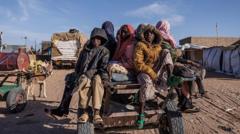
- The Refugee Crisis: Over 600,000 Sudanese refugees are now in Chad.
- The Ethnic Spillover: The Masalit, Zaghawa, and Arab tribes live on both sides. A spark in Darfur is a fire in Chad.
- The Drone Factor: The sudden influx of cheap, effective drone technology has made border "mistakes" much more lethal and frequent.
I've seen this play out in other regions. Once drones enter the mix, the barrier to entry for cross-border strikes drops. You don't need to march an army across a river anymore. You just need a pilot with a remote and a lack of conscience.
What Retaliation Actually Looks Like
When a country like Chad warns of "retaliation," people often think of a full-scale invasion. That's unlikely. Chad's military is one of the most capable in the region—they proved that during their fights against Boko Haram—but they don't want a long-term war with Sudan. They can't afford it.
Retaliation will likely be surgical. We’re looking at increased "hot pursuit" operations where Chadian troops cross the border to neutralize threats. Or perhaps the "accidental" closure of key supply routes that the SAF needs. The real danger is the tit-for-tat cycle. Sudan strikes a "rebel base" in Chad. Chad strikes a "militia post" in Sudan. Before you know it, you have two sovereign nations in a state of undeclared war.
The international community, specifically the African Union and the UN, has been painfully slow here. They issue statements. They "express concern." Meanwhile, people in Adré are burying their dead and wondering if the next buzzing sound in the sky is a bird or a bomb.
The Misconception of Neutrality in the Sahel
Many observers think Chad can just "close the border" and stay out of it. That's a fantasy. The border is a sieve. Families live on both sides. Trade happens daily. More importantly, the Zaghawa ethnic group—which the Déby family belongs to—has deep roots in Darfur. If the SAF or their allied militias target Zaghawa people in Sudan, the pressure on the Chadian government to intervene becomes an existential political issue.
Chad isn't a neutral bystander. It's a participant by geography. The strike on the mourners wasn't just a tragedy; it was a test of Chadian sovereignty. If N'Djamena doesn't respond convincingly, they’re basically telling the SAF that Chadian airspace is open for business.
Why You Should Care About This Specific Conflict
It’s easy to tune out news from Central Africa, but this matters for global security. This region is already a hotspot for extremism. When two major militaries like those of Chad and Sudan start trading blows, it creates "gray zones." These are areas where neither government has control.
Terrorist groups love gray zones. They thrive in the chaos. If Chad has to pull troops from its borders with Niger or Cameroon to defend the Sudanese front, it leaves a gap. ISIS and Al-Qaeda affiliates are waiting for that gap.
The immediate next step for anyone watching this is to keep an eye on the diplomatic channels in Addis Ababa. If the African Union doesn't get a mediation team on the ground in N'Djamena within the next 48 hours, the military's "retaliation" plans will move from the drawing board to the field.
Watch the movement of Chadian heavy armor toward the East. If the tanks start moving, the window for talking has closed. This isn't just about 17 lives lost in a tragic strike; it's about whether the next 17,000 lives will be lost in a regional war that no one is prepared to stop. Get informed on the tribal dynamics of the Zaghawa and the Masalit if you want to understand who will actually be pulling the triggers in the coming weeks. The political rhetoric is just the surface; the blood ties are what will drive the actual combat. Reach out to regional analysts or follow local Chadian news outlets—not just Western wires—to see how the "street" in N'Djamena is reacting. That’s where the real pressure for war is building right now. Outrage is a powerful fuel, and right now, Chad is running on a full tank.