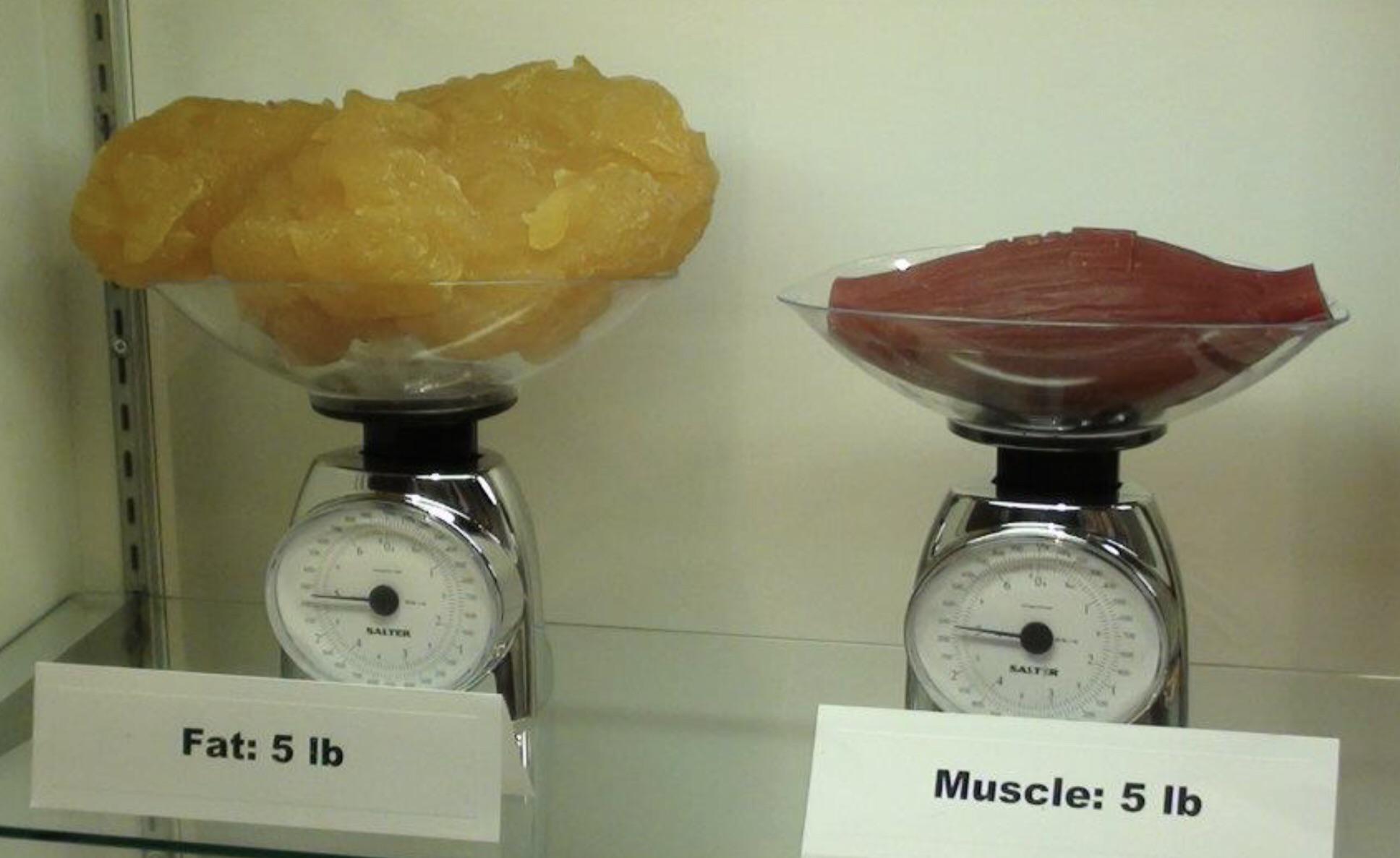
You’ve seen the picture. It’s a yellow, bumpy, somewhat disgusting blob of rubbery material sitting on a table next to a sleek, dense piece of red muscle. That’s 5 pounds of fat. It looks massive. Like, surprisingly huge. If you’ve ever held a five-pound bag of flour or a heavy dumbbell, you know the weight, but seeing it as biological tissue changes how you think about your body. It’s not just "extra weight." It’s an organ. Honestly, it’s one of the most misunderstood parts of human biology because we’ve been taught to hate it rather than understand what it’s actually doing behind the scenes.
Losing five pounds sounds small. Some people do that in a weekend after a stomach bug or a heavy gym session where they sweat a lot. But losing 5 pounds of fat? That is a massive physiological achievement. It’s roughly 17,500 calories of stored energy that your body had to decide to burn instead of keeping for a "rainy day." Most people give up because the scale doesn't move fast enough, but they don't realize that five pounds of yellow adipose tissue takes up about 15% to 20% more space than the same weight in muscle. You can lose the fat, gain the muscle, and the scale stays exactly the same even though your jeans are falling off. For a different perspective, see: this related article.
The Density Dilemma: Why the Mirror Lies
The "muscle weighs more than fat" line is a lie. A pound is a pound. Whether it’s lead or feathers, it’s a pound. The real issue is density. Adipose tissue—fat—has a density of about 0.90 g/mL. Muscle is closer to 1.06 g/mL. This means 5 pounds of fat takes up a lot more "real estate" on your frame. Think of it like a big, fluffy down comforter versus a tightly rolled yoga mat. They might weigh the same, but one fills the trunk of your car and the other barely takes up a corner.
When you lose five pounds of pure fat, you aren't just losing weight; you are shrinking. This is why people get frustrated. They see the scale "stall" at a certain number for three weeks, but their waist measurement dropped an inch. Your body is recomposing. It’s swapping out the bulky, yellow stuff for the dense, metabolic engine that is muscle. If you’re only looking at the number on the floor, you’re missing the entire story of your transformation. Further analysis regarding this has been shared by Healthline.
We also have to talk about where that fat lives. Not all fat is created equal. You’ve got subcutaneous fat—the stuff you can pinch—and then you’ve got visceral fat. Visceral fat is the dangerous stuff. It’s packed deep inside your abdominal cavity, wrapping around your liver, kidneys, and intestines. When someone loses 5 pounds of fat, and a chunk of that is visceral, their blood pressure drops, their insulin sensitivity improves, and their internal organs literally have more room to breathe. It’s a massive win for your longevity, even if it doesn't look like a huge change in a "before and after" photo yet.
The Caloric Math of 5 Pounds of Fat
Let's get into the weeds of the math. A pound of fat is roughly 3,500 calories. To burn off 5 pounds of fat, you need a deficit of 17,500 calories. That is a staggering amount of energy. To put that in perspective, a 180-pound person burns roughly 100 calories per mile of running. You would have to run 175 miles to burn five pounds of fat, assuming you didn't eat back a single calorie of that exercise.
This is why "eating less" is always more effective than "moving more" for pure fat loss, though you really need both for health. If you cut 500 calories a day from your maintenance level, it takes you about 35 days to lose those five pounds. It's a slow burn. It’s meant to be. Your body is hardwired to survive a famine. It doesn't want to let go of its emergency fuel tank easily. It fights you. It sends hunger signals. It makes you feel a little lethargic.
Why the first 5 pounds is usually a "fake out"
Ever notice how you lose five pounds in the first week of a diet and then... nothing? That's not fat. Sorry. It's mostly glycogen and water. Your body stores carbohydrates as glycogen in your muscles and liver. Each gram of glycogen is bound to about three to four grams of water. When you start a diet, especially a low-carb one, your body burns through its glycogen stores. The water goes with it. You pee it out. You look leaner in the face, and the scale drops four or five pounds in four days.
Then, week two hits. The "weight loss" stops or slows to a crawl. This is where most people quit. They think the diet stopped working. In reality, the diet just started working. You’ve cleared out the water, and now your body has to actually dig into the fat cells (adipocytes) to get energy. Real fat loss is boring, slow, and non-linear. You might lose nothing for six days and then drop two pounds overnight. That's the "Whoosh Effect." It’s a real thing where fat cells fill with water after the fat is gone, holding the shape, until they finally collapse and release the fluid.
What 5 Pounds of Fat Actually Does Inside You
Fat isn't just inert blubber. It’s a highly active endocrine organ. It’s constantly pumping out hormones and signaling molecules called adipokines.
When you have an extra 5 pounds of fat, particularly in the midsection, that tissue is producing:
- Leptin: The hormone that tells you you’re full. Interestingly, the more fat you have, the more leptin you produce, but you can become "leptin resistant," where your brain stops hearing the signal.
- Estrogen: Fat cells contain an enzyme called aromatase which converts testosterone into estrogen. This is why men with higher body fat percentages often struggle with lower libido or "man boobs."
- Pro-inflammatory cytokines: These are chemicals like IL-6 and TNF-alpha. They keep your body in a state of low-grade chronic inflammation.
When you lose those five pounds, the "noise" of these hormones starts to quiet down. Your systemic inflammation levels drop. This is why people often report that their joints feel better after losing what seems like a negligible amount of weight. It’s not just the reduced physical pressure on the knees—though that helps—it’s the reduction in chemical inflammation attacking the joints.
The Adipocyte Reality
Here is a slightly depressing fact: you don't actually "lose" fat cells when you lose weight. You just shrink them. Imagine a balloon. When you gain weight, the balloon fills up. When you lose 5 pounds of fat, the balloons deflate, but they stay there, waiting. They are like tiny, hungry ghosts. This is why it’s so easy to regain weight if you go back to old habits. Your body has already built the storage infrastructure. The only way to truly "get rid" of fat cells is through things like liposuction or cryolipolysis (CoolSculpting), but even then, if you overeat, the remaining cells will just expand or your body will create new ones in different areas.
The Visual Impact on Different Body Types
Where 5 pounds of fat sits on your body depends entirely on your genetics and your hormonal profile. It's why two people can weigh the same but look completely different.
- The Apple Shape: Usually driven by higher cortisol or insulin issues. Fat stores mostly in the belly. Losing five pounds here has the biggest health impact because it’s likely visceral fat. You’ll notice your pants fitting looser around the waist first.
- The Pear Shape: Mostly subcutaneous fat on the hips and thighs. This fat is actually "metabolically healthy" compared to belly fat, but it's stubborn as hell to lose. You might lose five pounds and not see it in the mirror at all because it’s spread out over a larger surface area.
- The "Skinny Fat" Individual: Someone with low muscle mass but high body fat. For this person, 5 pounds of fat loss is a total game changer. Because they don't have much volume to begin with, losing five pounds can be the difference between looking soft and having visible muscle definition.
Practical Insights for Shredding the Next 5 Pounds
Stop chasing the "big" number. Stop looking for the 20-pound drop in a month. It’s unsustainable and usually involves losing muscle, which wrecks your metabolism. If you want to lose 5 pounds of fat and keep it off, you have to play the long game.
Prioritize Protein Like Your Life Depends On It When you are in a calorie deficit, your body is looking for energy. It doesn't care if it gets that energy from your love handles or your biceps. If you don't eat enough protein (aim for 0.7 to 1 gram per pound of goal body weight), your body will catabolize your muscle. If you lose five pounds and three of it is muscle, you’ve actually lowered your BMR (Basal Metabolic Rate). You’ll have to eat even less just to stay at your new weight. Protein has a high thermic effect—it takes more energy to digest—and it keeps you full.
Lift Heavy Things Resistance training is the only way to signal to your body that it needs its muscle. When you lift weights while losing weight, you tell your brain, "Hey, we're using these muscles to survive, don't burn them for fuel." This forces the body to prioritize burning that 5 pounds of fat instead. You don't need to do "toning" exercises with tiny pink dumbbells. You need to squat, hinge, push, and pull.
Walk. Seriously. NEAT (Non-Exercise Activity Thermogenesis) is the secret weapon. This is all the movement you do that isn't formal exercise. Fidgeting, cleaning the house, walking to the car. High-intensity intervals are great, but they can make you so tired that you sit on the couch for the rest of the day, actually burning fewer calories overall. Walking 10,000 steps a day is a low-stress way to chip away at that 17,500-calorie deficit without spiking your cortisol or making you ravenously hungry.
Watch the Liquid Calories You can wipe out a 500-calorie daily deficit with one "fancy" coffee or a couple of beers at dinner. It's the easiest way to stall. If you're struggling to lose that last 5 pounds of fat, look at what you're drinking. Switching to black coffee, tea, and water is often the "one weird trick" that actually works because it removes the stealth calories you aren't even chewing.
Sleep is a Fat-Burning Tool If you sleep five hours a night, your ghrelin (hunger hormone) goes up and your leptin (satiety hormone) goes down. You will be hungrier, you will crave sugar, and your body will be more likely to hold onto fat due to elevated cortisol. You cannot "hustle" your way out of poor sleep. If you want to lose fat, get in bed.
Actionable Next Steps
- Get a baseline: Take photos and waist measurements today. Don't just rely on the scale.
- Increase protein: Add an extra 30g of protein to your breakfast. It stops the mid-day snack cravings.
- Track for one week: Use an app just for seven days to see where your "stealth" calories are coming from. Most people underestimate their intake by 30%.
- Strength train 3x a week: Focus on compound movements to preserve the muscle you have.
- Be patient: Real fat loss takes time. If you lose 0.5 to 1 pound of pure fat a week, you are winning. In two months, that’s a visible transformation that stays off.
Losing 5 pounds of fat is a major physiological shift. It changes your blood chemistry, your hormone levels, and your physical volume. It’s hard work, but it’s the kind of work that pays dividends for years in the form of better health and more energy. Forget the quick fixes. Just focus on the next pound. Then do it again.