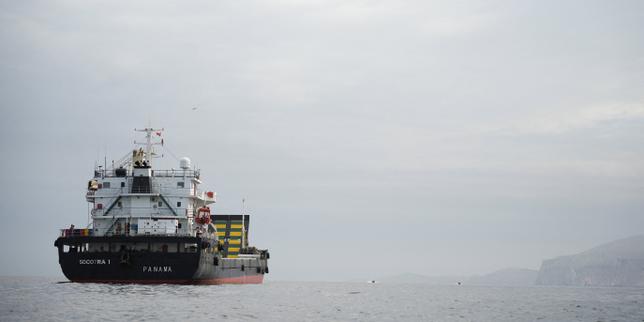
The maritime geography of the Middle East is no longer just a backdrop for trade. It is a weapon. As of Monday, the United States has shifted from diplomatic pressure to a strategy of direct economic strangulation, targeting Iranian port infrastructure with a precision that signals a new phase of regional conflict. This is not merely a symbolic tightening of existing sanctions. It is a calculated attempt to sever the primary artery of the Iranian economy while the world watches the Strait of Hormuz with bated breath.
While Washington moves to isolate Iranian shipping, a fragile and unlikely alliance has emerged between Beijing and Ankara. Both China and Turkey, nations that rely heavily on the stability of global energy flows, are demanding the unconditional reopening of the Strait of Hormuz. Their concern is not ideological. It is purely mathematical. If the world’s most significant oil chokepoint closes, the resulting price shock would trigger a global recession that neither the East nor the West can afford to manage.
The Logistics of a Port Blockade
Stopping a nation from using its own docks is a messy, complex endeavor that goes far beyond issuing a press release from the Treasury Department. The U.S. strategy focuses on P&I clubs, the protection and indemnity insurance providers that allow large vessels to enter international waters. By threatening secondary sanctions on any entity that provides insurance or technical services to ships docking at Iranian terminals like Shahid Rajaee, the U.S. effectively turns these vessels into pariahs.
Most modern shipping operates on a razor-thin margin of legality and logistics. A tanker without recognized insurance cannot pass through the Suez Canal or dock in any major European or Asian port. Washington knows that it does not need to sink ships to stop them; it only needs to make them uninsurable. This "paper blockade" is more effective than a naval picket line because it creates a legal wall that most commercial shipping companies are unwilling to climb.
However, Iran has spent decades refining a "ghost fleet" of aging tankers. These vessels operate under flags of convenience, frequently change their names, and disable their AIS transponders to avoid detection. They engage in ship-to-ship transfers in the middle of the night, blending their crude with oil from other nations to mask its origin. The U.S. move on Monday is specifically designed to target the physical infrastructure—the cranes, the berths, and the tugboat operators—making it impossible for even the ghost fleet to operate efficiently.
China and Turkey The Resistance of Necessity
China remains the largest buyer of Iranian crude, often purchasing it at a steep discount to fuel its massive industrial base. For Beijing, the U.S. attempt to block Iranian ports is a direct provocation against Chinese energy security. The Chinese Ministry of Foreign Affairs has characterized the move as a violation of international maritime law, but the real concern lies in the South China Sea precedent. If Washington can unilaterally dictate who uses ports in the Persian Gulf, Beijing fears the same logic could eventually be applied closer to its own shores.
Turkey’s position is equally precarious. As a NATO member that shares a border with Iran, Ankara views any regional instability as a domestic threat. Turkey relies on Iranian natural gas and trade routes to maintain its position as a bridge between Europe and Asia. The Turkish government’s call for the reopening of the Strait of Hormuz is a plea for economic self-preservation. They recognize that if the Strait is blocked, the cost of transit for all goods—not just oil—will skyrocket, further devaluing the Lira and stoking the fires of an already rampant inflation.
The Hormuz Chokepoint Paradox
The Strait of Hormuz is only 21 miles wide at its narrowest point. Through this tiny gap passes roughly 20 percent of the world’s petroleum liquids. It is the ultimate leverage. Tehran has long used the threat of closing the Strait as its primary deterrent against military action. The logic is simple: if Iran cannot export its oil, no one will.
Shutting the Strait would be a suicide mission for the Iranian economy, but in a cornered state, rational economic actors often vanish. The Iranian Revolutionary Guard Corps (IRGC) maintains a fleet of fast-attack craft and sea mines specifically designed for asymmetric warfare in these shallow waters. Even the rumor of mines in the Strait is enough to cause global insurance premiums to jump by 300 to 400 percent overnight.
The Physics of a Shutdown
- Sea Mines: Modern bottom-dwelling mines are difficult to detect and can be programmed to ignore small fishing boats while targeting the acoustic signature of a massive VLCC (Very Large Crude Carrier).
- Anti-Ship Missiles: Coastal batteries hidden in the rugged cliffs along the Iranian coastline provide a "no-go" zone for any vessel without sophisticated missile defense systems.
- Asymmetric Swarming: Using dozens of small, explosive-laden boats to overwhelm the defensive capabilities of a single large destroyer.
This isn't about winning a naval battle in the traditional sense. It is about making the cost of passage so high that commercial shipping refuses to enter the Gulf. The U.S. Fifth Fleet, based in Bahrain, is tasked with keeping these lanes open, but clearing mines is a slow, methodical process. Even a "successful" clearing operation could take weeks, during which the global economy would be effectively starved of energy.
The Shadow Market of Energy
When legitimate ports are blocked, the black market flourishes. We are seeing a massive shift in how oil is moved through the region. Small, independent refineries in China, known as "teapots," are the primary destination for this off-the-books crude. They operate outside the reach of the U.S. financial system, paying for shipments in Yuan or through barter systems involving heavy machinery and consumer goods.
The U.S. attempt to block these ports will likely drive more of this trade underground. It creates a perverse incentive for illicit shipping, where the risks are high but the rewards for those willing to bypass the blockade are astronomical. This shadow economy now involves a sophisticated network of shell companies based in Dubai, Singapore, and Hong Kong, all working to keep the Iranian oil flowing despite the sanctions.
Technical Vulnerabilities of the Iranian Grid
Beyond the ships, the ports themselves are vulnerable to a different kind of attack. The modern port is a marvel of automation. Software controls everything from the loading schedules to the ballast water pumps. The U.S. and its allies have increasingly turned to cyber operations to disable port infrastructure without firing a shot.
If the cranes at Bandar Abbas suddenly stop moving because of a software "glitch," the port is just as effectively blocked as if a destroyer were parked in the harbor. These non-kinetic strikes allow for a level of deniability that traditional military action does not. It is a quiet war, fought in the code of the industrial control systems that keep the global supply chain moving.
The Price of Miscalculation
The risk of a catastrophic miscalculation is at an all-time high. A single nervous sonar operator or a stray missile could ignite a conflict that spreads far beyond the Persian Gulf. The market is currently pricing in a "conflict premium," but it has not yet accounted for a total cessation of traffic through Hormuz. If the Strait closes, we are not looking at $100 a barrel oil; we are looking at **$200 or $250 a barrel**.
This would bankrupt emerging economies and force rationing in developed ones. The U.S. is betting that its domestic shale production can act as a buffer, but oil is a global commodity. Even if the U.S. produces enough for its own needs, it cannot insulate its citizens from a global price surge. The interconnectedness of the 2026 economy means that a blockade in the Middle East is a tax on every person on the planet.
Why Conventional Sanctions Failed
For years, the strategy was to target the buyers. The U.S. told countries like India and Japan to stop buying Iranian oil or face penalties. This worked for a time, but it reached a point of diminishing returns. The new strategy targets the infrastructure of the seller. By focusing on the ports, Washington is attempting to remove the choice from the buyers.
This shift acknowledges a hard truth: as long as Iran has a way to get its product to the water, someone will be desperate or greedy enough to buy it. By aiming at the berths and the loading arms, the U.S. is trying to break the physical link between the oil in the ground and the global market. It is a much more aggressive stance, and one that carries a significantly higher risk of a military response.
The Regional Domino Effect
The tension isn't limited to Iran and the U.S. Saudi Arabia and the United Arab Emirates are watching closely. While they would benefit from the removal of a regional rival, they are also the most vulnerable to Iranian retaliation. Most of their oil also has to pass through the Strait of Hormuz. If Iran chooses to lash out, the pipelines that bypass the Strait—such as the East-West Pipeline in Saudi Arabia—do not have nearly enough capacity to handle the total volume of the region’s exports.
The UAE has spent billions developing the port of Fujairah, which sits outside the Strait on the Gulf of Oman. This was intended to be their "escape hatch." However, even Fujairah is within range of Iranian missiles. There is no true safety in the region as long as the conflict remains at this boiling point. The U.S. move to block ports starting Monday has effectively ended the era of "strategic patience" and replaced it with a policy of forced confrontation.
The global economy is now hostage to a game of chicken played with tankers and sea mines. As the deadline for the port blockade passes, the focus moves from the halls of the Treasury Department to the bridge of every ship entering the Persian Gulf. The next move belongs to Tehran, and in the narrow waters of the Strait, there is very little room to maneuver.
The reality is that you cannot isolate a major energy producer without the entire world feeling the heat of the friction. Washington is gambling that the Iranian regime will buckle before the global economy breaks. It is a high-stakes bet with no clear exit strategy and a mounting list of unintended consequences.
Watch the insurance rates. Watch the transponder signals in the Gulf of Oman. When the cranes stop moving in Bandar Abbas, the ripple effect will be felt at every gas station and in every boardroom from London to Tokyo. The blockade is no longer a threat; it is a reality.