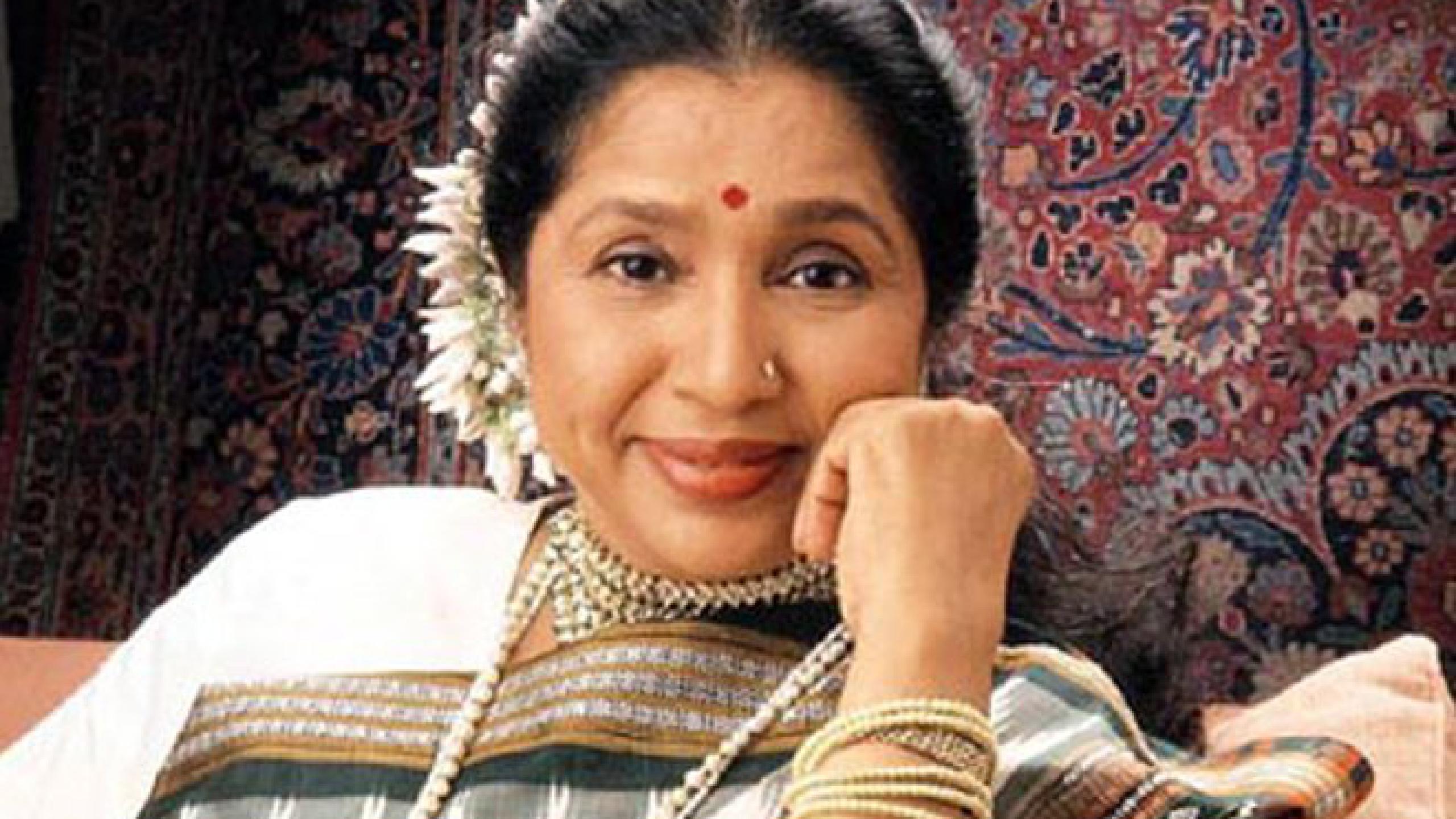
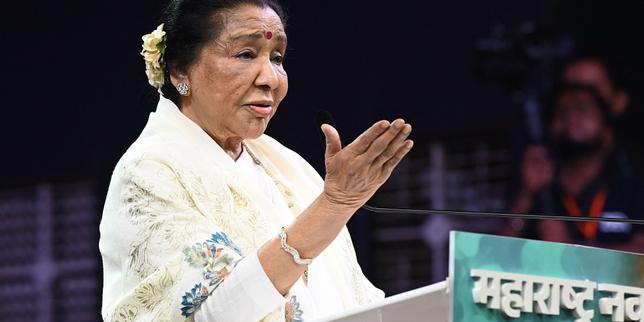
India just lost its most versatile heartbeat. Asha Bhosle, the legendary playback singer who didn't just sing songs but gave them a soul for seven decades, has passed away in Mumbai. While news outlets like The Hindu are busy filing the standard dry obituaries, they’re missing the point. We aren’t just losing a singer. We're losing the final link to an era where music was built on grit, classical training, and an unbelievable ability to reinvent oneself.
Asha wasn't just "Lata Mangeshkar’s sister." She was the rebel. She was the one who took the songs nobody else wanted and turned them into gold. If Lata was the goddess of the shrine, Asha was the fire in the kitchen and the life of the party. She leaves a void that isn't just about a missing voice on a track—it’s about the end of a specific kind of Indian excellence that we'll likely never see again.
Why Asha Bhosle Was the Greatest to Ever Do It
Most people look at the Guinness World Record for the most studio recordings and think it's just a numbers game. It's not. You don't record over 12,000 songs by being "good." You do it by being indispensable.
Think about the range. She could jump from a haunting bhajan to a cabaret number like "Piya Tu Ab To Aaja" without breaking a sweat. Most singers find a niche and stay there. They get comfortable. Asha hated comfort. She thrived on the difficult stuff. While her contemporaries were focused on maintaining a certain "pure" image, Asha was busy collaborating with Boy George and Kronos Quartet. She was global before "going global" was a marketing strategy.
She understood the assignment every single time. When RD Burman wanted something funky, she gave him grit. When OP Nayyar wanted sensuality, she gave him breathy, nuanced vocals that defined the 1950s and 60s. She didn't just sing the lyrics; she acted them. Every "hey" and "ooh" in her songs was calculated to land exactly where it needed to. That’s not just talent. It’s high-level craft.
The Struggle Behind the Stardom
It's easy to look at her success and forget how hard she had to fight. Imagine being the younger sister of Lata Mangeshkar in an industry that only had room for one queen. For years, Asha got the leftovers—the vamps, the dancers, the supporting characters. The "good girl" songs went elsewhere.
Instead of complaining, she owned those "leftover" songs. She made the "vamp" the most interesting person in the movie. She used her voice to create a personality that was sharper and more modern than anyone else on the playback scene. She survived a tough personal life, including a fractured relationship with her family early on and a marriage that didn't work out, all while raising three kids. She walked into the recording studio and left her problems at the door. That's the kind of professional discipline that’s basically extinct today.
I've always felt that her work with RD Burman was the peak of Indian pop culture. They were a match made in heaven because they were both bored by the status quo. They pushed each other. They experimented with bossa nova, rock and roll, and jazz influences in Bollywood long before anyone else dared to touch those genres. If you listen to "Dum Maro Dum," you aren't just hearing a song. You’re hearing a revolution.
The Technical Brilliance We Often Ignore
People talk about her "sweet" voice, but let’s talk about her technique. Her breath control was insane. You try singing "Chura Liya Hai Tumne" and making those transitions sound as smooth as she did. It's nearly impossible.
She had this uncanny ability to change her timbre depending on the actress she was dubbing for. If she was singing for Helen, the voice had a certain sharpness. If it was for Rekha in Umrao Jaan, it was deep, melancholic, and heavy with classical weight. That movie, in particular, proved the doubters wrong. People thought she was just a "pop" singer. Then she delivered "In Aankhon Ki Masti" and "Dil Cheez Kya Hai," and suddenly, the entire nation realized she was perhaps the most technically proficient classical singer in the commercial space.
She won two National Film Awards and eighteen Filmfare Awards, but even those don't tell the whole story. The real proof is in the fact that her songs from 1965 still sound fresh in 2026. They don't feel like museum pieces. They feel like living, breathing parts of our daily lives.
What Her Loss Actually Means for Indian Music
Let's be honest. The current state of playback singing is a mess of auto-tune and bland "indie" vibes. Nobody has that distinct "throw" in their voice anymore. Asha Bhosle represented a time when you had to get it right in one take. You had to stand in front of a full orchestra and command the room.
Her passing is a reminder that we are moving into an era of "perfect" digital music that has zero personality. Asha was all personality. Even her flaws—the occasional sharp intake of breath or a slightly raspy edge—were what made her human. She was the "People’s Singer" because she sounded like she was having the time of her life.
She also showed us how to age with grace and curiosity. She didn't stop. She opened a successful chain of restaurants. She stayed active on social media. She kept her wit sharp. She never became a bitter veteran complaining about "today's kids." She just kept being Asha.
The Songs You Need to Listen to Right Now
If you want to understand why the country is mourning, don't just read the headlines. Go listen to the work. Skip the "best of" playlists for a second and dig into the deep cuts.
- "Abhi Na Jao Chhod Kar": It’s arguably the most romantic song ever recorded. The way she plays off Mohammed Rafi is a masterclass in vocal chemistry.
- "Mera Kuchh Saamaan": This is where you hear her soul. It’s conversational, haunting, and incredibly difficult to pull off. She makes it sound like a whispered secret.
- "Aao Huzoor Tumko": Listen to the control. The way she handles the drunk, swaying rhythm of the song is pure genius.
She wasn't just a singer for the movies. She was the singer for our lives. She was there for the weddings, the heartbreaks, the road trips, and the quiet nights. You don't replace someone like that. You just try to be grateful that we got to live in the same century as her.
Mumbai feels quieter today. The industry will keep churning out hits, but that specific spark—that mischievous, soulful, "Asha" spark—is gone. The best way to honor her isn't through some grand monument. It's by turning up the volume on a 1970s vinyl and realizing that, for a few minutes, she’s still right there in the room with you.
Go find her "Asha and Friends" album or her work with Ali Akbar Khan. Realize the depth of what we've lost. Then, make sure you tell the next generation that there was once a woman who could sing anything, and she did it better than anyone else ever will. End of story.