The headlines are predictable. A government shutdown looms, and the Department of Homeland Security immediately pulls the fire alarm. They tell you the airports will grind to a halt. They warn of "security gaps" and "catastrophic closures." It is a masterclass in bureaucratic hostage-taking.
But here is the reality: The TSA is not a security agency. It is a staffing agency that specializes in friction. If the TSA actually shut down tomorrow, your flight would likely be faster, cheaper, and—mathematically speaking—no less safe. The "closure" narrative is a phantom threat used to justify an organization that has failed nearly every undercover stress test it has ever faced.
The Security Theater of Pre-Check and Power Trips
We have been conditioned to believe that a line of people in blue shirts is the only thing standing between us and total chaos. This is a fundamental misunderstanding of aviation security layers.
I have spent two decades navigating the intersection of logistics and federal oversight. I have seen the internal reports where "Red Teams"—undercover inspectors—slip mock explosives and weapons past TSA screeners with failure rates as high as 95%. When an agency misses 19 out of 20 threats in a controlled test, it isn't a "security wall." It is a beaded curtain.
The real heavy lifting of aviation safety happens long before you reach the terminal. It happens through:
- Intelligence and Signal Intercepts: Identifying threats at the source.
- Hardened Cockpit Doors: The single most effective post-9/11 security upgrade.
- Armed Air Marshals and Flight Deck Officers: Actual tactical responses, not luggage shuffling.
- Behavioral Detection: Which, ironically, is often hindered by the chaotic environment the TSA creates.
The "shutdown" threat is a bluff. Federal law requires essential employees to work. They will show up. They just won't be happy about it. The bottlenecks aren't caused by a lack of security; they are caused by a lack of morale in a system designed to be inefficient.
The Efficiency Paradox
If a private corporation ran a logistics hub with the turnover and error rates of the TSA, it would be bankrupt in a fiscal quarter. Instead, the TSA uses the threat of a shutdown to demand more funding for the same broken processes.
Consider the $10 billion annual budget. Where does it go?
- Redundant Hardware: Scanners that are outdated by the time they are deployed.
- Administrative Bloat: A middle-management layer that rivals the Pentagon.
- Public Relations: Specifically, the "Warning" articles you see every time a budget vote is near.
Imagine a scenario where we decentralized. If airports were allowed to opt-out—a provision that actually exists under the Screening Partnership Program (SPP)—and hire private contractors, the accountability would shift. Private firms can be fired for incompetence. The TSA cannot.
When the government "shuts down," the TSA doesn't stop working; it just stops pretending to be polite. The wait times increase because of "call-outs," which is code for a labor strike by another name. The closure of a checkpoint isn't a security necessity; it's a management failure.
Stop Asking if the Airport is Open
People always ask: "Will my flight be canceled during a shutdown?"
That is the wrong question. Your flight won't be canceled because of the TSA. It might be delayed because the FAA's air traffic controllers—who actually perform a skilled, irreplaceable task—are stretched thin. But the TSA? They are the ushers at a theater who have convinced you the play can't start without them checking your ticket and making you take off your shoes.
The brutal truth is that "airport closures" are almost never total. They are localized closures of specific gates or terminals to consolidate staff. It is an inconvenience, not a blackout.
How to Navigate the Manufactured Crisis
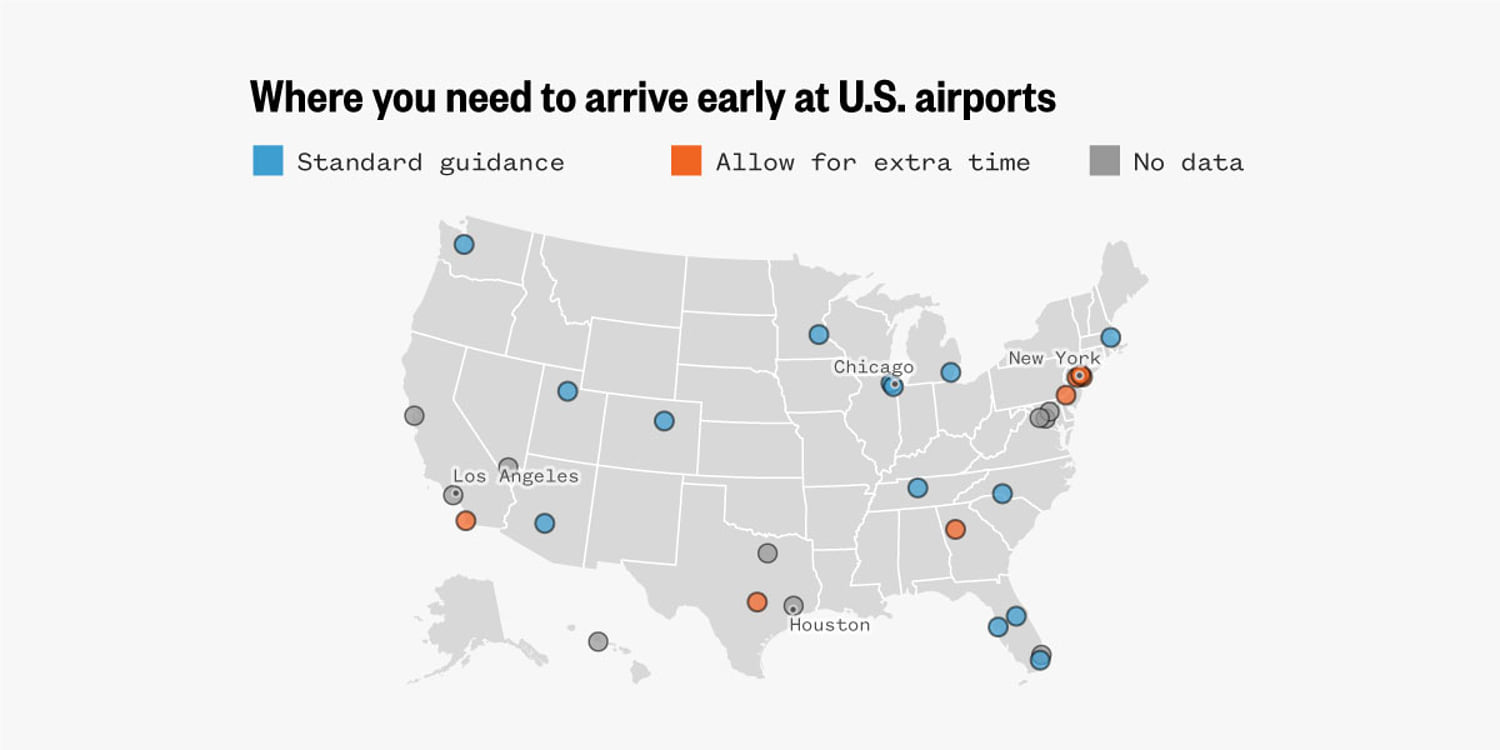
If you want to travel during a shutdown, ignore the panic. Do not show up five hours early just to sit in a terminal and buy $14 sandwiches. Do this instead:
- Fly out of secondary hubs: Smaller airports (think Manchester instead of Logan, or Long Beach instead of LAX) handle shutdowns with much more agility.
- Check the "SPP" list: Fly from airports that use private screening contractors. They are less susceptible to the "federal malaise" that hits during a shutdown.
- Call the bluff: The "warnings" are designed to make you stay home. When passenger volume drops, the TSA’s job actually gets easier.
The Risk Nobody Talks About
The real danger of a TSA shutdown isn't that a "bad actor" gets on a plane. It’s that the concentration of massive crowds in the "soft target" zone before the checkpoint becomes a sitting duck.
By creating five-hour lines in the lobby of an airport, the TSA creates the very security risk they claim to prevent. They move the vulnerability from the secure side of the glass to the unsecure side, where there are no scanners, no metal detectors, and hundreds of tightly packed bodies.
If the government were serious about security, they would eliminate the bottleneck entirely. They would move to a decentralized, tech-heavy approach that doesn't involve funneling thousands of people into a single hallway. But they won't. Because a line is visible. A line looks like "work." A line justifies a budget.
We are paying for the illusion of safety with the currency of our own time. The next time you see a headline about "TSA warnings," realize it is a press release masquerading as news. The system isn't failing; it is performing exactly as intended: to keep itself relevant by threatening its own absence.
The most dangerous thing at the airport isn't a bottle of water over 3.4 ounces. It's the bureaucracy that thinks its existence is more important than your mobility.
You don't need the TSA to be safe. You need them to get out of the way.