Military experts and satellite analysts are still picking through the debris of what happened. When Iran launched its massive wave of drones and missiles toward Israel, the world held its breath. Most of the attention naturally shifted to the high-tech interceptions over Jerusalem or the Nevatim airbase. But for the people living in the Negev desert, specifically in Arad and Dimona, the night was anything but a controlled light show. We've seen the footage of streaks across the sky, but the human cost and the strategic reality on the ground tell a much grittier story than the initial headlines suggested.
Reports began flooding in about a hundred injuries. That's a staggering number for a single night of escalation. While Israel's Iron Dome and Arrow systems are legendary, no shield is perfect. When you're dealing with a saturation attack involving hundreds of projectiles, the "statistical leaks" become a terrifying reality for those in the flight path. Arad and Dimona aren't just random spots on a map. They're sensitive, populated areas that represent the heart of Israel's southern frontier.
What actually hit the ground in the Negev
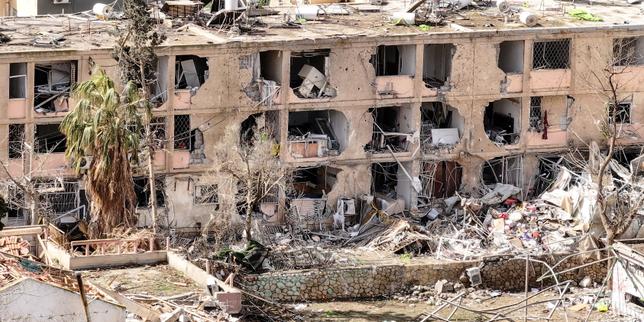
Don't let the grainy Telegram videos fool you. The "impacts" people filmed were a mix of direct hits, falling shrapnel, and the secondary effects of massive explosions. In Arad, the panic was visceral. When an interceptor hits a ballistic missile, the debris doesn't just vanish into thin air. It falls. Thousands of pounds of twisted metal traveling at supersonic speeds rained down on residential neighborhoods.
The injuries weren't all from direct blasts. In a high-stress environment like a midnight missile raid, you get a massive spike in "anxiety-related" injuries and physical trauma from people rushing to shelters. Imagine being woken up by a siren that sounds like the end of the world. You've got seconds. You trip, you fall, you're hit by shattered glass from a nearby sonic boom. That's how you get a hundred casualties in a flash. It's a logistical nightmare for local hospitals like Soroka in Beersheba, which had to pivot to mass casualty protocols instantly.
The Dimona factor
Everyone knows why Dimona is a target. It's the worst-kept secret in the Middle East. Targeting the area around the Shimon Peres Negev Nuclear Research Center is a massive gamble. Iran wanted to prove they could reach it. Israel wanted to prove they could stop it. The images showing flashes over the facility aren't just "cool war photos." They're a map of a potential global catastrophe that was barely avoided.
If a single heavy warhead had bypassed the Arrow-3 layer and hit the facility directly, we wouldn't be talking about a hundred injuries. We'd be talking about a regional shift that would've lasted decades. The fact that the city of Dimona itself saw shrapnel damage proves that the "bubble" isn't impenetrable. Residents reported houses shaking and windows blowing out. It wasn't just a firework display. It was heavy ordnance exploding at the edge of the atmosphere.
Why the injury count caught people off guard
Most people expect a binary outcome. Either the missile is shot down and everyone is fine, or it hits and everything is destroyed. Reality is messy. The high number of injuries in Arad and Dimona highlights a gap in civil defense that rarely gets talked about in Western media.
- Shrapnel Spread: Modern interceptors use "kill vehicles" to slam into targets. This creates a massive debris field. In a desert environment, these pieces can travel miles before hitting a rooftop.
- The 10-Second Rule: In the south, the warning time is often shorter than in Tel Aviv. People were caught in the open or in "soft" parts of their homes.
- Secondary Blasts: Some Iranian drones carry smaller "sub-munitions" designed to scatter on impact. Even a "downed" drone can still be a flying bomb if the warhead doesn't detonate in mid-air.
I've spoken with analysts who argue that the sheer volume of the attack was meant to paralyze the medical infrastructure. By forcing hundreds of people into ERs with lacerations and trauma, the Iranian strategy aims to create a sense of chaos that outlasts the actual explosion. It's psychological warfare as much as it is kinetic.
Misconceptions about the "Total Interception" narrative
You'll hear politicians say "99% were intercepted." Technically, that might be true in terms of the primary targets. But that 1% is where the tragedy lives. In Arad, a young girl was severely injured by shrapnel. That's the 1%. For her family, the statistics don't matter.
The images circulating on social media showing "craters" in the desert near these cities aren't always what they seem. Some are indeed from Iranian Kheibar Shekan missiles that made it through. Others are actually the spent boosters of the Israeli interceptors. Identifying the difference requires a trained eye. You have to look at the burn patterns and the twist of the metal. Most of what hit Arad was likely the result of successful interceptions where the "garbage" fell on the wrong spot.
The Arad impact zone
Arad is a quiet town. It's known for its clean air and proximity to Masada. Seeing it turned into a battlefield is a shock to the system. The images of fireballs over the town's skyline aren't just propaganda. They're evidence of a saturation strike. Iran sent enough metal into the air to ensure that even with a perfect defense, something would fall on someone's head.
What this means for the next 48 hours
The situation in the Negev is a bellwether for what comes next. If the injury count continues to rise as people emerge from their shelters and assess the damage, the pressure on the Israeli cabinet to retaliate becomes unbearable. You can't have a hundred citizens in the hospital and just call it a "defensive victory."
The medical teams at Soroka are still working through the backlog. Most of the injuries are treated and released, but the psychological scarring is permanent. The people of Arad and Dimona are now on the front line of a war that used to feel like it was happening somewhere else.
If you're tracking the situation, look at the satellite imagery of the Nevatim area and the outskirts of Dimona. Look for scorched earth. That's where the real story is. The official tallies often lag behind the reality on the ground. Keep your notifications on for local civil defense updates. If you have family in the Negev, ensure they've reinforced their "safe rooms" because the debris from an interception is just as lethal as a direct hit. The "shield" works, but it's a heavy, violent thing that leaves a mark where it falls.
Don't wait for the morning news to tell you the danger is over. Check the Home Front Command app for updated instructions on shrapnel clearance. If you see metal debris in your yard, don't touch it. It could be unexploded ordnance or toxic propellant. Call the sappers immediately.


