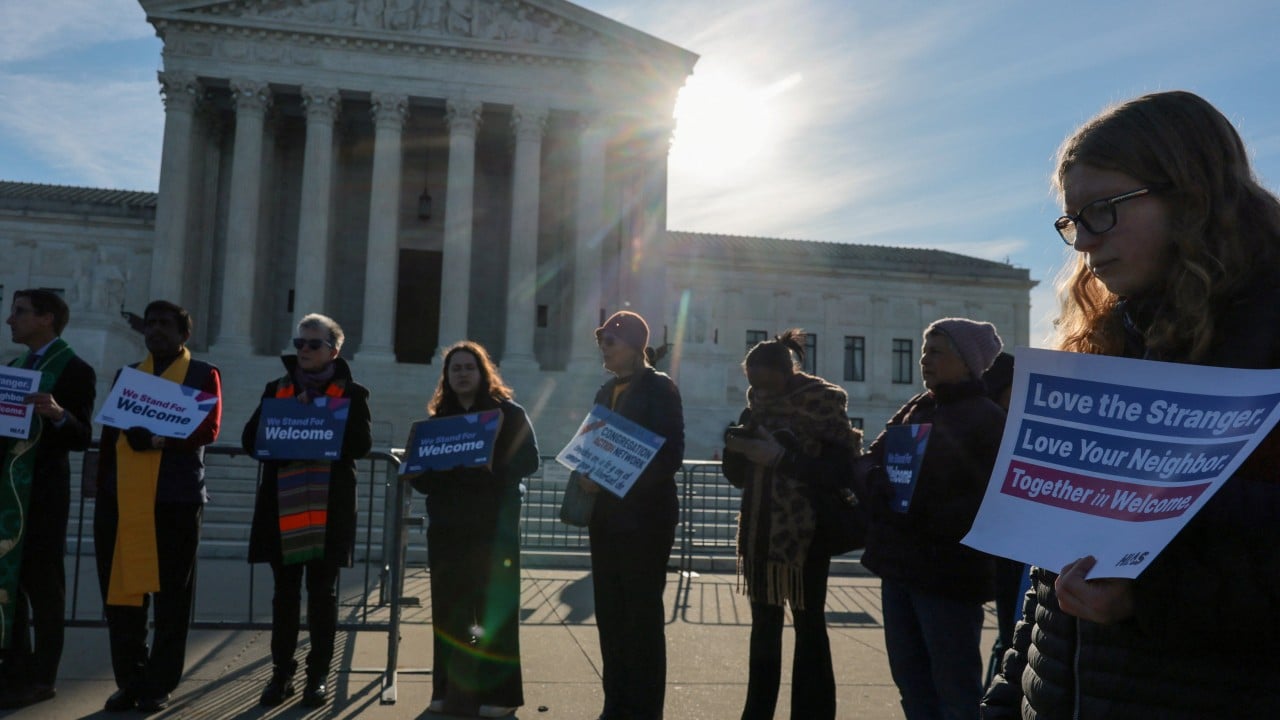
The Supreme Court just spent 80 minutes debating a single question that could change the face of the U.S. border. Does an asylum seeker "arrive" in America if they're still standing on the Mexican side of the line? It sounds like a riddle, but it's the heart of Noem v. Al Otro Lado, and based on Tuesday’s oral arguments, the conservative majority seems ready to give the Trump administration exactly what it wants.
This isn't just about legal jargon. It's about "metering"—the practice of turning away migrants at official ports of entry before they can even set foot on U.S. soil. If the Court sides with the government, it effectively grants the executive branch the power to "pause" the border whenever it feels overwhelmed. For the administration, it's a matter of capacity. For advocates, it's a loophole that makes the right to asylum vanish into thin air.
The Battle Over the Word Arrive
The legal tug-of-war centers on the Immigration and Nationality Act (INA). The law says any noncitizen who "arrives in the United States" has a right to be inspected and apply for asylum. But what does "arrives" actually mean?
Vivek Suri, the Justice Department lawyer, didn't mince words. He told the justices, "You can't 'arrive in the United States' while you're still standing in Mexico." To him, and seemingly to several conservative justices, the border is a hard line. If you haven't crossed it, the U.S. government doesn't owe you a thing.
Justice Brett Kavanaugh echoed this sentiment during the session. He questioned why Congress would "privilege someone who illegally enters" the country over someone waiting patiently at a port of entry. It's a pragmatic argument that resonates with the current administration's push for "orderly" processing, even if that order involves indefinitely long wait times in dangerous Mexican border towns.
Why This Case Matters Right Now
You might wonder why we're arguing about metering when it was a policy from Trump’s first term that the Biden administration later scrapped. The reality is that the Trump administration wants this "tool" back in its belt. While there's a separate, broader ban on asylum already in place, the ability to "meter" or turn back people at the gates provides a secondary layer of control that is harder to challenge if the Supreme Court blesses it now.
The Ninth Circuit Court of Appeals previously ruled that the government couldn't just stop people at the line. They argued that "arriving" includes the process of presenting yourself at a port of entry, regardless of which side of the painted line your boots are on. But the Supreme Court's 6-3 conservative majority looked skeptical of that interpretation. Chief Justice John Roberts spent a good chunk of time peppering the advocates for the migrants with questions about the exact physical location required to trigger legal rights.
The Humanitarian Cost of Waiting
While the lawyers talk about "statutory interpretation," people on the ground are talking about survival. When metering was in full swing back in 2019, thousands of people ended up in makeshift camps. These aren't just "waiting rooms." They’re often controlled by cartels, where kidnapping and extortion are the norm.
Justice Ketanji Brown Jackson pointed out a glaring issue with the case: it's largely built on hypotheticals. Since the policy isn't technically in effect today, she questioned whether the Court should even be ruling on it. "We don't have a policy in effect right now that we can actually rule on," she noted.
But for the conservative wing, the "capacity" argument carries more weight. The administration argues that ports of entry are like any other government office—if it’s full, you have to come back later. "It's saying our port is at capacity today, try again some other day," Suri told the Court.
What Happens if Trump Wins
If the Court rules in favor of the administration—which seems likely—the implications are massive.
- Executive Discretion: The President would have nearly unchecked power to decide when the border is "full."
- The End of the Port of Entry Safety Net: For decades, the "legal" way to seek asylum was to show up at a port. If you can be turned away there, it actually creates an incentive for people to cross illegally between ports just to get onto U.S. soil where they have more rights.
- International Friction: This ruling might fly in the face of international treaties regarding "non-refoulement"—the principle that you can't send someone back to a country where they'll be tortured or killed.
This isn't the only immigration case on the docket. We’re also waiting on rulings regarding birthright citizenship and Temporary Protected Status (TPS) for Syrian and Haitian migrants. It’s a full-court press to redefine who gets to stay in America and how they get here.
If you're tracking these changes, the best thing you can do is stay informed on the specific wording of these rulings as they drop. The "arrival" definition will be the blueprint for border enforcement for the next decade. Keep a close eye on the final opinion, expected by early July, to see if the Court adds any "reasonable delay" requirements or if they give the government a total green light to turn people back at the line.