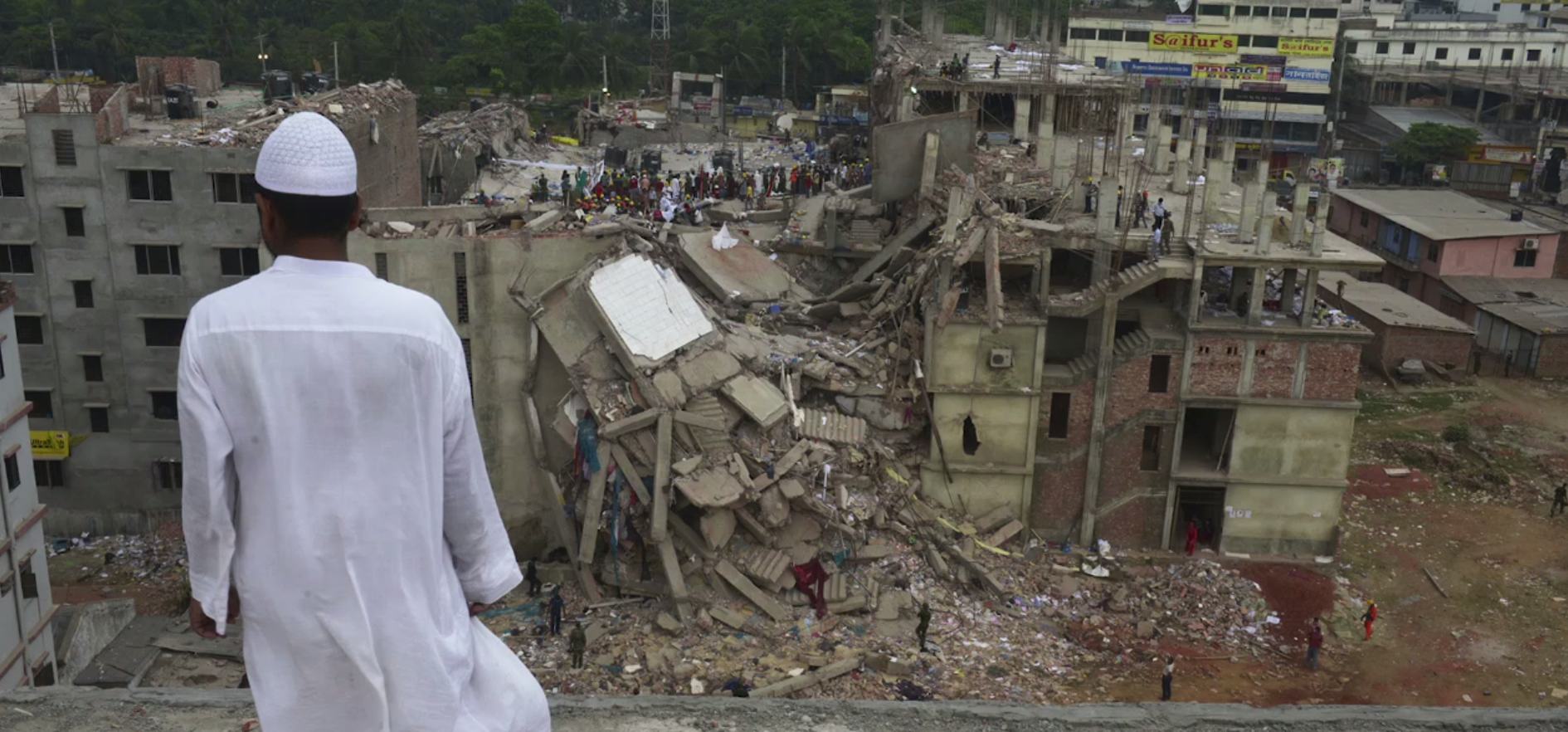
The security of Palestinian citizens of Israel is dictated by a widening gap between kinetic threat levels and the physical infrastructure of civil defense. While the Iron Dome provides a high-altitude technological shield, the terminal phase of a missile trajectory reveals a failure in ground-level protection. The disparity in safety outcomes between Jewish and Arab municipalities is not merely a byproduct of geography; it is a result of historical zoning restrictions, underfunded municipal budgets, and a reliance on outdated residential construction that lacks reinforced internal spaces.
Effective civil defense relies on three synchronized variables: early warning latency, physical hardening of structures, and spatial density of public shelters. When any of these variables fail, the risk of casualty increases exponentially. In many Arab towns in Israel—particularly in the Northern District and the "Triangle" region—all three variables are currently compromised.
The Infrastructure Gap: A Categorization of Risk
The deficit in protection can be analyzed through three distinct layers of infrastructure failure. Each layer represents a specific bottleneck in the state’s ability to provide equitable safety to its citizens.
1. The Residential Hardening Deficit
Israeli building regulations changed significantly after the 1991 Gulf War, mandating the construction of a Merkhav Mugan Dirati (Mamad), or a reinforced domestic room, in all new residential buildings. However, the age of the housing stock in Arab municipalities creates a systemic disadvantage.
- Pre-1991 Housing Stock: A disproportionate percentage of Arab households live in older, multi-generational homes built before the Mamad mandate.
- Permitting Bottlenecks: Decades of restrictive land-use policies and a lack of approved master plans have led to "unregulated" construction. Because these buildings are not officially recognized, they cannot be retrofitted with subsidized reinforcement or connected to the national civil defense grid.
- Economic Barriers: The cost of adding a Mamad to an existing structure ranges from 100,000 to 150,000 NIS. In socio-economically disadvantaged Arab towns, this capital expenditure is prohibitive without significant state intervention.
2. Public Shelter Density and Accessibility
In the absence of private reinforced rooms, citizens rely on Miklatim (public shelters). The availability of these shelters in Arab towns is statistically lower than in neighboring Jewish towns.
The logistical failure here is twofold. First, the distance between residential clusters and the nearest public shelter often exceeds the "safety window"—the time between the siren sounding and the impact. In northern Israel, this window is often as short as 30 to 60 seconds. If a shelter is more than 100 meters away, it is tactically useless for the elderly, children, or those with mobility issues. Second, many existing public shelters in Arab sectors have fallen into disrepair due to a lack of municipal maintenance budgets, rendering them unfit for long-term occupation during extended barrages.
3. Warning System Latency and Accuracy
The Home Front Command utilizes a sophisticated localized alert system. However, the efficacy of this system is diminished in Arab sectors by linguistic and technological barriers.
- Acoustic Coverage: There are documented "dead zones" where air-raid sirens are either inaudible or indistinguishable from background noise.
- Linguistic Parity: While the Home Front Command app provides Arabic alerts, the rollout of real-time instructions in Arabic has historically lagged behind Hebrew updates. This creates a cognitive delay in high-stress environments where seconds dictate survival.
The Economic and Legal Friction of Civil Defense
The lack of protection is a direct consequence of a friction-heavy regulatory environment. To understand why shelters are not being built, we must look at the "Cost of Compliance" versus the "Cost of Inaction."
For a municipality to build a public shelter, it must have clear land titles and a budget surplus. Many Arab local authorities operate under chronic deficits and are often under the administration of "appointed committees" rather than elected officials, which slows down long-term infrastructure planning. Furthermore, the National Priority Map, which determines the level of state subsidies for security infrastructure, has historically excluded several Arab border communities while including nearby Jewish ones.
The legal framework also places the onus of protection on the individual. By mandating that homeowners build their own Mamads, the state shifts the financial burden of national security onto the private citizen. In a community where 50% of families live below the poverty line, this is a recipe for structural vulnerability.
The Iron Dome Paradox
The Iron Dome’s interception logic is based on an algorithm that predicts the impact point of an incoming rocket. If the rocket is projected to hit an "open area," the system does not fire an interceptor, as each Tamir interceptor costs approximately $50,000.
This creates a specific danger for Bedouin "unrecognized villages" in the Negev. Because these villages do not appear on official state maps, the Iron Dome’s software classifies them as "open areas." Consequently, residents in these areas are exposed to direct hits without the benefit of an active defense shield. This is not a failure of the technology, but a failure of the underlying dataset that informs the technology's deployment.
Strategic Logic of Remediation
Solving the protection gap requires a departure from the "one-size-fits-all" mandate of residential Mamads. A high-authority strategic approach would involve:
- Modular Shelter Deployment: Instead of waiting for individual home renovations, the state must deploy prefabricated mobile shelters (Migoniyot) in high-density Arab neighborhoods. This bypasses the need for complex building permits and provides immediate, if basic, protection.
- The Localization of Command: Empowering local Arab leadership and emergency services (such as the "Emergency Committees") to manage local distribution of resources. Trust in state institutions is low; therefore, civil defense must be channeled through local municipal frameworks to be effective.
- Automated Mapping Updates: The Home Front Command must update its "Impact Point" database to include all populated areas, regardless of their legal zoning status. Protecting human life must take precedence over land-use disputes in the kinetic theater of war.
The current situation creates a tiered citizenship of safety. When the frequency of rocket fire increases, the lack of hardened infrastructure in Arab sectors acts as a force multiplier for casualties, leading to avoidable loss of life and increased social friction during periods of national crisis. The solution is a massive, state-funded "Hardening Initiative" that treats civil defense as a public utility rather than a private luxury.
Establish a centralized, emergency-funded task force dedicated to the immediate installation of 5,000 mobile shelters across the Northern and Southern Districts. This task force should operate under a "Security Emergency" status to bypass the standard 24-month bureaucratic cycle for land-use permits. Simultaneously, provide 100% government-backed loans for Mamad retrofitting in any residential building constructed before 1991 in the high-risk zone (within 40km of the border). This is the only pathway to decoupling physical safety from socio-economic and administrative status.