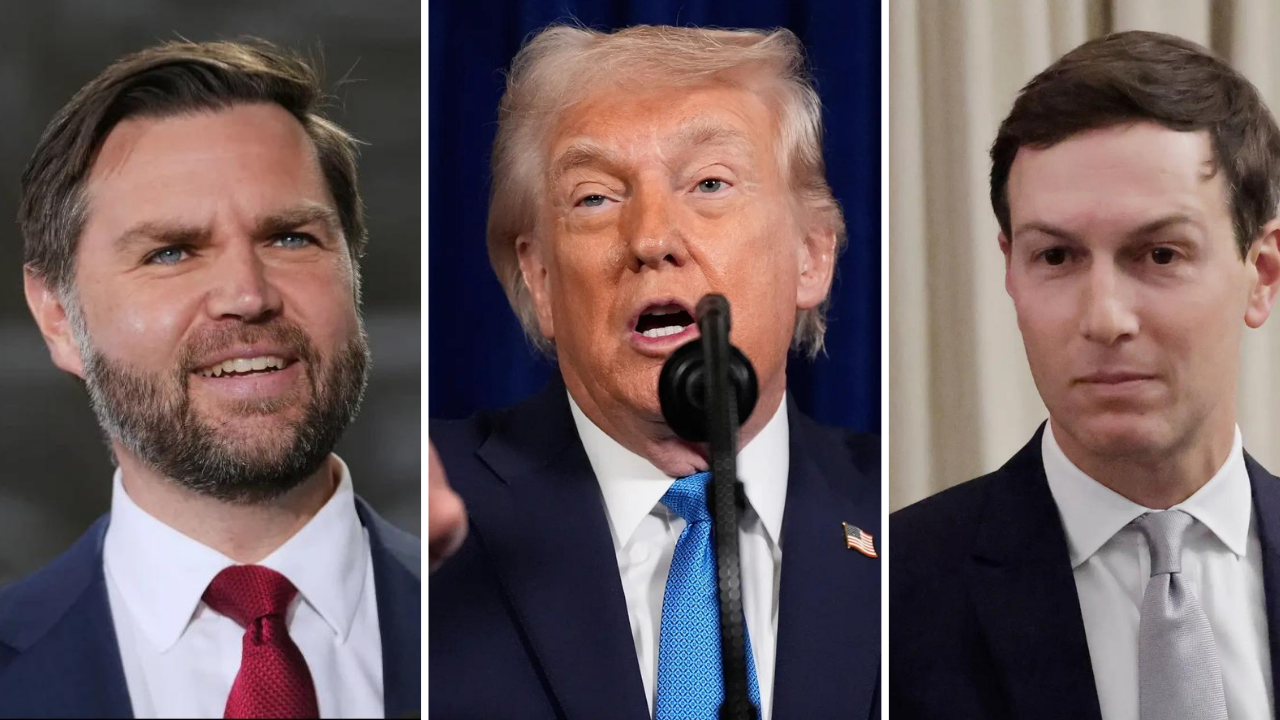
The media is obsessed with the guest list for a dinner party that has already been set on fire. While pundits scan the horizon for "key names" like JD Vance or Steve Witkoff to save the day through some mythical diplomatic masterstroke, they are ignoring the cold, hard reality: the era of the "deal" is dead. We aren't in a negotiation phase; we are in an inventory liquidation phase.
I have watched executive teams blow billions of dollars chasing "partnerships" with competitors who clearly intended to bury them. The current DC obsession with who is "talking" to Tehran is the geopolitical equivalent of that corporate delusion. You don't negotiate with a burning building; you either put the fire out or let it consume the structure.
The JD Vance Delusion
The lazy consensus suggests that JD Vance is the "philosophical" brake on the administration’s war machine. Analysts point to his "America First" isolationism as a sign that he will steer Trump toward a grand bargain. This is a fundamental misunderstanding of the Vance doctrine.
Vance isn’t an isolationist; he is a prioritizer. His skepticism of Middle Eastern "forever wars" isn't a blank check for Iranian expansion. In fact, his brand of realism demands a swift, decisive resolution rather than the decades of "strategic patience" that allowed the IRGC to build a regional missile empire. When Trump announced major combat operations on February 28, 2026, the "Vance-as-Peacemaker" narrative should have died. Instead, it’s being resurrected by people who can't distinguish between avoiding a war and finishing one.
The Myth of the "Oil and Gas Prize"
Trump recently teased a "very significant prize" regarding oil and gas offered by Tehran. The market jumped, and Brent crude took a dive. It was a classic Trumpian head-fake.
The idea that the Iranian regime—currently facing rolling blackouts and a domestic currency in freefall—is in a position to offer a "prize" to the world's leading oil producer is laughable. This isn't a negotiation; it’s a desperate fire sale.
- The Reality: Iran’s energy infrastructure is archaic.
- The Constraint: Any "deal" involving their oil requires billions in Western CAPEX that no sane CFO would approve in the current security climate.
- The Truth: The "prize" isn't a partnership; it’s a surrender of assets.
The 60-Day Deadline Was Never a Deadline
In April 2025, the administration set a 60-day deadline for a new nuclear agreement. When that passed and the 12 Day War ignited in June, the "negotiation" shifted from the boardroom to the battlefield. The current talks in Muscat and Rome aren't about "peace through strength"—they are about managing the "snapback" of global sanctions that officially killed the JCPOA’s ghost in October 2025.
If you are looking at names like Steve Witkoff or Jared Kushner and thinking "diplomacy," you are missing the play. These aren't diplomats; they are closers. Their presence signifies that the U.S. is no longer interested in the "process" of statecraft. They are looking for a signature on a pre-written document of total capitulation.
Why the "Maximum Pressure" 2.0 is Different
Critics argue that "Maximum Pressure" failed in 2018, so it will fail now. This ignores the shift in the $180^\circ$ geopolitical alignment.
- The Israel Factor: In 2018, Israel was focused on containment. In 2026, following the joint strikes on nuclear sites, they are focused on elimination.
- Internal Decay: The 2025 Iranian protests were not "unrest"—they were a systemic rejection. The regime is now cannibalizing its own security apparatus to stay alive.
- The Technology Gap: Electronic warfare and autonomous systems have rendered Iran’s "swarm" tactics and proxy networks obsolete.
The Hard Truth: There is No Middle Ground
The mistake every "expert" makes is assuming there is a middle ground where Iran keeps its enrichment and the U.S. lifts sanctions. That path closed the moment the IAEA declared Iran in breach in June 2025.
We are now operating in a binary reality. Either the regime undergoes a fundamental structural collapse, or the U.S. maintains a permanent kinetic blockade on their exports. Everything else—the letters to Khamenei, the Omani mediators, the "constructive" talks in Rome—is theater. It’s designed to provide diplomatic cover for the military buildup of the 82nd Airborne and the dual-carrier strike groups currently parked in the North Arabian Sea.
Stop Asking "Who is Negotiating?"
The right question is: "What comes after the collapse?"
Investors and policy wonks are wasting time tracking JD Vance's flight path. They should be looking at the contingency plans for the Strait of Hormuz and the post-war reconstruction of the Iranian energy sector. The current administration isn't trying to fix the old relationship. They are waiting for the old relationship to finish burning so they can buy the land.
The "peace" Trump is touting isn't a handshake; it's a repossession.
Would you like me to analyze the specific economic impact of the 2026 secondary sanctions on Asian petrochemical buyers?