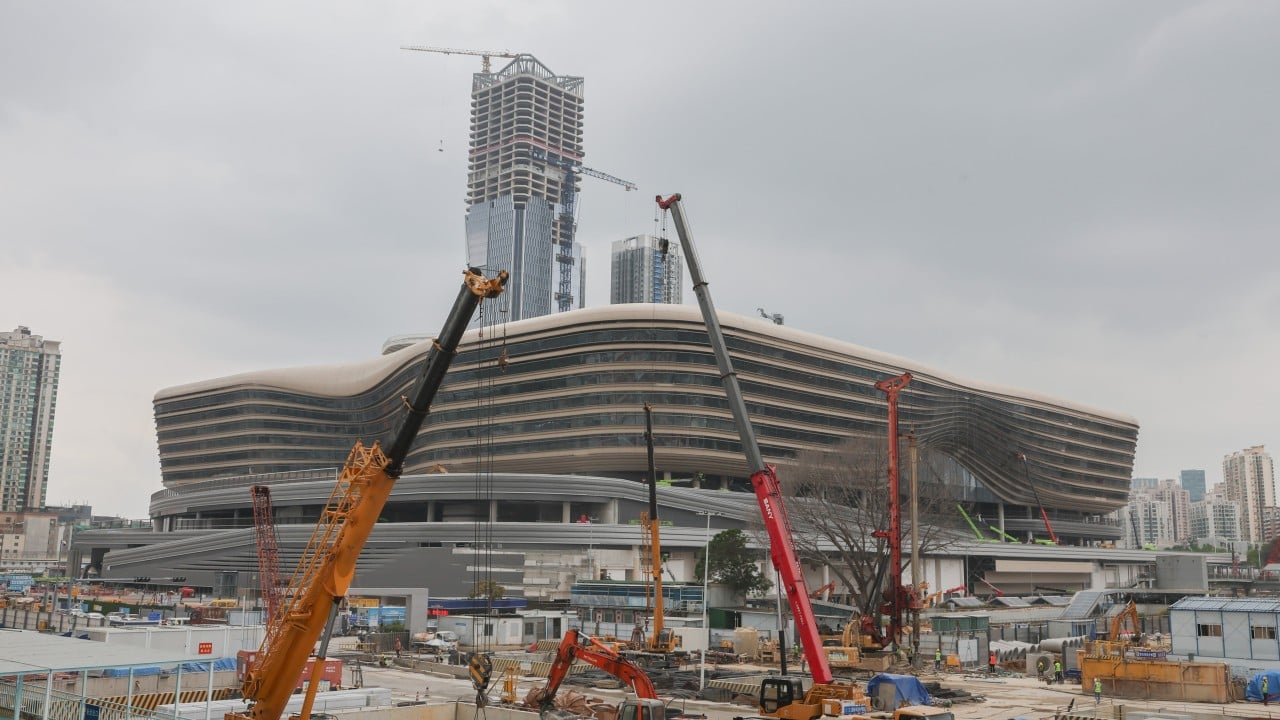
Lawmakers are panicking because they can’t find a place to park their cars at the new Huanggang Port. They are calling it a "planning oversight." They are demanding more concrete, more asphalt, and more multi-story dead zones for idle metal.
They are dead wrong.
The "lack of parking" at the Huanggang border isn't a bug. It is a feature. In fact, if the planners cave to this short-sighted pressure to turn a multi-billion-dollar transit node into a glorified suburban mall lot, they are effectively sabotaging the very connectivity the Greater Bay Area (GBA) is supposed to represent. We don’t need more parking spaces. We need to stop pretending that the private car is the future of cross-border integration.
The Myth of the Essential Commuter Car
The standard argument goes like this: "If we want professionals to move freely between Shenzhen and Hong Kong, we need to accommodate their cars."
This logic is stuck in 1995. I have spent a decade watching urban planners incinerate capital on "last-mile" solutions that only serve to congest the middle five miles. Every square meter of the Huanggang redevelopment is some of the most expensive real estate on the planet. To use it for stationary vehicles—which sit idle 95% of the time—is an economic crime.
When you build parking, you invite traffic. When you invite traffic to a border checkpoint, you create a bottleneck that ripples back into the heart of Futian and the Northern Metropolis. The goal of Huanggang isn’t to be a destination for your Audi; it’s to be a high-velocity conduit for human capital.
The Opportunity Cost of Asphalt
Let’s talk numbers that the "concerns" ignore. A single parking spot in a high-density urban core like the one surrounding Huanggang can cost upwards of $50,000 to $100,000 to construct when you factor in land value and structural requirements.
Imagine a scenario where we build 2,000 additional "essential" spots. That is $200 million spent on storage.
Now, imagine that same $200 million invested in:
- Autonomous shuttle frequency.
- Seamless biometric "Co-location" gates that actually work.
- Subterranean moving walkways or high-speed maglev links to the Lok Ma Chau loop.
Which one drives the GDP of the GBA? It’s not the parked car.
The Co-Location Trap
The competitor narrative obsesses over the "inconvenience" of the current transit setup. They want "seamless" driving. But "seamless driving" is an oxymoron at a sovereign border. Even with the best technology, 10,000 cars hitting a checkpoint simultaneously creates a physical limit that no amount of parking can fix.
The real innovation at Huanggang is the move toward Co-location of Customs, Immigration, and Quarantine (CIQ). This is designed to get people off the road and into the terminal. If you make it too easy to drive and park, you disincentivize the very mass-transit behaviors that make the "one-hour living circle" possible.
The lawmakers complaining about parking are essentially asking for a return to the days of the Man Kam To or Sha Tau Kok sprawl—low-efficiency, high-friction border crossings that serve a tiny elite of dual-plate car owners while the rest of the economy waits in line.
Why We Should Actually Delete Existing Parking
If I were running the Huanggang project, I wouldn’t just stop building new spots. I would actively price out the ones that exist.
The "People Also Ask" crowd wants to know: How can I get to Huanggang faster? The answer is never "drive yourself." The answer is "get out of the car."
By creating a "Parking Desert," you force the market to solve the problem through efficiency.
- Ride-hailing optimization: Vehicles that stay in motion don't need parking spots.
- The Rise of the "Air-Side" Economy: By forcing travelers into the terminal, you create a captive audience for high-value retail and services within the checkpoint itself, turning a cost center into a profit center.
- Transit-Oriented Development (TOD): Huanggang should be the poster child for a "Car-Free Border."
The "Dual-Plate" Elitism Problem
We need to be brutally honest about who these parking spaces are for. They aren't for the average worker. They are for the shrinking demographic of dual-plate vehicle owners.
These plates are status symbols, often trading for six figures on the secondary market. Lawmakers are effectively asking for public subsidies—in the form of prime real estate—to support a legacy transportation method for the ultra-wealthy.
The GBA’s future belongs to the MTR, the Intercity Railways, and the Autonomous Bus. Every dollar spent on a parking garage at Huanggang is a dollar stolen from the infrastructure that actually moves the masses.
The Downside of This Truth
I’ll admit the friction: if you don’t build parking, the first two years of operation will be a PR nightmare. People will complain. They will be late for meetings. They will take to social media to cry about the "lack of foresight."
But that friction is the only thing that changes behavior. If you make it comfortable to be inefficient, people will stay inefficient.
We are building a megalopolis of 80 million people. If even 1% of them decide to drive to the border because "parking is easy," the entire system collapses under its own weight.
What You Should Actually Do
Stop asking for more parking. Start asking for:
- Dynamic pricing for border access: Make it so expensive to drive a private car to Huanggang that only those with a literal emergency would do it.
- Micro-mobility hubs: Instead of a car park, build a massive, automated bicycle and e-scooter garage.
- The "Check-in Anywhere" system: Let travelers drop their bags in central Futian or West Kowloon and have them appear at the other side of the border, removing the "need" for a private trunk.
The obsession with parking is a symptom of a localized, small-town mindset. Huanggang is the gateway to a global tech powerhouse. It’s time we started acting like it.
If you can't get to the border without your private car, you aren't ready for the future of the Greater Bay Area. Stay home. Leave the lanes open for the people moving at the speed of the 21st century.
Stop digging the hole. Sell the shovels and buy a train ticket.