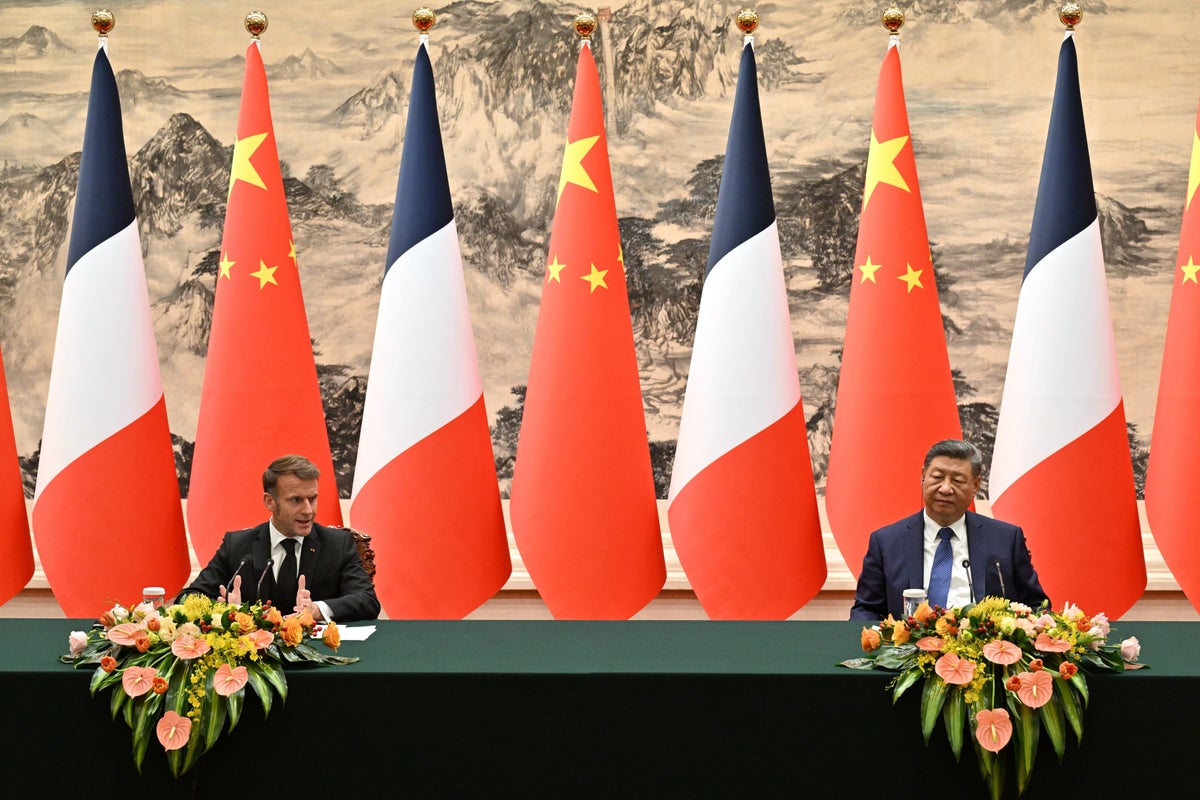
The execution of a French national by the Chinese state serves as a definitive case study in the irreconcilable conflict between Western humanitarian diplomacy and the Chinese Communist Party’s internal stability doctrine. This event is not an isolated judicial act but the result of a calculated friction between two distinct legal architectures: the European Union’s abolitionist mandate and China’s "Strike Hard" anti-drug policy. When these systems collide, the outcome is determined by the prioritization of domestic sovereignty over international reputational risk.
The Dual-Track Legal Conflict
The tension in this case stems from the divergence in how France and China define the social cost of narcotics. In the French legal framework, drug trafficking is a high-level criminal offense, yet it remains subject to the proportionality principle, which excludes the death penalty as an irreversible violation of human rights. China, conversely, operates under a utilitarian security model where the death penalty functions as a macro-deterrent against perceived existential threats to social order.
The Mechanism of the Strike Hard Policy
China’s use of capital punishment for non-violent drug offenses is rooted in a historical trauma regarding opium and a contemporary fear of internal destabilization. The legal mechanism involves a low threshold for the death penalty:
- Possession or trafficking of more than 50 grams of heroin or methylamphetamine can trigger a capital sentence under Article 347 of the Criminal Law of the People's Republic of China.
- The judicial process prioritizes the "severity of the social harm" over the individual's intent or background.
- The Supreme People's Court (SPC) must approve all death sentences, but in high-profile drug cases, the SPC rarely overturns lower court rulings if the quantity thresholds are met.
This creates a structural bottleneck for foreign diplomats. France, utilizing its diplomatic "protection of nationals" protocol, attempts to intercede at the political level. However, China views such intercession as an infringement on judicial independence—a concept they define as the state's right to apply its laws without external interference.
The Three Pillars of Chinese Judicial Assertiveness
To understand why diplomatic appeals almost invariably fail in these scenarios, we must analyze the three core pillars that support China’s refusal to grant clemency to foreign nationals.
1. The Internal Equality Doctrine
The Chinese leadership faces a significant domestic risk if they are seen as providing "extraterritoriality" or special treatment to foreigners. In the Chinese public consciousness, historical "unequal treaties" where foreigners were exempt from local laws are a source of profound resentment. Therefore, executing a French citizen serves a domestic signaling function: it demonstrates that the law is applied uniformly, regardless of the offender's passport. This "equality before the law" argument is used to neutralize criticism from the international community while bolstering nationalist support at home.
2. The Deterrence Multiplier
The Chinese Ministry of Public Security views the execution of foreign traffickers as a critical component of their border security strategy. By maintaining a zero-tolerance policy that includes execution, the state aims to increase the "risk-cost" for international syndicates attempting to use China as a transit hub. The logic is strictly economic; if the cost of entry is life, the supply chain should, in theory, divert elsewhere.
3. Diplomatic Reciprocity and Leverage
Executions of foreign nationals often coincide with periods of high tension or serve as a barometer for bilateral relations. While the judicial process follows its own timeline, the final sign-off for execution is a political lever. If France or the EU is applying pressure on trade or human rights issues, China is less likely to grant a stay of execution as a "gesture of goodwill." The execution becomes a hard-power statement that Western values do not dictate Chinese internal outcomes.
The Failure of the European Diplomatic Toolkit
France’s approach to saving its citizens on death row typically follows a predictable, yet often ineffective, escalation ladder.
- Consular Access: Ensuring the physical well-being of the prisoner and legal representation.
- Legal Appeals: Exhausting the Chinese appellate system, which has a success rate for foreigners that is statistically negligible in drug cases.
- High-Level Political Pressure: Calls between Heads of State or Foreign Ministers.
The failure of this toolkit lies in its reliance on "shaming" or "reputational damage." For a Western democracy, an execution is a reputational catastrophe. For the Chinese state, the perceived damage to international standing is a secondary concern compared to the primary concern of maintaining the integrity of the domestic legal system. The Western assumption that China will eventually trade a life for better trade relations ignores the fact that China views the integrity of its criminal code as a non-negotiable component of its sovereignty.
Logistics of the Final Appeal
In the case of the French national convicted in 2010, the timeline from conviction to execution highlights the exhaustion of the "legal-diplomatic loop." Between 2010 and the eventual execution, multiple rounds of "quiet diplomacy" occurred. The transition from a life sentence (which is sometimes granted in lower-stakes cases) to a death sentence usually implies that the state has determined that the individual's role in the trafficking network was significant enough to warrant the maximum deterrent.
The final stage of the Chinese capital process is opaque. Once the Supreme People's Court issues the final order, the execution is typically carried out within days. Families are often notified only shortly before or after the event. This speed is designed to prevent a last-minute media surge or international mobilization that could complicate the execution's logistics.
Quantifying the Geopolitical Impact
While the execution creates a temporary freeze in diplomatic relations—symbolized by the summoning of ambassadors or the cancellation of state visits—the long-term impact on trade and security cooperation is often muted. This is the "decoupling of ethics and economics" that defines modern Sino-European relations.
- Trade Resilience: Despite the "outrage" expressed by the Quai d'Orsay (the French Foreign Ministry), major aerospace, luxury, and energy contracts rarely face cancellation over a single judicial execution.
- Security Paradox: Both nations continue to cooperate via Interpol and other channels on counter-terrorism and cybercrime, even as they remain fundamentally divided on the death penalty.
The execution acts as a stress test that reveals the limits of European influence. It confirms that while France can project power through the EU's economic bloc, it lacks the jurisdictional reach to protect its citizens from the harsh realities of the Chinese penal code.
Strategic Realities for International Actors
The execution of a French citizen in China necessitates a recalibration of risk for foreign nationals and corporations operating in the region. The "Diplomatic Shield" is largely an illusion when it comes to "red line" crimes like drug trafficking.
Future diplomatic strategies must move away from post-conviction appeals—which are essentially dead on arrival—and toward aggressive pre-emptive legal intervention and public awareness. For the French state, the recurring nature of these incidents suggests that a more robust, multilateral EU approach is the only way to shift the cost-benefit analysis for Beijing. However, as long as China views the death penalty as a pillar of social stability and a defense against "Western spiritual pollution" or crime, the jurisdictional friction will remain absolute.
Organizations must recognize that in the Chinese legal theater, the "Human Rights" argument is not just ignored; it is viewed as a subversive tool of foreign policy. The only effective counter-strategy is one that speaks the language of Chinese domestic security requirements, identifying ways to mitigate the "social harm" of the crime without requiring the state to back down on its sovereign right to execute. Short of this, the pattern of execution followed by brief diplomatic cooling will remain the status quo.


