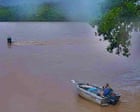
The humidity in Far North Queensland doesn't just sit on your skin; it owns you. It is a heavy, wet blanket that smells of salt spray and rotting mangroves. Usually, this is just the price of admission for living in paradise. But when the barometric pressure drops and the birds stop singing, that same air starts to feel like a warning.
A tropical low is a deceptively clinical term. It sounds like a minor economic dip or a quiet mood. In reality, it is a massive, swirling engine of water and wind. Right now, that engine is idling off the coast, and it is pointed directly at the living rooms of thousands of Australians.
Consider a woman named Sarah. She isn't real, but she represents every person currently standing on a porch in Cairns or Port Douglas, looking at a darkening horizon. She has lived through the "big ones" before. She knows the drill: tape the windows, bring in the outdoor furniture, and check the batteries in the torch. But this time, the directive from the authorities isn't just to hunker down. The message coming through the radio and the emergency pings on her phone is more urgent.
Seek higher ground.
The Anatomy of an Invisible Threat
When a tropical low approaches, the danger isn't just the wind that rips the iron sheets off roofs. The real killer is the water. A storm surge acts like a bulldozer made of brine. As the low-pressure system moves toward the coast, it literally pulls the ocean upward. It creates a mound of water that the wind then shoves onto the land.
This isn't a wave that breaks and retreats. It is a steady, relentless rise. It ignores sandbags. It laughs at front doors. If you are in its path, your house becomes a bowl, and the Coral Sea becomes the soup.
The Bureau of Meteorology has been tracking this specific system with a precision that would have seemed like sorcery thirty years ago. They see the tightly packed isobars. They see the sea surface temperatures that act as high-octane fuel for the storm. For the residents of the far north, the data points aren't just lines on a map. They are the difference between a dry carpet and a total loss.
Why We Stay and Why We Go
There is a specific kind of psychological friction that happens when a person is told to leave their home. Your home is your fortress. It contains your photos, your heirlooms, and the physical manifestations of your life's work. To walk away from it while it is still perfectly dry feels like a betrayal of your own survival instincts.
But the ocean doesn't care about your memories.
The directive to seek higher ground is a recognition of the limits of human engineering. We have built beautiful cities on the edge of the world’s most magnificent reef, but we are guests there. When the tide decides to reclaim the coastal fringe, the only winning move is to be somewhere else.
Emergency services aren't being dramatic when they issue these orders. They are looking at the topography. They know which streets will become rivers. They know which suburbs will be cut off from help once the bridges go under. To stay in a low-lying zone during a storm surge is to gamble with a dealer who never loses.
The Logistics of a Great Migration
Imagine the sudden, frantic choreography of a neighborhood evacuating. It’s the sound of car doors slamming and the sight of neighbors who haven't spoken in months suddenly coordinating who is taking whose elderly mother.
The roads heading inland and upward become clogged with a slow-moving parade of SUVs, hatchbacks, and utes. Everyone has the same look in their eyes: a mix of irritation at the traffic and a cold, gnawing fear of what they might find when they return.
This isn't just a logistical challenge for the police and the SES. It is a massive communal stress test. The evacuation centers—often school gyms or community halls—become temporary islands of humanity. There is the smell of instant coffee and the low murmur of dozens of strangers trying to pretend they aren't terrified.
- Pack the essentials: medicine, documents, and enough water for three days.
- Don't forget the pets; they feel the pressure drop even more acutely than we do.
- Check on the person next door who doesn't have a car.
These aren't suggestions. In the face of a tropical low, they are the social contract written in ink.
The Weight of the Wait
The hardest part isn't the wind. It’s the waiting.
Once you are on higher ground, once you are safe, the silence of the storm’s approach is deafening. You refresh the radar on your phone until the battery starts to die. You listen to the rain hit the roof of the shelter, wondering if that same rain is currently flooding your kitchen.
We often talk about natural disasters as sudden events, but they are actually long, grueling marathons of anxiety. The "tropical low" might never even reach Category 1 cyclone status, but that doesn't matter. If it dumps 500 millimeters of rain in twenty-four hours while the tide is high, the result is the same. The geography of the Far North—where the mountains of the Great Dividing Range meet the sea—creates a natural funnel. The water has nowhere to go but up and over the banks.
This is the reality of life in the tropics. It is a beautiful, lush existence punctuated by moments of extreme vulnerability. We live there because the sun is golden and the rainforest is ancient, but we must respect the fact that the landscape remains untamed.
The Morning After the Rain
Eventually, the center of the low will cross the coast or veer back out to sea. The winds will die down to a stiff breeze, and the heavy, oppressive clouds will begin to break.
The descent back to the lowlands is always a somber journey. You drive past the debris—the palm fronds, the scattered bins, the occasional displaced boat. You look for the high-water mark on the trunks of the trees.
For some, the return will be a relief. Their house stood just high enough. For others, the front door will open to reveal a thick layer of silt and the heartbreaking smell of a home that has been drowned.
But even in that devastation, there is a certain resilience that defines the people of Queensland. They are a community that knows how to use a squeegee and a mop. They know how to rebuild. They understand that the "higher ground" isn't just a physical location on a hill; it is a state of mind. It is the collective decision to prioritize life over property, to listen to the warnings, and to look out for one another when the sky turns black.
As the next system begins to brew in the Coral Sea, the lessons remain. The ocean is vast, the wind is indifferent, and the only thing we truly own is our ability to get out of the way.
The water is coming. It’s time to move.