The tally room at the Adelaide Convention Centre usually hums with the electric, jagged energy of a caffeine-fueled counting war. But on this particular Saturday night, as the numbers flickered across the massive LED screens, a different kind of energy took hold. It was the heavy, suffocating weight of a shift that no one in the room quite knew how to name yet. For the Liberal Party, the stalwarts of the Australian Right, the air didn’t just feel thin. It felt like it was escaping the room entirely.
Peter, a volunteer who had spent thirty years handing out how-to-vote cards in the leafy, affluent suburbs of Adelaide’s east, stood by the buffet with a lukewarm paper cup of tea. He had watched the tallies for the South Australian Senate seats with the practiced eye of a man who remembered the glory days of the Howard era. Back then, the math was simple. You held the center, you spoke to the quiet Australians, and you won.
Tonight, the math had broken.
The "sobering lessons" mentioned in the morning headlines weren't just abstract political concepts for Peter. They were the faces of his neighbors who had walked past his plastic bunting without making eye contact. They were the quiet, polite "no thank yous" from people who used to be the bedrock of the party. While the Liberal primary vote sputtered, a different color was bleeding into the map.
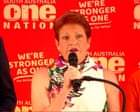
One Nation had secured a seat.
It wasn't a fluke. It wasn't a glitch in the system. It was a roar from the fringes that had finally found its way into the hallowed halls of the upper house. To understand how a party often dismissed by the urban elite as a relic of the past managed to plant a flag in South Australian soil, you have to look past the polling data. You have to look at the kitchen tables where the lights stay off a little longer each night to save on the power bill.
The Geography of Discontent
Politics is often treated like a chess match played by people in suits, but for the voter in regional South Australia or the outer-suburban mortgage belt, it feels more like a game of survival. When the Liberal Party looks in the mirror, they see a "broad church." When the disillusioned voter looks at the Liberal Party, they often see a group of people arguing about internal bylaws while the price of a liter of diesel climbs toward the ceiling.
One Nation doesn't offer a 400-page policy white paper. They offer a target for the frustration. They speak a language that is blunt, unpolished, and intensely human. In the vacuum left by a Liberal Party struggling to define its own identity—torn between its conservative base and its moderate, suburban wing—One Nation walked in and sat down at the table.
Consider the hypothetical case of a small business owner in a town like Port Pirie. Let's call him Jim. Jim doesn't care about the intricacies of factional warfare in Canberra. He cares that his transport costs have doubled. He feels that the major parties are more interested in global climate targets than whether his shop will be open in six months. When a candidate stands on a stump and says, "They've forgotten you," Jim doesn't see a radical. He sees a mirror.
The Liberal defeat in South Australia wasn't just a loss of seats; it was a loss of soul. The party found itself squeezed. On one side, the "Teal" independents were chipping away at the moderate, professional heartlands, demanding more action on integrity and the environment. On the other, One Nation was cannibalizing the conservative fringe, whispering that the Liberals had become "Labor Lite."
The Ghost in the Machine
The swing toward One Nation in the Senate reflects a growing segment of the electorate that no longer believes the system is designed to help them. This isn't just a South Australian phenomenon, but the state's unique economic profile—with its heavy reliance on manufacturing, defense, and agriculture—makes it a perfect laboratory for this kind of political disruption.
The numbers are stark. While the Liberal Party saw its primary vote dip to levels that would have been unthinkable a decade ago, One Nation’s Sarah Game managed to navigate the complex web of preferences to secure a spot. It was a masterclass in capitalizing on the "exhausted voter."
Imagine the ballot paper. It’s a meter long. It’s confusing. For many, voting for a minor party isn’t an endorsement of every single policy that party holds. It is a protest. It is a way of saying "none of the above" while still participating in the ritual. The Liberal Party's "sobering lessons" involve realizing that they can no longer rely on being the "default" choice for anyone who isn't a Labor voter.
The middle ground has become a minefield.
The Language of the Lost
There is a specific kind of silence that follows a political landslide. It’s the sound of strategists staring at spreadsheets, trying to find a narrative that makes the pain go away. But the narrative isn't in the spreadsheets. It’s in the language.
The Liberals spent the campaign talking about economic management and "safe hands." These are concepts, not stories. One Nation talked about "taking the country back." That is a story. It’s a story with heroes, villains, and a clear sense of direction, however controversial that direction might be.
To win back the ground they’ve lost, the Liberals don't just need better policies. They need to find a way to talk to people like Peter and Jim again without sounding like they are reading from a teleprompter. They need to acknowledge that for many Australians, the "Australian Dream" feels like it’s been put behind a glass case with a "Do Not Touch" sign on it.
The rise of the minor parties is a symptom of a deeper malaise. When the two-party system fails to provide a sense of security, people look for the edges. They look for the voices that aren't muffled by the requirements of being a "government-in-waiting." One Nation has the luxury of being loud because they don't expect to hold the keys to the treasury. They only expect to hold the balance of power.
The Long Walk Back
The sun rose over Adelaide the Sunday after the election, hitting the glass of the quiet Convention Centre. The posters were being peeled off the walls. The "sobering lessons" were being drafted into memos that would likely be ignored by those most responsible for the loss.
There is a temptation in the wake of such a defeat to swing wildly in one direction. To chase the Teals by moving left, or to chase One Nation by moving right. But the real lesson isn't about moving on a horizontal line. It’s about moving vertically—down into the real lives of the people who feel the major parties have become a private club for the well-connected.
In the outer suburbs, where the lawns are a little less green and the commutes are a little longer, the result of the election wasn't a shock. It was an inevitability. If you stop listening to the heartbeat of the street, you shouldn't be surprised when the street finds a different rhythm to march to.
The Liberal Party now sits in a cold, quiet room of its own making. The door is heavy, and the lock is rusted. Outside, the world has moved on, finding new voices and new champions, however unlikely they may seem.
The blue ribbon has been frayed. It wasn't cut by a single blow, but by a thousand small nicks of neglect, until finally, the weight of the discontent was enough to snap the silk.
Peter walked out of the tally room, his tea long since gone cold, and looked at the empty streets. He realized then that the party hadn't just lost an election. It had lost the ability to hear the music of the ordinary. And until they learn the tune again, the seats at the table will continue to be filled by those who aren't afraid to sing off-key, as long as they sing loud enough to be heard.
The ballots are counted, the speeches are over, and the new senators are packing their bags for Canberra. But the silence in the heartlands remains, a vast and echoing space waiting for someone to fill it with a story that actually rings true.