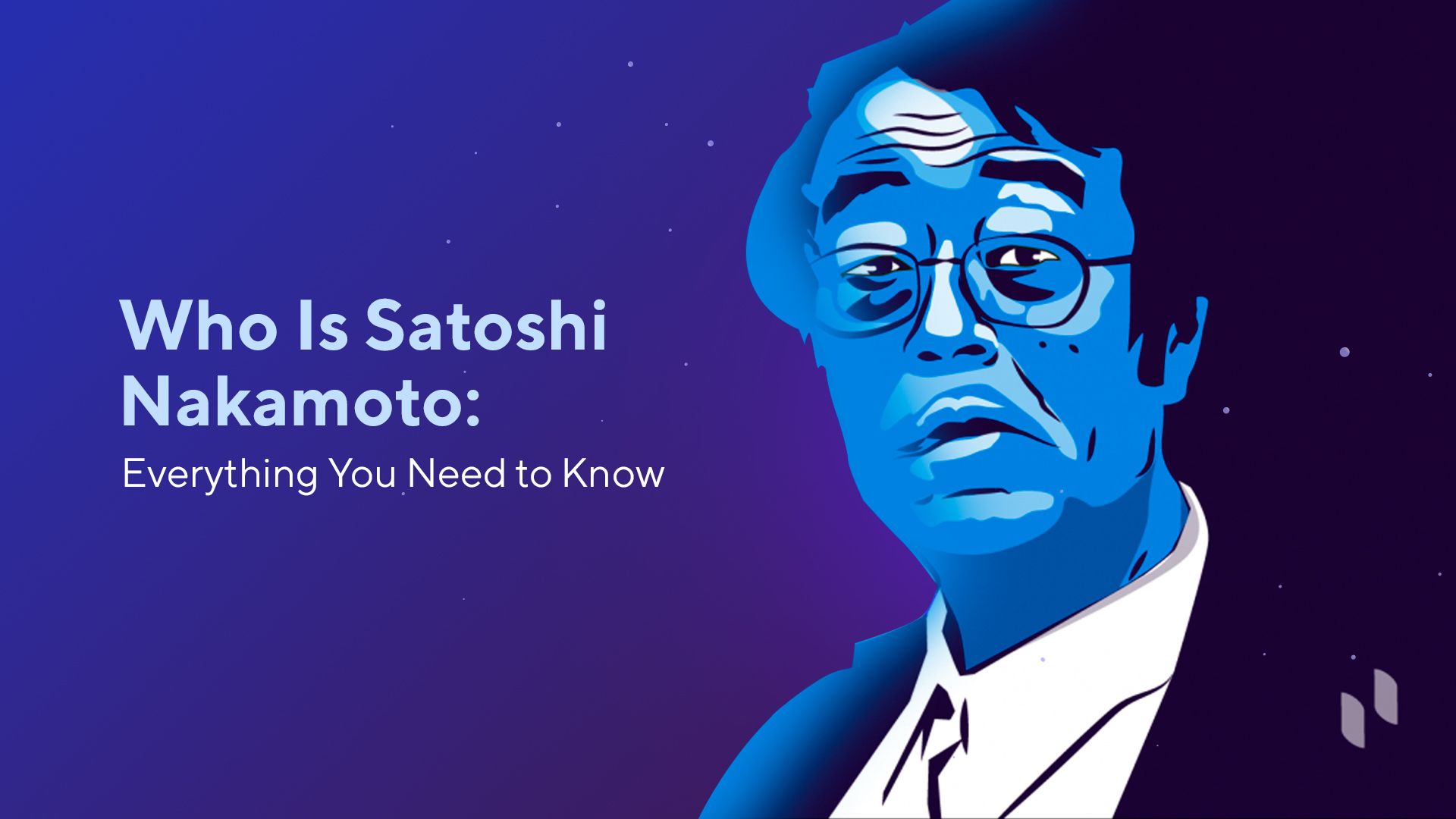
The hunt for Satoshi Nakamoto is the ultimate midwit trap. For fifteen years, journalists have wasted thousands of ink inches and millions of dollars trying to unmask a ghost, treating the creator of Bitcoin like a missing Marvel superhero. They treat "Unraveling the Mystery" as if finding a name—Hal Finney, Nick Szabo, or some random engineer in California—would somehow change the fundamental math of the blockchain.
It won’t. In fact, if we actually found Satoshi today, it would be the worst thing to happen to the industry since the FTX collapse. For another perspective, consider: this related article.
The obsession with Bitcoin’s creator isn't just a harmless hobby for internet sleuths. It is a fundamental misunderstanding of what decentralized technology actually is. By searching for a founder, you are trying to re-insert a "King" into a system specifically designed to be "Kingless." You are trying to find a throat to choke.
Stop looking for a person. Start looking at the code. Further coverage regarding this has been shared by ZDNet.
The Myth of the Visionary Genius
The standard narrative paints Satoshi as a lone genius who descended from the heavens to hand us the gift of digital gold. This is historical revisionism. Bitcoin wasn't a sudden spark of divine inspiration; it was a messy, iterative patch on thirty years of failure.
Before the whitepaper, we had:
- eGold: Centralized and easily crushed by regulators.
- Hashcash: Adam Back’s proof-of-work system that lacked a scarcity mechanism.
- B-money: Wei Dai’s proposal that struggled with consensus.
- Bit Gold: Nick Szabo’s theoretical framework that never quite solved the double-spending problem without a trusted third party.
Satoshi’s "genius" wasn't inventing something new. It was the engineering equivalent of a duct-tape job that actually held. He combined existing cypherpunk Legos—specifically Hashcash and timestamping—into a Byzantine Fault Tolerant system.
When you fetishize the creator, you ignore the collective labor of the cypherpunk movement. You turn a community-driven technological evolution into a cult of personality. That is the exact "Great Man" theory of history that decentralized systems were built to dismantle.
Why Unmasking Satoshi Would Tank Your Portfolio
Every time a "Satoshi lead" hits the news, the market holds its breath. Why? Because the world is terrified of the 1.1 million BTC sitting in Satoshi’s original wallets.
If Satoshi is a myth, those coins are burned. They are effectively removed from the circulating supply, acting as a permanent deflationary floor. The moment a name is attached to those wallets, that floor turns into a trapdoor.
Imagine a scenario where a living, breathing Satoshi is identified. Suddenly, a single human being controls roughly 5% of the total supply. That isn't decentralization; that’s a central bank with a human face. The "mystery" is the only thing keeping Bitcoin's value proposition intact. The anonymity of the creator is the project's strongest feature, not a bug to be solved.
If we find him, we find a point of failure. We find someone who can be subpoenaed, coerced, or canceled. The SEC doesn't want to "solve the mystery" for the sake of history; they want a defendant. By participating in the hunt, you are doing the government’s surveillance work for free.
The "Identity" Fallacy in Software
People ask, "Don't we need to know his intent to understand Bitcoin's future?"
No. That is the logic of constitutional originalism, and it has no place in open-source software. In the world of code, the author’s intent is subordinate to the code’s execution.
If Satoshi intended Bitcoin to be a medium of exchange for coffee (it’s in the title: "A Peer-to-Peer Electronic Cash System"), but the market decided it was a store of value (Digital Gold), the market wins. The code doesn't care what the programmer "meant." It only cares what the nodes accept.
Bitcoin is governed by the consensus of the network, not the ghost of the founder. Every time you ask "What would Satoshi do?", you are begging for a priest to interpret a holy text. You are rebuilding the very hierarchies Bitcoin was meant to burn down.
The Dangerous Allure of the "Craig Wright" Circus
The vacuum created by Satoshi’s silence has allowed grifters to flourish. We’ve seen years of litigation from individuals claiming the mantle, exploiting the public’s desperate need for a leader.
These legal battles aren't just annoying; they are expensive. They clog up the courts and force actual developers to spend time defending themselves against "copyright" claims on whitepapers that were meant to be public domain. This is the cost of our curiosity. If the industry collectively agreed that Satoshi’s identity is irrelevant, these patent trolls would lose their power overnight.
We don't need a Satoshi. We have the $P=NP$ problem. We have elliptic curve cryptography. We have the Difficulty Adjustment.
$$\text{New Difficulty} = \text{Old Difficulty} \times \left( \frac{\text{Actual Time}}{\text{Target Time}} \right)$$
That formula is more important than the name on the passport of the person who typed it.
The Actionable Truth: Kill Your Idols
If you want to actually understand Bitcoin, stop reading biographies. Stop watching documentaries with grainy silhouettes and distorted voices.
Instead, do this:
- Read the Code, Not the Lore: Download the Bitcoin Core repository. Look at the commits. See how the software has changed since Satoshi left in 2010. You will realize he hasn't been "in charge" for over a decade.
- Stop Ascribing Morality to Math: Bitcoin isn't "good" because Satoshi was a "hero." It is "functional" because the incentives are aligned. If Satoshi turned out to be a villain, the math would still work.
- Embrace the Void: The greatest gift Satoshi gave the world wasn't the blockchain; it was his disappearance. He performed the ultimate act of ego-death to ensure the system could survive. By trying to bring him back, you are spitting on his greatest contribution.
The search for Satoshi is a symptom of a legacy mindset. It is the behavior of people who are still stuck in the world of CEOs, Founders, and "Visionaries." In a truly decentralized world, the creator is just the first user.
Bitcoin succeeded not because of who Satoshi was, but because it eventually didn't matter who he was. Every minute you spend trying to solve the "mystery" is a minute you spend ignoring the reality that the throne is empty—and it needs to stay that way.
The mystery isn't something to be unraveled. It is the foundation of the entire architecture. Leave the ghost alone. Protect the anonymity. Burn the idols.
Bitcoin belongs to the nodes now.
Stop looking for the man and start running the software.