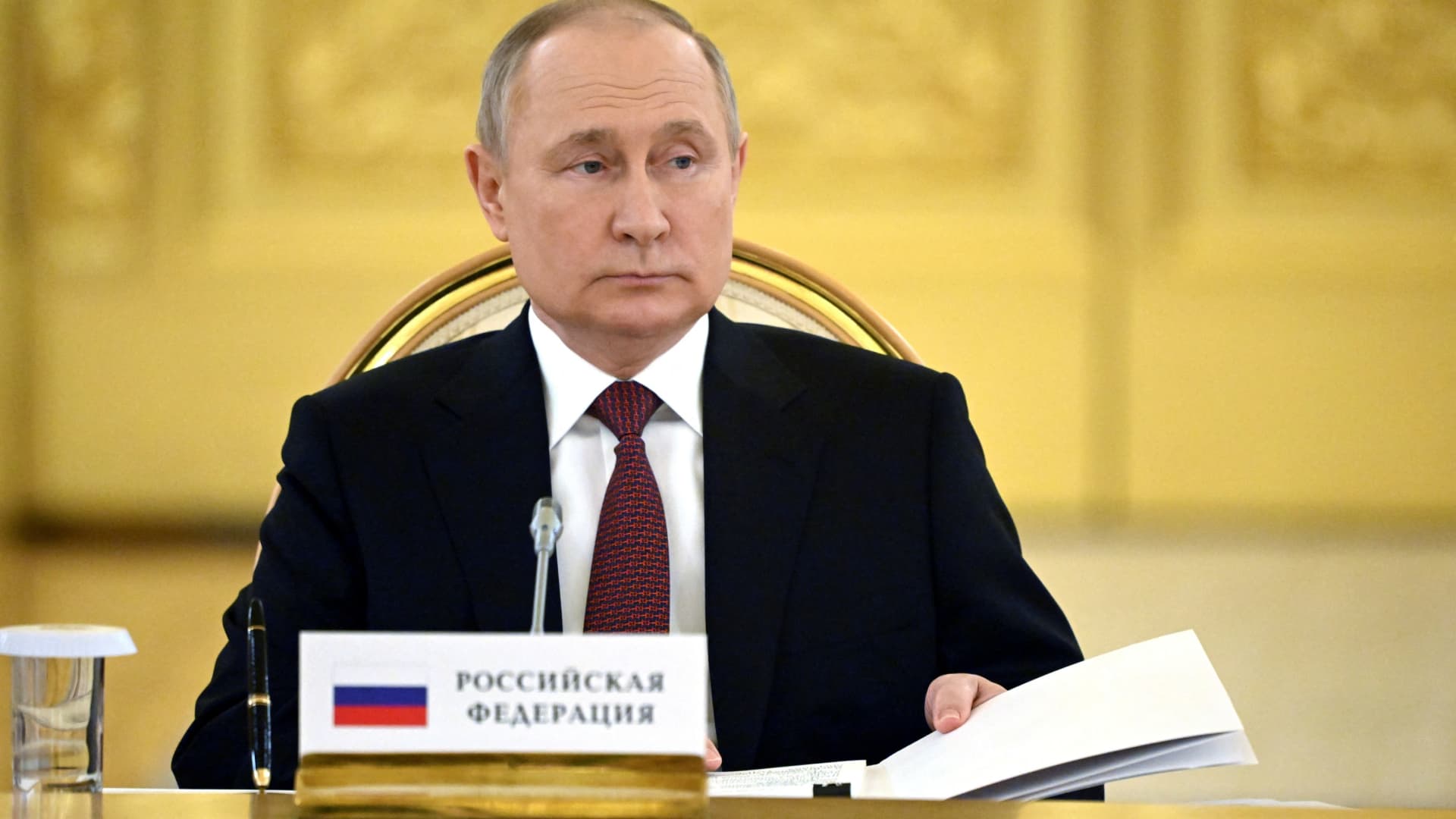
The term "misadventure" usually conjures up images of a failed hiking trip or a poorly planned vacation. When a diplomat uses it to describe the military positioning of a superpower, the air in the room gets cold. That’s exactly what happened when Andrei Kelin, Russia’s ambassador to the UK, sat down to tear apart the current American approach to Iran. He didn’t just criticize the policy. He questioned whether the United States even knows what the "end state" looks like.
Washington looks stuck. It’s a cycle we’ve seen before: deployment, escalation, a few strikes, and then a long, awkward silence where nobody knows how to leave without looking like they lost. If you're looking for a clear, documented path for how the US plans to de-escalate with Tehran while maintaining its regional alliances, you won’t find it. It doesn’t exist.
The vacuum of objective-based diplomacy
Foreign policy works best when it has a finish line. During the Cold War, the goal was containment. In the early 2000s, however messy, the stated goal was regime change. Today? The goal seems to be "don't let things get too much worse." That isn't a strategy. It's damage control.
Ambassador Kelin’s assessment hits a nerve because it points out the obvious lack of a "Day After" plan. If the US successfully cripples Iranian proxy influence, who fills that power gap? History suggests it won't be a pro-Western democracy. It’ll be the next most radical group with a functioning militia.
Western officials often talk about "maximum pressure." They've used this phrase since the 2018 withdrawal from the Joint Comprehensive Plan of Action (JCPOA). But pressure is a tool, not a destination. When you keep squeezing a balloon, it either pops or it slips through your fingers. Right now, Iran is doing a bit of both. They're advancing their enrichment levels while simultaneously expanding their influence through the "Axis of Resistance" in Iraq, Syria, and Yemen.
Why the Russian perspective matters right now
It’s easy to dismiss Kelin as a biased actor. Russia and the US are essentially in a proxy war in Ukraine, so of course he’s going to take shots at American foreign policy. But bias doesn't automatically mean he's wrong about the mechanics of the situation.
Moscow has watched the US struggle in the Middle East for twenty years. They saw the chaos in Libya. They watched the withdrawal from Afghanistan. From their view, the US enters these conflicts with high-tech hardware and zero cultural or political foresight. When Kelin calls it a misadventure, he's signaling to the rest of the world—specifically the Global South—that the US is an unreliable partner that starts fires it can’t put out.
The irony isn't lost on anyone. Russia is currently bogged down in its own brutal conflict. However, in the specific context of Iran, Russia has managed to do something the US can't: maintain a working relationship with both Tehran and its rivals. That gives their critique a layer of practical weight that's hard to ignore.
The exit strategy that never was
An exit strategy requires two things: a definition of victory and a timeline.
If victory means Iran stops being a revolutionary state, we’re looking at a multi-decade project that no American administration has the stomach or the budget for. If victory means just stopping a nuclear bomb, then the current path of sanctions and occasional drone strikes is failing. Iran is closer to "breakout capacity" now than they were when the nuclear deal was active.
We have to ask what "out" looks like. Does it look like the 2021 Kabul airport? Does it look like the permanent "temporary" presence we have in eastern Syria?
The cost of staying in the gray zone
Living in the gray zone—where you’re not at war but you’re certainly not at peace—is incredibly expensive. It costs billions in carrier strike group deployments. It costs political capital every time a stray missile hits a civilian area. Most importantly, it costs focus. While the US is busy playing whack-a-mole with Iranian-backed groups, it's losing ground in the Pacific.
Critics of the Biden-Harris administration, and the Trump administration before it, point to the same flaw. Both sides of the aisle seem to think that if they just ignore the Middle East enough, it will go away. Then, something explodes, and they're sucked back in without a roadmap.
Breaking the cycle of reactive politics
If you want to understand why this feels like a treadmill, look at the internal politics of Washington. Any move toward real diplomacy with Iran is labeled as "appeasement" by the right. Any move toward military action is labeled as "warmongering" by the left.
The result? A paralyzed middle ground.
We do just enough to stay involved, but not enough to actually change the trajectory of the region. This is what Kelin is mocking. He knows that as long as the US is reactive, it can't lead.
What a real strategy would look like
A real strategy would require a hard pivot. It would mean either committing to a massive, long-term regional security framework that includes Iran—which sounds impossible right now—or a total, disciplined retrenchment.
The "middle way" is just a slow bleed.
The US needs to decide if it's the policeman of the Persian Gulf or if it's going to let regional powers like Saudi Arabia and Iran find their own, likely violent, equilibrium. Pretending to be the policeman while only showing up half the time is the worst of both worlds.
The shift in global alliances
While the US figures out its next move, the rest of the world isn't waiting. China mediated a deal between Iran and Saudi Arabia. Russia is buying Iranian drones. The BRICS bloc is expanding to include Middle Eastern heavyweights.
The "misadventure" isn't just about military strikes. It's about the loss of diplomatic monopoly. When the US lacks a clear exit or entry strategy, it creates a market for other mediators.
If you're an official in Riyadh or Abu Dhabi, you're looking at the US and wondering if they'll still be there in five years. If they don't have an exit strategy, they might just have an "escape" strategy. That fear drives those allies closer to Moscow and Beijing.
Practical steps for observing the shift
Watch the rhetoric coming out of the State Department over the next six months. If the language stays focused on "deterrence" without mentioning "diplomatic frameworks," expect the stalemate to continue.
Pay attention to the maritime security in the Red Sea. If the US can't secure trade routes against a group like the Houthis—who are essentially the junior varsity team of the Iranian proxy network—then the "misadventure" is officially a crisis.
The most telling sign will be the defense budget. A real shift in strategy will show up in where the money goes. If we keep pouring billions into "contingency operations" in the Middle East with no end date, then Kelin's critique isn't just propaganda. It's a preview of the next decade.
Start by tracking the movements of the USS Abraham Lincoln or whatever carrier is currently rotated into the region. These aren't just ships; they're billion-dollar reminders that the US is still trying to find the door. Stop reading the sanitized press releases and start looking at the maps. The map doesn't lie, and right now, the map shows a superpower circling the block because it can't find a place to park.