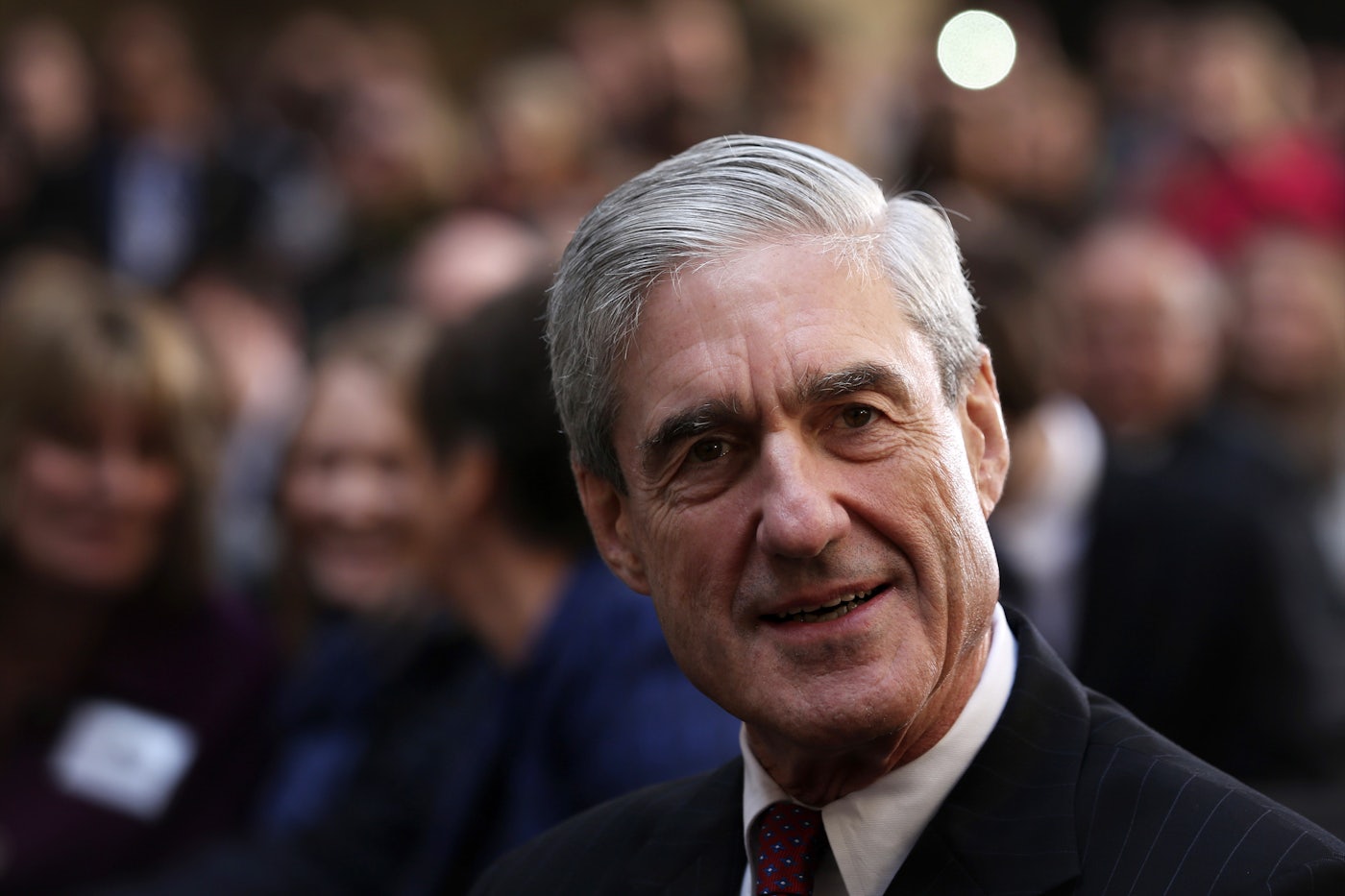
The passing of Robert Mueller marks the end of a specific, perhaps now extinct, era of American power. He was the last of the "wise men," a Vietnam combat veteran and career prosecutor who believed that the facts, once presented with enough clinical detachment, could stabilize a rocking ship of state. They didn't. Mueller’s death is not just the passing of a public servant; it is a final autopsy on the belief that a legalistic process can resolve a deep-seated political identity crisis.
Mueller spent two years as the Special Counsel investigating Russian interference in the 2016 election and ties to the Trump campaign. He ran the most disciplined, leak-free operation in the history of modern Washington. He secured dozens of indictments. He clawed back millions in criminal forfeitures. Yet, the moment he submitted his report in 2019, the reality of the 21st-century media machine shredded his careful work. He expected his findings to speak for themselves. Instead, they were shouted down by a culture that had moved past the need for a final arbiter.
The Marine Who Believed in the Rules
To understand Mueller, you have to look at the scars. He didn't just hold an elite pedigree from Princeton and Virginia Law; he carried the literal weight of a Bronze Star and a Purple Heart from his time leading a rifle platoon in Vietnam. That experience forged a man who viewed the Department of Justice not as a political tool, but as a rigid structure of rules designed to prevent chaos.
When he took over the FBI just one week before the September 11 attacks, he transformed the bureau from a traditional law enforcement agency into a counterterrorism juggernaut. It was a brutal transition. Agents who were used to chasing bank robbers suddenly had to learn signal intelligence and global geopolitics. Mueller pushed them with a cold, unrelenting hand. He was famously demanding, often ending meetings the second he felt a subordinate was unprepared.
This rigidity was his greatest strength and his ultimate undoing. In the Special Counsel’s office, he operated under the assumption that the public still respected the "black box" of a grand jury. He stayed silent for 22 months while the President of the United States and his allies attacked his character daily on social media. Mueller’s silence was intended to be dignified. In practice, it left a vacuum. That vacuum was filled by partisans who defined the narrative before Mueller ever took the podium for his brief, nine-minute press statement in May 2019.
The Why Behind the Investigation Failure
Critics on the left often argue Mueller was too timid. Critics on the right claim he was the spearhead of a "deep state" coup. Both miss the structural reality of what Mueller was trying to do. He was attempting to use 20th-century investigative norms to solve a 21st-century digital insurgency.
The "why" of the investigation’s perceived failure lies in Mueller’s refusal to make a "traditional" prosecutorial judgment on obstruction of justice. He followed an Office of Legal Counsel (OLC) guideline that states a sitting president cannot be indicted. For Mueller, if he couldn't indict, he couldn't even accuse, because the target would have no venue—a trial—to defend themselves.
This was a peak Mueller move. It was legally sophisticated, ethically consistent, and politically disastrous. By refusing to say "guilty" or "innocent," he handed the red pen to Attorney General William Barr, who promptly wrote his own summary that declared "no collusion, no obstruction." By the time the actual 448-page report was released weeks later, the concrete had hardened. The public had already decided what to believe.
The Overlooked Factor of Digital Warfare
The most enduring part of Mueller’s legacy isn't the political drama, but the detailed roadmap he provided of how modern foreign interference works. The indictments of the Internet Research Agency and the GRU officers were masterpieces of forensic accounting and cyber-intelligence.
Mueller proved, beyond a reasonable doubt, that a foreign power used social media as a weapon of war. He showed how $100,000 in Facebook ads and a handful of well-placed hacks could tip the scales of American discourse. But because this information was wrapped in the toxic wrapper of the Trump investigation, half the country refused to learn the lesson. We are more vulnerable today because the messenger was as polarizing as the message.
The Burden of the Institutionalist
Robert Mueller represented a version of Washington that no longer exists. It was a place where "the institution" mattered more than the individual. He didn't write a memoir. He didn't take a multi-million dollar deal to be a contributor on a cable news network. He didn't tweet.
There is a grim irony in his departure. Mueller was a man of the law who found himself in a fight that was entirely about power. He brought a rulebook to a street fight. He believed that the Department of Justice could remain an island of objectivity in a sea of bile.
The investigation he led cost $32 million, but it actually turned a profit for the taxpayers because of the assets seized from Paul Manafort. It resulted in 34 individuals and three companies being charged. It was, by any objective metric of law enforcement, a massive success. And yet, it changed almost nothing about the trajectory of American politics.
The Ghost of the 1970s
Mueller was often compared to Archibald Cox or Leon Jaworski from the Watergate era. But those men operated in a world with three TV networks and a Senate that still felt shame. Mueller operated in a world of fragmented reality. He was the last person to believe that a single set of facts could unite a country.
His passing leaves a void in the concept of the "special" investigator. We have seen since then that appointing a gray-haired, stern-faced veteran to "get to the bottom of it" is no longer a silver bullet. It is just another piece of content to be spun, clipped, and discarded.
A Legacy of Silence
Robert Mueller’s life was defined by duty, but his career will be remembered for its final, heavy silence. He refused to be the hero the Democrats wanted and refused to be the villain the Republicans described. He was simply a prosecutor who followed the memo.
In the end, Mueller’s insistence on staying within the lines may have been his final service to the country, even if it was the most frustrating one. He showed us that the law has limits. It can punish a crime, but it cannot heal a culture. It can tell us what happened, but it cannot force us to care.
The era of the untouchable, nonpartisan investigator is buried with him. We are now in the age of the political prosecutor, the "lawfare" specialist, and the judicial activist. Mueller would have hated every bit of it. He lived his life by a code of silence that the modern world found incomprehensible. He spoke once, he wrote a report, and then he walked away, leaving a fractured nation to argue over the ruins of his work.
The man is gone, but the question he couldn't answer remains. How does a democracy defend itself when it no longer agrees on what a fact looks like? Robert Mueller spent his final years watching the answer disappear.
Verify the timeline of the OLC guidelines and the specific counts of the Manafort forfeiture to see the scale of the investigation's reach.