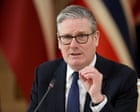
Keir Starmer is betting the house on the British wallet. With local elections looming on May 7, the Prime Minister has pivoted his entire campaign toward the cost of living, framing the Labour government as a shield against a volatile global economy. He is essentially asking voters to ignore the sirens of the populist right and the environmental left in favor of "stability." However, this strategy is less about a triumphant record and more about a desperate defensive crouch.
The core of the problem is that while inflation has steadied at 3.0%, the lived experience of the average voter remains one of permanent, compounded price hikes. Labour’s new "Pride in Britain" slogan is an attempt to wrap economic anxiety in a flag, but for many in the party's former heartlands, the math simply doesn't add up.
The Strategy of Fear
Starmer is not just campaigning on what he has done; he is campaigning on what he claims others would have done. In a calculated move, he has linked the cost of living directly to foreign policy. By highlighting early support from Kemi Badenoch and Nigel Farage for US-Israeli strikes against Iran—strikes the UK government did not back—Starmer is framing his opponents as "reckless" actors who would have sent fuel and food prices into an uncontrollable spiral.
It is a classic "better the devil you know" play. He is telling the electorate that a vote for Reform UK is a vote for higher mortgages and more expensive petrol. This shift marks a significant change in tone. No longer is Labour promising a transformative "New Britain"; it is promising to keep the lights on while the rest of the world burns.
The North East and the Reform Threat
The real story of these local elections is not in the leafy suburbs but in the North East and West Midlands. In these areas, the Labour machine is bracing for a "political earthquake." Internal party projections are grim, with chiefs conceding that sweeping losses are likely.
The rise of Reform UK in former industrial strongholds suggests that Starmer’s focus on the "living wage" and "pensions increases" is falling on deaf ears. For a voter who has seen their local high street hollowed out and their energy bills double since 2022, a 15% cut in business rates for pubs—while welcome—feels like a tactical patch on a structural wound.
The Green Surge and the London Problem
While Reform attacks from the right, the Green Party is eating away at Labour's base from the left, particularly in London. In boroughs like Hackney, Newham, and Lewisham, the dissatisfaction isn't just about the price of milk. It is about a perceived lack of radicalism.
The "Beveridge Report for the Economy," a blueprint circulating among disgruntled Labour MPs, highlights this exact tension. The report argues that the current system rewards exploitation over hard work. It suggests that by trying to be "sensible," Labour has allowed the populists to appear like the only ones offering real change. When Starmer talks about "fiscal discipline," a segment of his own party sees a missed opportunity to fundamentally fix why the British economy feels broken.
A Volatile World as a Campaign Shield
The conflict with Iran has provided Starmer with a convenient, if grim, rhetorical shield. By positioning the UK as a sober voice of restraint, he can blame external shocks for domestic hardship. It allows the government to argue that any progress—such as the £150 energy bill reduction coming in April—is a hard-won victory against a backdrop of global chaos.
But the "Pride in Britain" branding feels hollow when the government is simultaneously warning of dire results in Wales and Scotland. Losing power in Wales after 27 years would be a historic humiliation, yet the current polling suggests Plaid Cymru and Reform are successfully channeling the very "voter anger" Starmer is trying to soothe.
The Reality of the Numbers
Despite the rhetoric, the economic indicators are a mixed bag.
| Indicator | Current Figure (Feb 2026) | Trend |
|---|---|---|
| CPI Inflation | 3.0% | Steady |
| Services Inflation | 4.3% | Easing |
| Clothing Prices | +0.9% | Rising |
| Food Inflation | 3.3% | Slowing |
While food inflation is slowing, the fact that prices are still rising on top of the massive hikes of 2024 and 2025 means "slowing" does not mean "cheaper." It means things are getting more expensive at a less aggressive rate. This distinction is often lost in political speeches, but it is never lost at the supermarket till.
The High Street Gamble
The government is highlighting its "Taskforce to tackle money laundering" in barbershops and vape stores as a way to restore pride to the high street. It is a niche, almost bizarre focus for a national campaign launch. It suggests a leadership that is looking for small, easy wins because the larger ones—like the promised 1.5 million new homes—are bogged down in the same planning red tape they vowed to slash.
The local elections will be the first major test of whether "securonomics"—the idea of building a resilient, broad-based economy—actually resonates with people who are struggling to pay for their kids' school trips.
Starmer’s insistence that the UK has "turned the corner" is a gamble. If the results on May 7 show a sea of Green and Reform gains, it won't just be a bad night for local councillors. It will be a signal that the Prime Minister's shield is made of cardboard.
You can verify your local polling station and register for a postal vote through the official government portal before the April deadline to ensure your voice is heard in this critical mid-term test.