The prevailing narrative regarding rare earth elements (REEs) is a masterpiece of geopolitical alarmism. You’ve seen the headlines. They suggest that if the United States enters a prolonged conflict—whether in the Middle East against Iran or elsewhere—Beijing simply needs to "turn off the faucet" of neodymium and dysprosium to grind the American military-industrial complex to a screeching halt.
It is a seductive, terrifying, and fundamentally illiterate argument.
This "resource trap" theory assumes that supply chains are static, that materials are irreplaceable, and that the Chinese Communist Party (CCP) is willing to commit economic suicide to win a tactical skirmish. I’ve spent years dissecting the intersection of commodity markets and defense procurement. The reality is far messier for the doomsayers: Rare earths are neither rare, nor are they the ultimate leverage point the media portrays.
The "Rare" Lie and the Geographic Fallacy
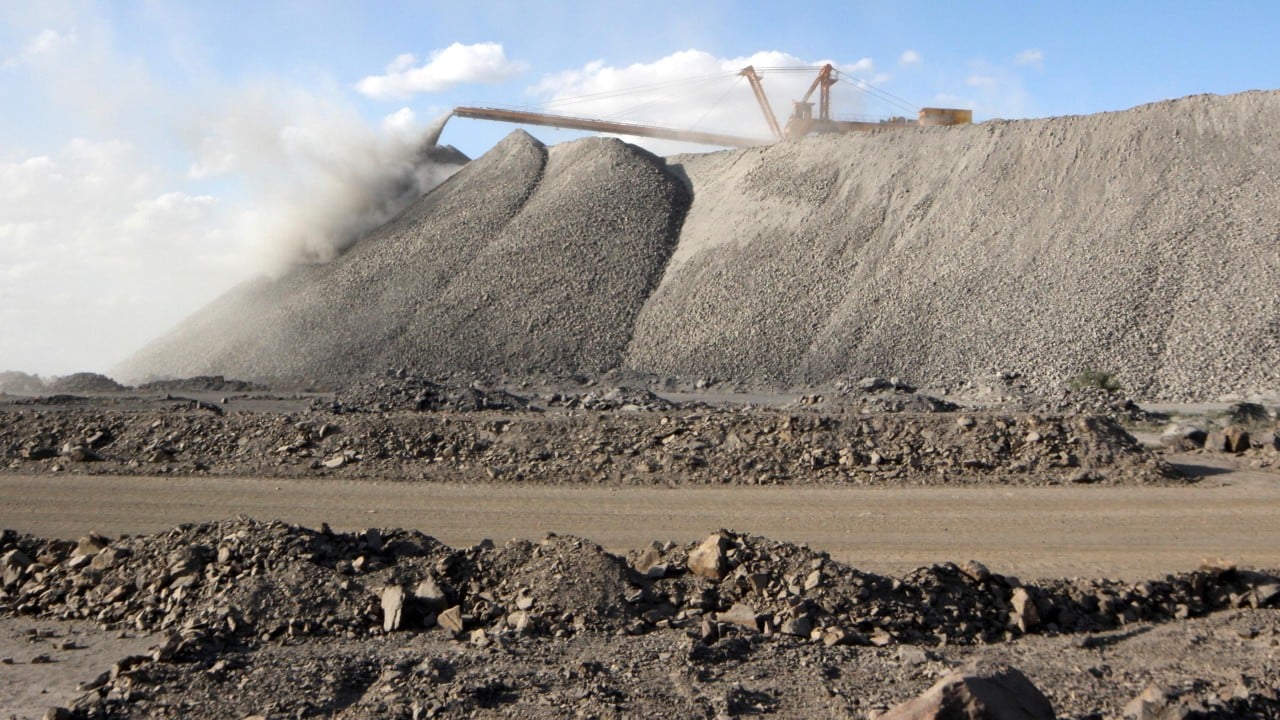
First, let’s kill the name. Rare earth elements are about as rare as copper or lead. Cerium is the 25th most abundant element in the Earth's crust. The "rarity" isn't geological; it’s ecological and regulatory.
China dominates the sector not because they have the only deposits, but because they were the only nation willing to endure the environmental carnage of processing them for thirty years. They subsidized the filth so the West could feel "green."
The competitor’s argument hinges on the idea that because China controls roughly 60% of mining and nearly 90% of refining, they hold the leash on US Tomahawk missiles. They don't. Military demand for REEs accounts for less than 5% of total US consumption. If a shooting war starts, the Pentagon doesn't go to the open market to compete with Tesla for magnets; they invoke the Defense Production Act.
When you prioritize national survival over ESG scores, the "supply crunch" evaporates.
The 2010 Senkaku Lesson Everyone Forgot
In 2010, China actually tried this. During a fishing boat dispute with Japan, Beijing unofficially blocked REE exports. The result? It was a disaster for China, not Japan.
The price spikes triggered by the embargo did three things immediately:
- Substitution: Manufacturers like Toyota and Honda figured out how to use less of the material or find alternatives.
- Investment: Capital flooded into mines outside China, such as Lynas in Australia and Mountain Pass in California.
- Recycling: Engineers developed "urban mining" techniques to pull REEs from old electronics.
By the time China ended the "embargo," they had permanently lost market share and destroyed their own pricing power. If they try to "dictate" the length of a US strike on Iran by withholding magnets, they aren't holding a gun to Washington’s head—they are holding it to their own foot.
Why the Iran Conflict Premise is Flawed
The idea that a strike on Iran would be "governed" by rare earth supplies assumes a war of attrition that hasn't existed since 1945.
A US engagement with Iran would be an exercise in precision munitions and standoff capabilities. We aren't talking about a five-year mobilization of 12 million troops. We are talking about the expenditure of existing stockpiles. The missiles that would hit Iranian infrastructure were built two, five, or ten years ago. Their permanent magnets are already seated in their guidance fins.
A supply cutoff today affects the missiles of 2028, not the sorties of next week. To suggest otherwise is to fundamentally misunderstand how defense lead times work.
The Refining Bottleneck is a Paper Tiger
Critics often point to the "refining gap." They say, "Sure, we can mine the ore in Nevada, but we have to ship it to China to get the oxides out."
This was true five years ago. It is becoming a lie today.
Companies like MP Materials are rapidly scaling domestic separation capabilities. Blue Line in Texas is partnering with Lynas. These aren't "maybe" projects; they are operational or near-operational facilities. Furthermore, the US Department of Defense is directly funding heavy rare earth separation on American soil.
The "refining bottleneck" is a temporary logistical hurdle, not a permanent strategic veto. If the US is at war, the EPA’s red tape—the primary obstacle to domestic processing—disappears in an afternoon.
The Hidden Leverage: What We Have That They Need
If we want to talk about resource wars, let’s talk about the dependencies China actually fears.
While the US needs Chinese magnets for some high-tech components, China needs Western high-end semiconductors, aerospace software, and—most importantly—the US dollar clearing system to buy the food and energy that keeps their population from revolting.
The "Rare Earth Weapon" is like bringing a knife to a nuclear standoff. If China cuts off REEs, the US cuts off the software that runs the Chinese economy. Or, more simply, the US Navy stops the tankers coming from the Persian Gulf that provide China’s oil.
Who blinks first? The country missing some magnets for its F-35s, or the country whose entire industrial base goes dark because the lights won't stay on?
Misunderstanding the Defense Supply Chain
I have seen Tier 2 and Tier 3 defense contractors scramble when a sub-component goes missing. It's annoying. It’s expensive. But it’s never terminal.
The "lazy consensus" assumes that if you lack one specific grade of terbium, you can't build a radar. In reality, engineering is about trade-offs. If the "perfect" magnet isn't available, you redesign for the "good enough" magnet. You increase the size of the motor, or you adjust the cooling system.
US military dominance isn't built on a single element; it's built on an adaptive engineering culture. China’s dominance is built on being the world's low-cost refinery. One of those is much easier to replace than the other.
The Actionable Reality for Investors and Policy Makers
If you are betting on a rare earth "squeeze" to win a war for China, you are going to lose your shirt.
The real strategic play isn't hoarding neodymium; it’s material agnosticism. The companies that will win the next decade are the ones developing iron-nitride magnets or high-performance induction motors that don't use rare earths at all.
Tesla has already announced a move away from permanent magnet motors in their next-generation drive units. This isn't just about cost—it’s about de-risking the supply chain. When the largest consumer of magnets on the planet signals they don't need the "unbeatable" resource, the "dictator" loses his throne.
Stop Asking the Wrong Question
The question isn't "Could China’s rare earth supplies dictate how long US strikes go on?"
The question is: "Why is the US still pretending this is a threat when the solution is already in motion?"
The rare earth "threat" is a ghost story told by lobbyists looking for subsidies and by analysts who prefer easy narratives over complex logistics. A US-Iran conflict would be decided by logistics, electronic warfare, and regional alliances. Neodymium prices wouldn't even make the top fifty list of concerns in the Situation Room.
The CCP knows this. It’s time the American public stopped falling for the bluff.
Mining ore is easy. Refining is just chemistry. But losing access to the global financial and energy markets because you tried to hoard some dirt? That’s an existential mistake.
The faucet can be turned off, but the US has already learned how to dig its own well.
Stop worrying about the dirt. Start worrying about the lack of imagination in Western procurement.
The "Rare Earth Weapon" is a relic of 2010. In 2026, it’s just another commodity.
The next time someone tells you China can shut down a US war with rare earths, ask them why they think the US military—the most well-funded organization in human history—would be defeated by a shortage of materials used in a refrigerator.
They won’t have an answer, because there isn't one.
The monopoly is over. The leverage is gone. The bluff has been called.