The pre-dawn air in Bangkok usually carries the scent of jasmine garlands and diesel exhaust, a thick, humid promise of a new day. For Somchai, a street food vendor whose life is measured in the rhythmic sizzle of a wok, that promise has recently begun to smell like anxiety. He doesn’t follow the intricate maneuvers of Middle Eastern geopolitics. He hasn't memorized the names of the generals in Tehran or the specific range of a ballistic missile. Yet, as the sun rises over the Chao Phraya River, the cost of his cooking oil has climbed again, and the tourists who usually crowd his plastic stools are thinning out.
A world away, the horizon is glowing with a much more dangerous light. Discover more on a related issue: this related article.
When conflict ignited between Iran and its regional adversaries, the shockwaves didn't stop at the borders of the Persian Gulf. They traveled across the Indian Ocean, hit the shipping lanes of the Andaman Sea, and slammed into the fragile recovery of the Thai economy. For Prime Minister Anutin Charnvirakul, the timing could not have been more cruel. After years of stagnation, Thailand was finally beginning to breathe again. The "Land of Smiles" was supposed to be celebrating a reboot—a grand reopening of its borders and its ledgers.
Instead, the government is now staring at a balance sheet written in red. Further analysis by The Motley Fool highlights related views on the subject.
The Invisible Tether
We often think of global economics as a series of sterile numbers on a Bloomberg terminal. We talk about GDP, inflation indices, and fiscal drag. But in reality, the economy is a nervous system. When a finger is burned in the Middle East, the brain in Bangkok feels the sting instantly.
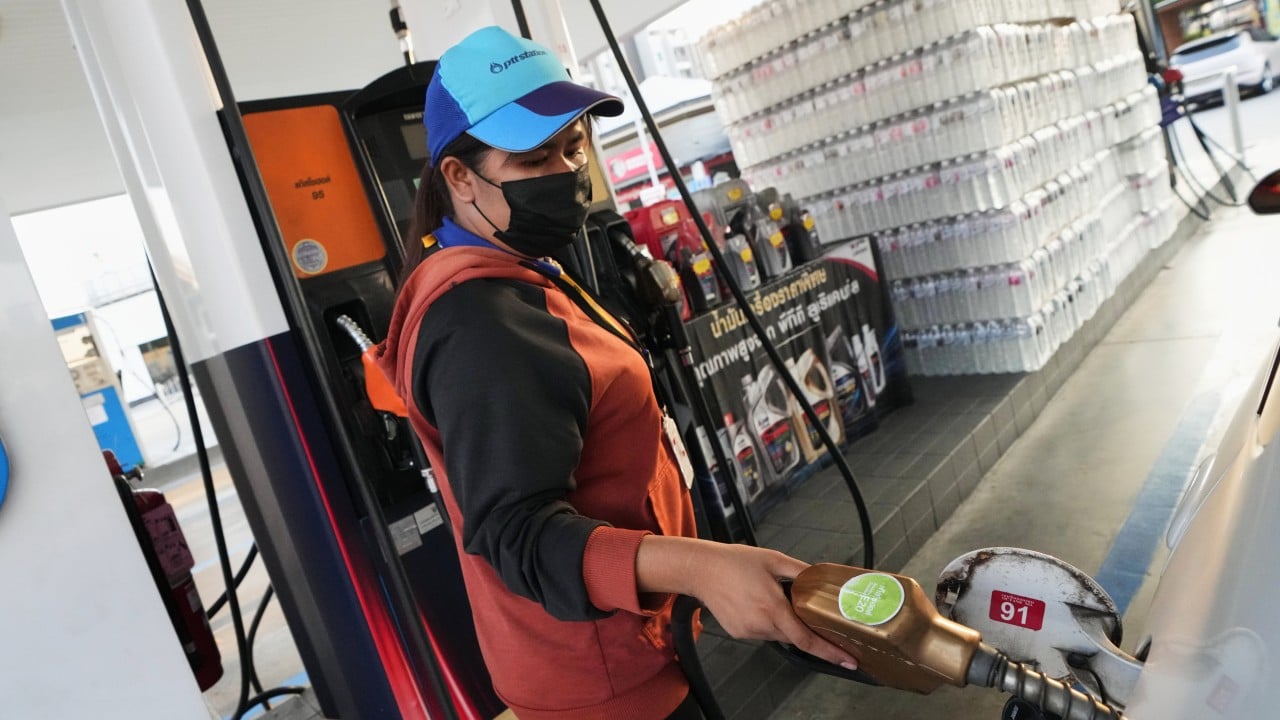
The most immediate pain point is energy. Thailand is a massive net importer of oil. When the Strait of Hormuz becomes a gamble for tankers, the price at the pump in Nonthaburi or Chiang Mai doesn't just tick upward; it leaps. For the Thai government, this creates an impossible choice. They can subsidize fuel to keep the populace happy, draining the national treasury in the process, or they can let the prices float, effectively taxing every citizen who needs to transport goods or commute to work.
Consider the "Hypothetical Tuk-Tuk Factor." Imagine a driver named Kiet. Six months ago, Kiet spent 300 baht a day on fuel. Today, that number is 450. To compensate, he must raise his fares. The office worker who uses his services now has less money for lunch. The restaurant owner sees fewer customers and buys less produce from the farmer. It is a slow-motion car crash of purchasing power.
This isn't just about petrol. It's about the cost of everything that moves. Fertilizer, plastic, electricity—all of it is tethered to the price of a barrel of crude that is currently being inflated by the threat of a wider Iranian war.
The Ghost of 1997
There is a specific kind of trauma in the Thai collective consciousness known as the "Tom Yum Kung" crisis. In 1997, the economy collapsed, and the middle class was wiped out overnight. People who owned Mercedes-Benzes were suddenly selling sandwiches on street corners.
Prime Minister Anutin knows this history. He also knows that his mandate rests on the promise of stability. His "economic reboot" was built on a foundation of low interest rates and a surging tourism sector. But war is a master of deconstruction.
As the conflict in the Middle East escalated, the global "flight to safety" began. Investors pulled their money out of emerging markets like Thailand, seeking the cold, hard embrace of the US Dollar and gold. This put immediate downward pressure on the Baht. A weaker currency sounds good for exports, but when you are importing expensive energy and raw materials, it’s a recipe for a debt spiral.
The Empty Hotel Room
The most heartbreaking casualty of this distant war is the Thai tourism industry. For three years, hotel owners from Phuket to Koh Samui held their breath, waiting for the world to return. They took out loans to renovate. They rehired staff. They waited for the "reboot" Anutin promised.
Then the flight paths changed.
War in the Middle East doesn't just make fuel expensive; it makes people afraid to travel. International airfares have spiked due to war-risk insurance and fuel surcharges. More importantly, the psychological toll of global instability makes a luxury vacation feel like an unnecessary risk.
Imagine a family in Europe or North America. They had planned a two-week escape to the white sands of Krabi. But as they watch the news—missiles over Isfahan, talk of closed airspaces, and the potential for a global recession—they hit the "cancel" button. They decide to stay home. They save their money.
That single "cancel" click ripples through the Thai economy. It’s the maid who won't be called in for a shift. It’s the fisherman who can't sell his catch to the resort. It’s the local artisan whose wood carvings will sit on a shelf, gathering dust.
The Geopolitical Tightrope
Anutin’s administration is currently performing a high-wire act with no net. On one side, Thailand must maintain its traditional alliances. On the other, it cannot afford to alienate the massive energy producers of the Middle East or the rising influence of China, which views the region as a critical piece of its Belt and Road Initiative.
The government has attempted to pivot, looking for "niche" markets and trying to stimulate internal consumption. But you cannot stimulate your way out of a global supply shock.
The real tragedy of the situation is the lack of agency. Thailand is doing everything "right" by the textbook. It is opening up visa-free travel, investing in infrastructure, and courting tech giants. Yet, all of that progress is being held hostage by a conflict thousands of miles away, driven by ideologies and grievances that have nothing to do with the people of Southeast Asia.
The Human Cost of Complexity
It is easy to get lost in the talk of "derailed reboots" and "macroeconomic headwinds." We must look closer.
We must look at the young graduate in Bangkok who was hoping to start a small business but now finds that credit has dried up. We must look at the elderly couple in the rural Isan region who are watching the price of cooking gas eat into their meager savings.
The "shock" mentioned in the headlines isn't just a financial term. It is a physical sensation. It is the sinking feeling in the gut when the grocery bill is higher than the week before. It is the quiet conversation between parents about whether they can still afford the extra tutoring for their daughter.
A Fragile Resilience
Thailand is a nation that knows how to survive. It has weathered coups, floods, and previous economic meltdowns. There is a deep, cultural resilience in the Thai people—a "Mai Pen Rai" (no worries) attitude that often masks a profound strength.
But resilience has its limits.
The Anutin administration is currently trying to build a bridge to a more prosperous future while the materials are being burned in a fire they didn't start. They are searching for a way to decouple their destiny from the volatile swings of the Middle East. They are looking at renewable energy, at regional trade blocs, and at digital economies.
However, these are long-term solutions for a short-term crisis.
The sun is now high over Bangkok. Somchai is serving a bowl of noodles to a regular customer. He smiles, but the smile doesn't reach his eyes. He is wondering if he should buy less pork for tomorrow’s prep. He is wondering if the news tonight will bring more talk of drones and retaliations.
The world is small. The fires are hot. And in the heart of Thailand, the reboot isn't just delayed; it is being rewritten by the hand of a conflict that few understood and no one invited.
We are all connected by the same thin, fragile threads of commerce and oil. When those threads are pulled taut in the desert, they snap in the tropics. The story of Thailand's economic struggle is not a story of policy failure or bad management. It is a story of a global neighborhood where everyone’s house is made of glass, and someone just started throwing stones.
Would you like me to look into the specific sectors of the Thai export market that are currently most vulnerable to these shifting shipping costs?