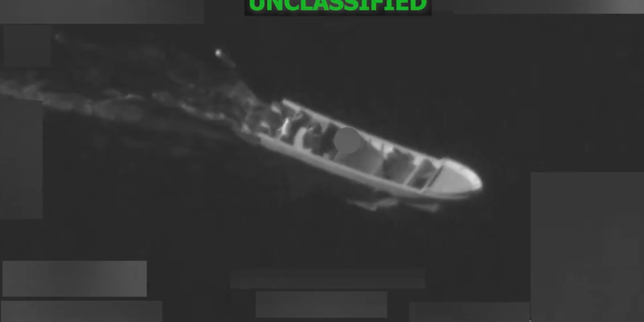
Media outlets are currently salivating over the tragic optics of five casualties in the Pacific. They frame these strikes as "escalations" or "accidental friction" in a theater increasingly dominated by drone warfare and long-range precision. They are wrong. These aren’t accidents. They aren't even escalations. They are the calculated, high-friction cost of maintaining a maritime status quo that the world’s economy depends on but refuses to pay for.
Standard reporting treats these kinetic events as isolated tragedies. In reality, they are data points in a massive, real-time stress test of the Pacific’s anti-access/area-denial (A2/AD) networks. When you see a headline about "five dead," you are seeing the tip of a spear that has been sharpened by decades of ignored warnings about global supply chain fragility.
The Myth of the Accidental Strike
The public has been fed a diet of "surgical precision" myths since the Gulf War. People think a missile is a scalpel. It isn't. It is a blunt instrument guided by a complex, often flawed logic of signals intelligence (SIGINT) and electronic warfare (EW).
When a strike hits a target that the press deems "unintended," it’s rarely a failure of the hardware. It is usually a victory of the adversary's deception or a brutal trade-off in the rules of engagement. In the Pacific, where every square inch of the ocean is monitored by satellite constellations and high-altitude long-endurance (HALE) drones, there are no "accidents" in the traditional sense. There are only outcomes that were deemed acceptable within the margin of error to achieve a specific kinetic effect.
If you want to understand why these five deaths happened, stop looking at the wreckage and start looking at the electromagnetic spectrum. We are in a "grey zone" conflict. In this space, the goal isn't total victory; it's the exhaustion of the enemy's patience and resources.
The Logistics of Blood and Silicon
The Pacific is not a battlefield; it’s a warehouse. Over $5 trillion in trade passes through these waters annually. The strikes you read about are the defense mechanisms of a global operating system trying to purge a virus.
The "lazy consensus" among pundits is that these strikes increase the risk of a third world war. This is backward. These targeted, limited strikes act as a pressure valve. By engaging in high-intensity, low-volume kinetic actions, superpowers signal their red lines without committing to the meat-grinder of a full-scale naval engagement.
I’ve spent years analyzing the cost-to-kill ratios in modern defense procurement. We are currently seeing a shift where the cost of a single interceptor missile—often $2 million to $5 million—is being used to take out assets worth a fraction of that. The media calls this a "failure of strategy." I call it the "insurance premium of empire." You pay the $5 million now, or you pay $500 billion when the Straits of Malacca are closed for a month.
Why "Human Rights" is the Wrong Lens for Geopolitics
It sounds cold because it is. When the news cycles focus on the individual loss of life in these strikes, they are distracting you from the structural reality. Geopolitics is not a moral endeavor; it is a mechanical one.
The Western obsession with "zero-casualty warfare" has created a dangerous paradox. It has emboldened non-state actors and smaller regional powers to hide within civilian infrastructure or use "gray hull" vessels—civilian ships used for military purposes.
Imagine a scenario where a drone swarm is launched from a fishing trawler. If the responding strike hits that trawler and kills five "fishermen" who were actually technical operators, the media cries foul. But the alternative is allowing that swarm to disable a carrier strike group’s radar, leaving 5,000 sailors vulnerable.
The math is simple. The morality is not. If you want a peaceful Pacific, you are asking for a miracle. If you want a stable Pacific, you have to accept the occasional, violent enforcement of the rules.
The Failure of Diplomacy is a Feature Not a Bug
We hear the constant refrain: "We need more diplomatic channels to prevent these strikes."
Diplomacy in the Pacific is currently a dead language. Why? Because the technological gap between the players is widening so fast that by the time a treaty is signed, the weapons it covers are obsolete. We are moving toward a world of autonomous kill chains where the decision to fire is made in milliseconds by an AI processing a terabyte of sensor data.
In this environment, "hotlines" between capitals are useless. By the time a general picks up the phone, the missile has already transitioned to its terminal phase. These five deaths are the result of a system that is moving faster than human bureaucracy can manage.
Stop Asking if the Strikes are "Justified"
The question itself is a trap. It assumes there is a judge and a jury in the middle of the ocean. There isn't. There is only the actor with the better sensor fusion and the longer reach.
If you are looking for someone to blame, don't look at the drone operators in Nevada or the captains in the Seventh Fleet. Look at the global appetite for cheap semiconductors and just-in-time manufacturing. Our entire lifestyle is subsidized by the very military presence that carries out these strikes.
You cannot have your $1,200 smartphone and your moral high ground at the same time. The security of the sea lanes is bought with the currency of force. Sometimes that currency is spent in batches of five lives at a time.
The Real Danger No One is Talking About
The true risk isn't that these strikes will start a war. The risk is that they will become so routine that we stop noticing them.
We are entering an era of "background noise warfare." This is the steady hum of low-level violence that keeps the gears of the global economy turning. The danger is not "escalation" but "normalization." When we normalize the death of five people in the Pacific, we are acknowledging that our global system is so fragile that it requires constant, violent maintenance just to stay upright.
This isn't a "glitch" in the international order. This is the design.
The next time you see a headline about "new strikes" and "five dead," don't ask how we can stop it. Ask yourself if you’re willing to pay the price of what happens if we don’t. Because the alternative isn't peace; it's a total systemic collapse that would make these strikes look like a quiet day at the beach.
The Pacific is a theater of cold math. If you're looking for a hero or a villain, you’re in the wrong ocean. You’re looking at a machine doing exactly what it was built to do: protect the flow at any cost.
Accept the friction or get out of the water.