Media outlets love a good disaster narrative. They feed on the adrenaline of a landing gear failure at LaGuardia or the mysterious movements of a "new go-between" in the friction between the U.S. and Iran. They want you to feel the fear. They want you to believe we are on the precipice of a systemic collapse in aviation safety or a sudden, unprompted escalation in global warfare.
They are wrong.
The "Morning Rundown" style of reporting treats every mechanical hiccup and diplomatic whisper as a tectonic shift. It isn't. If you want to understand why these events happen and why the common interpretation of them is fundamentally flawed, you have to stop looking at the sparks and start looking at the engine.
The LaGuardia Myth: Mechanical Failure vs. Human Reliability
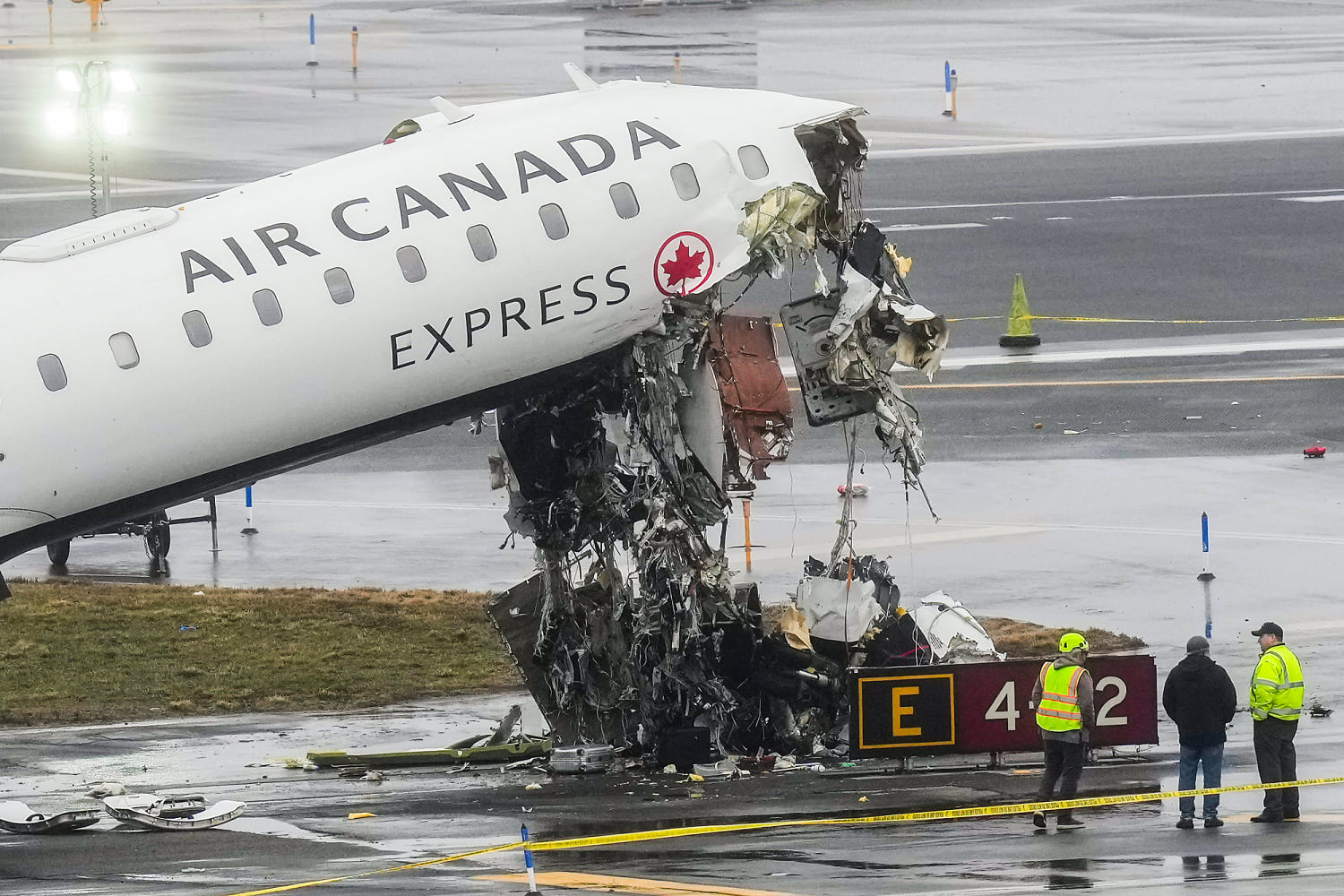
When a plane skids or a tire blows at LGA, the immediate reaction is to blame "aging infrastructure" or "lax maintenance." This is lazy. U.S. commercial aviation is currently operating at a level of safety so high it actually creates a psychological blind spot.
I have spent years analyzing risk profiles in high-stakes environments. The reality is that the modern airliner is too safe for its own good. We have reached a point of diminishing returns where the hardware is so redundant that the primary point of failure is no longer the machine—it is the over-reliance on the machine.
When people "describe the crash," they describe a series of physical sensations. They describe the smoke, the jolts, the screams. What they fail to realize is that the "crash" is often the safest possible outcome of a critical failure.
Why You're Worried About the Wrong Part of the Flight
Let’s talk about the math of risk. We spend billions of dollars on runway safety and bird strike prevention.
$$P(S) = 1 - P(F)$$
In this equation, where $P(S)$ is the probability of safety and $P(F)$ is the probability of failure, we have driven $P(F)$ down to levels that are statistically insignificant. Yet, the public treats a blown tire like a sign of the apocalypse.
The real danger isn't the physical impact. It's the "normalized deviance" in pilot training. When the computer is right 99.99% of the time, the human brain begins to atrophy. I've seen flight crews in simulators struggle with basic manual handling because they are used to the plane flying itself.
The "scary" LaGuardia incident isn't a sign that flying is dangerous. It's a sign that our systems are robust enough to survive even when things go sideways. The media focuses on the debris; you should be focused on the fact that everyone walked away.
The U.S.-Iran Proxy Delusion: There is No "New" Go-Between
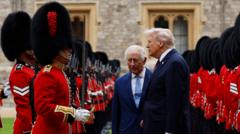
The mainstream narrative suggests that every time a new name pops up as a mediator or a "go-between" in the U.S.-Iran tension, the rules of the game have changed.
This is a fundamental misunderstanding of geopolitics.
In the world of international statecraft, there is no such thing as a "new" player. There are only old players with new titles. Whether it's Oman, Qatar, or some back-channel European diplomat, the mechanics of the conflict remain identical.
The Illusion of Progress
When you hear about a "breakthrough" in U.S.-Iran relations via a third party, you are being sold a story. The reality is far more cynical. These "go-betweens" are not neutral. They are profit centers. They trade in information and access.
I’ve watched diplomatic "miracles" dissolve in weeks because the participants weren't looking for peace—they were looking for leverage. They were looking for a way to satisfy domestic audiences while maintaining a state of perpetual low-level conflict.
- Logic Check: Why would a "new" mediator succeed where decades of professional diplomacy failed?
- Data Check: Look at the frequency of "escalations" versus the actual number of direct kinetic engagements between the U.S. and Iran.
The conflict isn't a war waiting to happen. It is a managed, expensive status quo. It’s an industry that supports thousands of intelligence officers, analysts, and defense contractors on both sides.
The Technology Trap: Stop Buying the "Smart" Solution
We are obsessed with "solving" complex human problems with more tech.
At airports, we want more sensors, more AI-driven monitoring, more automated air traffic control. In foreign policy, we want more sophisticated surveillance and more precise drones to "eliminate threats."
I have seen companies dump $100 million into "smart security" only to have it bypassed by a person with a clipboard and a confident walk.
We are building a world that is "brittle."
A brittle system is one that works perfectly until it doesn't. And when it doesn't, it fails catastrophically. The more complexity we add to the "Morning Rundown" of daily life—the more we rely on these intermediaries and automated systems—the more we lose the ability to handle a simple, old-fashioned crisis.
The Nuance Everyone Misses
The competitor's article wants you to feel like the world is a series of disconnected, frightening events. I am telling you that it is a single, interconnected system of over-managed risks.
The "go-between" in the Middle East is the same as the automated braking system on the runway. Both are designed to prevent a catastrophe, but both create a false sense of security that prevents us from addressing the underlying rot.
- Stop reading the headlines and start reading the balance sheets. Who benefits from the fear of a crash? Insurance companies. Who benefits from the fear of a war? The military-industrial complex.
- Understand the "Butterfly Effect" of small errors. A minor error in a diplomatic cable can cause more damage than a thousand blown tires at LGA.
- Acknowledge the cost of intervention. Every time we try to "fix" a geopolitical tension or an engineering flaw, we introduce new, unforeseen variables.
The real threat isn't a plane skidding off a runway. It's the fact that we've forgotten how to land without the computer's help. The real threat isn't a new mediator in Tehran. It's the fact that we've forgotten how to talk to our enemies directly.
We are so obsessed with the "Morning Rundown" of the symptoms that we are ignoring the disease.
We are trading resilience for efficiency.
We are trading truth for comfort.
If you want to survive the next decade, stop looking for "go-betweens" and start looking at the people who built the machine in the first place. They are the ones who know exactly where it's going to break. And they aren't telling you the truth in a morning newsletter.
Don't look at the smoke. Look at the mirrors.