The needle on the dashboard is a liar. It sits there, hovering just above the red line, while the digital display mocks you with a range of twelve miles. You are stuck in a three-mile crawl on the outer ring road, the air conditioning humming a low, expensive tune. Every minute spent idling is a transaction you didn't agree to. In the backseat, your daughter is complaining that she’s hungry. You think about the price of the milk you need to buy on the way home. It was higher on Tuesday than it was on Sunday.
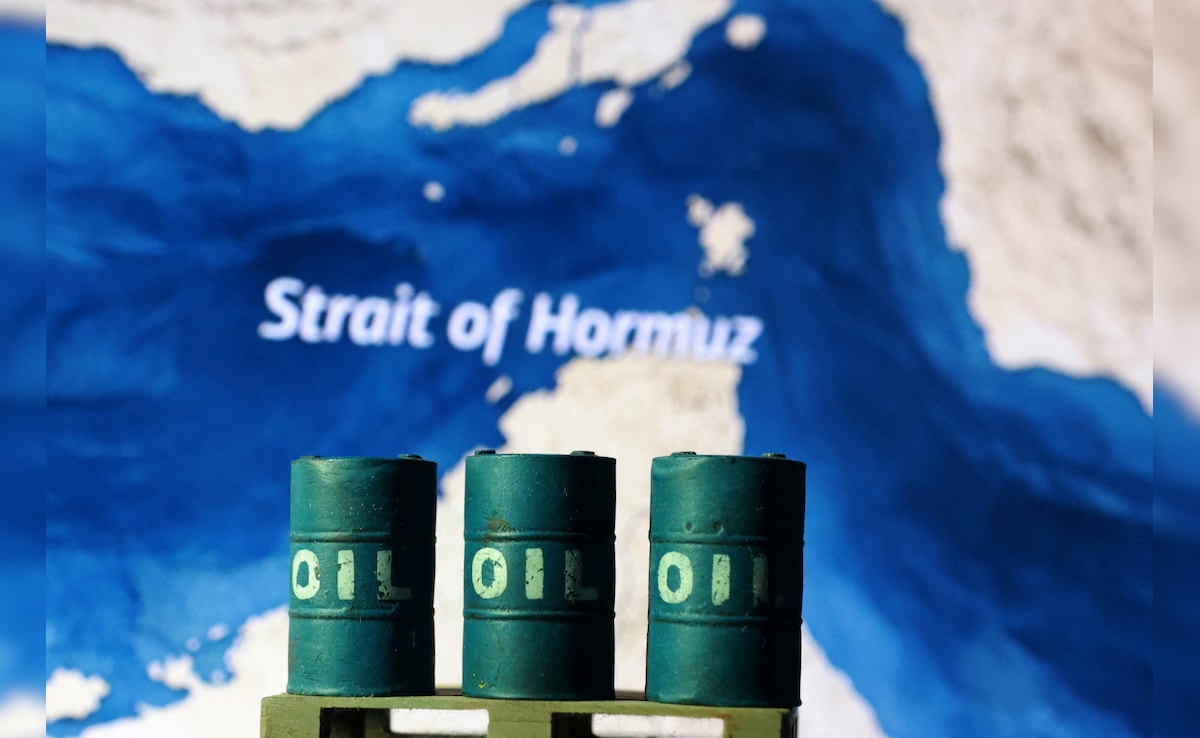
This isn't just about a commute. It’s about the invisible ghost that haunts every shelf, every gas pump, and every light switch in the world. That ghost is crude oil. And right now, it is threatening to reach $150 a barrel.
Most people see that number—$150—and think of the gas station. They think of the extra thirty rupees or the additional twenty dollars it takes to fill the tank. But the tank is only the beginning. When oil hits that stratosphere, it stops being a commodity and starts being a wrecking ball. It swings through the foundations of how we live, eat, and breathe.
The Ghost in the Grocery Aisle
Let’s talk about the milk.
Consider a hypothetical farmer named Elias. Elias doesn't trade futures on the ICE Exchange in London. He doesn't care about geopolitical posturing in the Strait of Hormuz. He cares about his cows. But the cows eat grain that was harvested by a diesel-swallowing combine. That grain was transported to his farm in a heavy-duty truck. When the milk leaves Elias’s gate, it goes into a refrigerated truck—burning more diesel—to a processing plant powered by a grid that, in many parts of the world, still relies on oil-fired peaking plants.
By the time that carton reaches your hand, it is less a beverage and more a liquid representation of energy costs.
When oil touches $150, inflation stops being a statistic in a central bank report and becomes a visceral, daily panic. It is a tax on existence. Because oil is the primary ingredient in almost everything you touch. The plastic casing of your phone? Oil. The synthetic fibers in your "breathable" workout gear? Oil. The fertilizer that allowed the soil to grow the vegetables in your salad? Oil.
When the input cost of everything rises simultaneously, the economy doesn't just slow down. It gasps for air.
The Currency Cracks
The world runs on the US Dollar, but the Dollar runs on oil. This is the "Petrodollar" system, a handshake agreement from the 1970s that turned the greenback into the world's reserve currency. But when oil prices skyrocket to $150, the math for developing nations turns into a horror story.
Imagine a country like India or Turkey. They need oil to keep the lights on and the factories humming. They have to buy that oil in Dollars. As the price of oil climbs, their demand for Dollars spikes. They start selling off their local currency to buy the greenback.
The result? The local currency collapses.
Suddenly, it isn't just oil that is expensive. Everything imported—medicines, electronics, machinery—doubles in price overnight because the local money has lost its teeth. This is how a "currency crisis" starts. It begins with a high price at a terminal in Rotterdam and ends with people standing in line at a bank in a city six thousand miles away, trying to withdraw their savings before they turn into confetti.
We have seen this play out before, but never with the global economy so precariously balanced. In 2008, oil touched $147. We remember what happened next. While the oil price wasn't the only cause of the Great Recession, it was the spark that lit the fuse of a housing market already soaked in gasoline. High energy prices acted as a massive, unplanned interest rate hike on every consumer on the planet. People couldn't pay their mortgages because they were spending their mortgage money on gas and bread.
The Great Stagnation
Economists like to use the word "demand destruction." It sounds clinical. It sounds like something that happens in a laboratory.
In reality, demand destruction looks like a closed restaurant.
It looks like a family deciding they can't afford the drive to visit a dying relative. It looks like a small shipping company laying off half its drivers because the fuel surcharges have eaten the profit margins whole. At $150 a barrel, the friction of moving things from point A to point B becomes too high. The gears of the world start to grind, then smoke, then seize.
But there is a deeper, more psychological cost.
High energy prices breed a specific kind of atmospheric dread. It is the realization that you are no longer in control of your own budget. You can work harder, you can skip the morning coffee, you can cut the cable bill, but if the cost of moving your body to your place of work doubles, you are losing ground.
This leads to a "hollowing out" of the middle class. Discretionary spending—the lifeblood of the modern economy—evaporates. No one goes to the cinema. No one buys a new pair of shoes. No one upgrades their laptop. We all retreat into a defensive crouch, clutching what we have, waiting for the storm to pass.
The Geopolitical Ransom
We like to believe we live in a world of software and ideas, but we are still tethered to the crust of the earth. When oil is cheap, power is diffused. When oil is $150, power is concentrated in the hands of the few who sit atop the wells.
At these prices, the wealth transfer is staggering. Trillions of dollars migrate from the pockets of commuters and small business owners into the sovereign wealth funds of a handful of nations. This isn't just a shift in bank balances; it's a shift in the ability to dictate global policy. It funds wars. It silences critics. It turns energy into a leash.
The irony is that we are told we are in a transition. We are moving toward "green" energy, toward a world beyond the internal combustion engine. But that transition itself requires an immense amount of—you guessed it—energy. You cannot build a wind turbine without a fleet of oil-burning ships and trucks. You cannot mine the lithium for an EV battery without heavy machinery that runs on diesel.
If oil stays at $150 for too long, the very transition meant to save us becomes too expensive to afford.
The Human Toll
Think of a courier. Let's call him Aris. Aris lives in a city where the "gig economy" is the only economy left. He rides a motorbike twelve hours a day, delivering packages for a flat fee. He doesn't get a fuel allowance. When the price of petrol jumps by thirty rupees or fifty cents, Aris doesn't just make less money. He starts paying for the privilege of working.
He skips a meal. Then he skips two.
Then he sells the motorbike and disappears from the workforce.
Multiply Aris by ten million. That is what $150 oil does. It breaks the smallest links in the chain first. We don't notice the breakages until the whole chain falls apart and hits the floor with a deafening clang.
The talk of "market stability" and "OPEC+ quotas" is a layer of paint over a crumbling wall. Beneath the jargon is a simple, terrifying reality: we have built a civilization that requires cheap movement to survive. Without it, the distances between us grow. The world gets bigger, colder, and much more expensive.
The needle on your dashboard is still hovering near the red. You finally make it to the gas station. You watch the numbers on the pump spin faster than you ever thought possible, the digits blurring into a frantic dance. You realize that you aren't just paying for a few gallons of refined ancient sunlight.
You are paying the ransom for your own life to keep moving forward.
And as the pump clicks off, you wonder how much longer you can afford to keep the engine running.
The silence that follows is the most expensive thing of all.