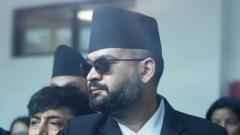
The swearing-in of a former battle rapper as the head of a Himalayan nation sounds like a plot discarded by a Netflix writers' room for being too unrealistic. Yet, here we are. Nepal is about to swear in an ex-rapper as its new prime minister, and the political establishment in Kathmandu is vibrating with a mix of genuine terror and forced curiosity. This isn't just a quirky trivia point for the international press. It represents a fundamental break from the geriatric circle of leaders who've swapped the top seat like a game of musical chairs for three decades.
People are asking if a man who built his reputation on rhythmic insults and structural engineering can actually manage a volatile coalition government. The answer isn't found in his discography, but in the massive shift of the Nepali electorate's patience. They're tired of the "Old Guard." They're tired of the same five faces. They want someone who speaks their language, even if that language happens to be delivered over a 90-BPM beat.
The Man Behind the Mic and the Mayoralty
Before he was the prime minister-elect, Balen Shah was already the most disruptive force in Nepali politics. He didn't come from the traditional student wings of the Maoists or the Congress party. He came from the streets—literally. His rise as the Mayor of Kathmandu was the pilot episode for this current season of national politics.
He didn't just win; he demolished the expectations of what an independent candidate could do. While veteran politicians were busy debating 1950s Marxist theory, Balen was talking about waste management, digital transparency, and urban planning. He used his background as a structural engineer to look at the city as a broken machine that needed fixing. Now, he's looking at the whole country through that same lens.
Critics often point to his "rapper" label to dismiss him. That's a mistake. In the South Asian context, hip-hop has always been a medium for social commentary and rebellion against the status quo. His lyrics weren't just about fluff; they were about the struggles of the youth in a country that often feels like it's stuck in a time loop. That connection with the younger generation—who make up the bulk of the voting population—is his greatest asset.
Breaking the Cycle of the Old Guard
To understand why this is such a big deal, you have to look at the wreckage of the previous administrations. Nepal has seen more prime ministers in the last twenty years than most countries see in fifty. It’s been a revolving door of the same leaders from the CPN-UML, the Maoist Center, and the Nepali Congress.
These leaders grew up in an era of underground revolution and civil war. While their history is significant, their governance style is often seen as transactional and out of touch. They've spent years forming and breaking alliances just to stay in power, leaving the actual development of the country as a secondary concern.
Balen's entry into the Prime Minister's Office signifies that the "independent" wave wasn't a fluke. It's a movement. His supporters aren't just fans of his music; they're people who are fed up with the lack of jobs and the constant corruption. He represents a shift toward technocracy—the idea that people who actually know how to build things should be the ones in charge of the budget.
The Challenges of a Musical Transition
Let's be real. Running a capital city is one thing; navigating the treacherous waters of federal politics in Nepal is another beast entirely. The prime minister isn't a king. He has to work with a parliament filled with those same veteran politicians he spent years criticizing.
The biggest hurdle will be the bureaucracy. Nepal's administrative system is notoriously slow and resistant to change. An outsider trying to move fast usually hits a brick wall of red tape. There’s also the matter of geopolitics. Balancing the interests of two giants like India and China requires a level of diplomatic finesse that isn't usually taught in a recording studio.
However, Balen has shown a surprising amount of pragmatism. During his time as mayor, he wasn't afraid to step on toes, but he also knew when to build bridges to get projects funded. He’s going to need that dual energy—the fire of a rapper and the precision of an engineer—to survive his first 100 days.
What This Means for the Himalayan Economy
Investors are watching this transition with cautious optimism. The hope is that a younger, more tech-savvy leader will prioritize the "Digital Nepal" initiatives that have been stalled for years. Nepal has a massive potential for hydropower and tourism, but it needs modern infrastructure and a stable regulatory environment to attract serious foreign capital.
If the new prime minister can prove that he's more than just a charismatic figurehead, we could see a pivot toward more business-friendly policies. He’s already talked about reducing the brain drain—the massive exodus of Nepali youth to the Gulf and Europe for work. If he can create even a fraction of the jobs he’s promised, his popularity will be untouchable.
Getting Used to the New Rhythm
The swearing-in ceremony marks the end of an era and the start of an experiment. It's an experiment that other nations in the region are watching closely. Can a populist outsider with no traditional party backing actually govern?
If you want to understand what's happening in Nepal, stop looking at the old political maps. Look at the data on youth demographics and the growing influence of social media in the mountains. The old ways of campaigning—loudspeakers on trucks and patronage networks—are dying. The new way is direct, digital, and apparently, rhythmic.
Watch the first few cabinet appointments closely. If he fills the room with experts and young professionals rather than political cronies, you'll know he's serious about systemic change. If he starts making concessions to the old party bosses just to keep his seat, the honeymoon will end faster than a one-hit wonder.
Keep an eye on the official government gazette for new directives on infrastructure projects. That’s where the real work happens. If you're following this from abroad, don't get distracted by the "rapper" headlines. Focus on the policy shifts in Kathmandu's Singha Durbar. The beat has changed, and now the rest of the country has to learn the new dance.