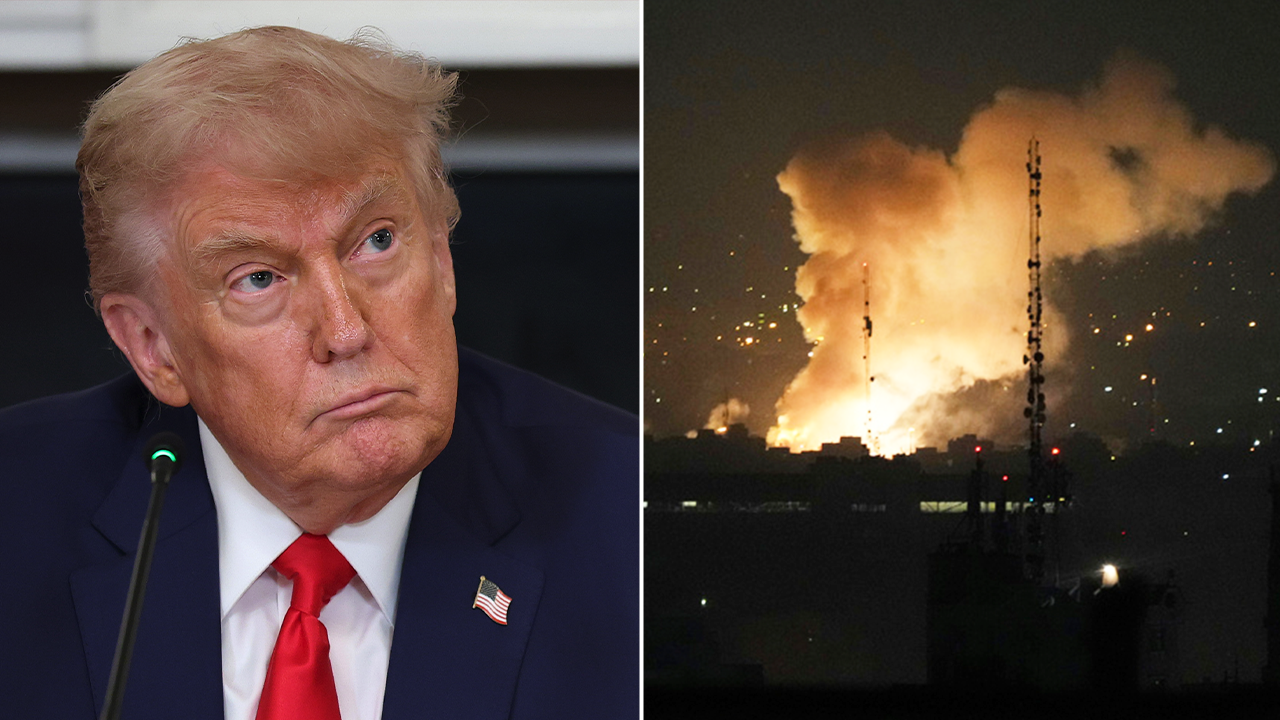
The arrest of dozens of individuals following the "No Kings" rally in Los Angeles serves as a case study in the friction between protected assembly and the operational thresholds of municipal law enforcement. While media narratives often focus on the ideological friction of the protest, a structural analysis reveals that the transition from a First Amendment-protected event to a mass-arrest scenario is governed by a specific set of legal triggers and tactical maneuvers. Understanding this event requires deconstructing the "Dispersal Threshold"—the precise moment when a gathering is reclassified from a legal assembly to an "unlawful assembly" under California Penal Code Section 407.
The Tripartite Framework of Public Order
The escalation in Los Angeles can be categorized into three distinct operational phases: the Expression Phase, the Contention Phase, and the Enforcement Phase. Each phase carries different legal weights and requires different resource allocations from the Los Angeles Police Department (LAPD).
1. The Expression Phase
During this initial stage, the "No Kings" rally functioned within the traditional bounds of the First Amendment. Law enforcement's role is primarily "passive monitoring," where the objective is to maintain a perimeter and ensure the safety of both participants and bystanders. The cost of policing at this stage is relatively low, focusing on traffic control and basic surveillance.
2. The Contention Phase
The shift toward mass arrests begins when the behavior of the crowd crosses a threshold of "imminent threat" or "obstruction." In the Los Angeles context, this often involves the occupation of public roadways or the failure to maintain a clear path for emergency services. Once the crowd's presence creates a "clear and present danger" to public safety or property, the legal status of the gathering shifts. This is not a subjective decision made by individual officers but a command-level determination based on the collective behavior of the group.
3. The Enforcement Phase
The transition to the Enforcement Phase is marked by the "Dispersal Order." This is a formal declaration that the assembly is now unlawful. For an arrest for "Failure to Disperse" (Penal Code 409) to be legally defensible, the following conditions must be met:
- A clear and audible warning must be given to the entire crowd.
- A reasonable exit route must be identified and left open.
- Sufficient time must be granted for individuals to vacate the area voluntarily.
The arrests in Los Angeles were the result of a "bottleneck" dynamic where the Enforcement Phase was initiated after these three conditions were documented by the department’s legal and tactical advisors.
The Economic and Operational Cost of Mass Arrests
Processing dozens of arrests is an resource-intensive operation that creates a significant "processing lag" within the municipal justice system. Each arrest requires a minimum of two officers to leave the field to transport and book the individual, effectively reducing the active force on the ground.
The "Arrest Efficiency Ratio" measures the number of officers required per arrestee. In high-tension environments like the "No Kings" rally, this ratio often sits at 3:1 when factoring in the arrest team, transport logistics, and the administrative burden of evidence collection (such as body-worn camera footage review). When forty or more individuals are taken into custody, the department essentially commits 120+ man-hours to the administrative process immediately, creating a temporary vacuum in local precinct coverage.
Tactical Geometries of the Los Angeles Streets
The physical layout of the protest site dictates the success or failure of dispersal efforts. Los Angeles’s grid system allows for a "Kettling" maneuver—a controversial tactic where police cordons contain a crowd within a specific area with limited exits.
The logic behind Kettling is to prevent the "fragmentation" of a protest. Fragmented groups are harder to monitor and can lead to decentralized property damage. However, the paradox of Kettling is that by restricting movement, law enforcement may inadvertently prevent the very dispersal they have ordered. The legal validity of the arrests in the "No Kings" rally hinges on whether the "egress paths" provided by the LAPD were genuinely accessible or merely theoretical.
The Bottleneck Effect in Urban Protest
- Avenue Constraint: Wide boulevards allow for easier dispersal but require more officers to form a line.
- Alleyway Risks: Narrow paths create "crush zones" that increase the liability of the municipality.
- Public Transit Hubs: Proximity to Metro stations complicates dispersal, as individuals may attempt to flee into subterranean environments, requiring specialized transit police intervention.
The Role of "Non-Lethal" Force in Dispersal Logic
The use of 40mm less-lethal launchers or pepper balls is often seen as a tool for "pain compliance." However, from a strategic perspective, these tools are "Distance Management Systems." Their primary function is not to punish, but to maintain a "Buffer Zone" between the police line and the crowd.
When the Buffer Zone is breached, the risk of hand-to-hand combat increases, which significantly raises the probability of injury for both officers and civilians. The deployment of chemical irritants or kinetic projectiles is a signal that the "Spatial Integrity" of the police line has been compromised. In the Los Angeles incident, the frequency and type of force used provide a data point on how close the crowd came to the physical line of the LAPD.
Information Warfare and the "Digital Panopticon"
Modern protests are as much about the "Signal" as they are about the "Site." Every arrest in the "No Kings" rally was likely captured by multiple angles: body-worn cameras, overhead helicopters (Air Support Division), and civilian smartphones.
This creates a "Verified Reality" requirement for the prosecution. To sustain a charge of "Failure to Disperse," the District Attorney must prove that the specific individual arrested heard the order and had the physical ability to comply. The sheer volume of video data generated during mass arrests creates a "Discovery Bottleneck." Defense attorneys can overwhelm the system by requesting every second of footage related to their client, often leading to the dismissal of minor charges to clear the court dockets.
The Signal-to-Noise Ratio in Political Assembly
The "No Kings" rally represents a growing trend of "Hyper-Local Agitation," where specific political grievances are manifested in urban centers to maximize visibility. From a strategy perspective, the organizers of such rallies often view arrests not as a failure, but as a "Validation Metric."
In this framework, the "Cost of Dissent" is shifted from the organizers to the taxpayers. The city must fund the police overtime, the processing fees, and the potential civil litigation that follows. Conversely, the police department uses these arrests to reinforce the "Rule of Law" and deter future unauthorized occupations of critical infrastructure.
Strategic Forecast: The Shift Toward Proactive Containment
Moving forward, municipal strategies in Los Angeles and similar urban centers will likely move away from the "Reactive Arrest" model toward a "Proactive Containment" model. This involves the use of pre-installed physical barriers and the aggressive use of "No-Go Zones" established hours before a protest begins.
The goal is to eliminate the "Dispersal Threshold" entirely by preventing the assembly from ever reaching a critical mass in a sensitive location. This shifts the conflict from the street to the courtroom, where the debate focuses on the constitutionality of "Prior Restraint" rather than the mechanics of a specific arrest.
The "No Kings" arrests are a symptom of a system that is currently optimized for physical clearance but poorly equipped for the legal and digital aftermath. To minimize future volatility, the city must address the "Information Gap" between the dispersal order and the crowd's perception of that order. Clearer, high-decibel acoustic hailing devices (LRADs) and real-time digital broadcasts of dispersal orders to social media channels are the next logical steps in the evolution of public order management. Using technology to ensure that the "Reasonable Person" standard is met before the first zip-tie is applied will be the only way to maintain municipal order without triggering a cycle of endless litigation.