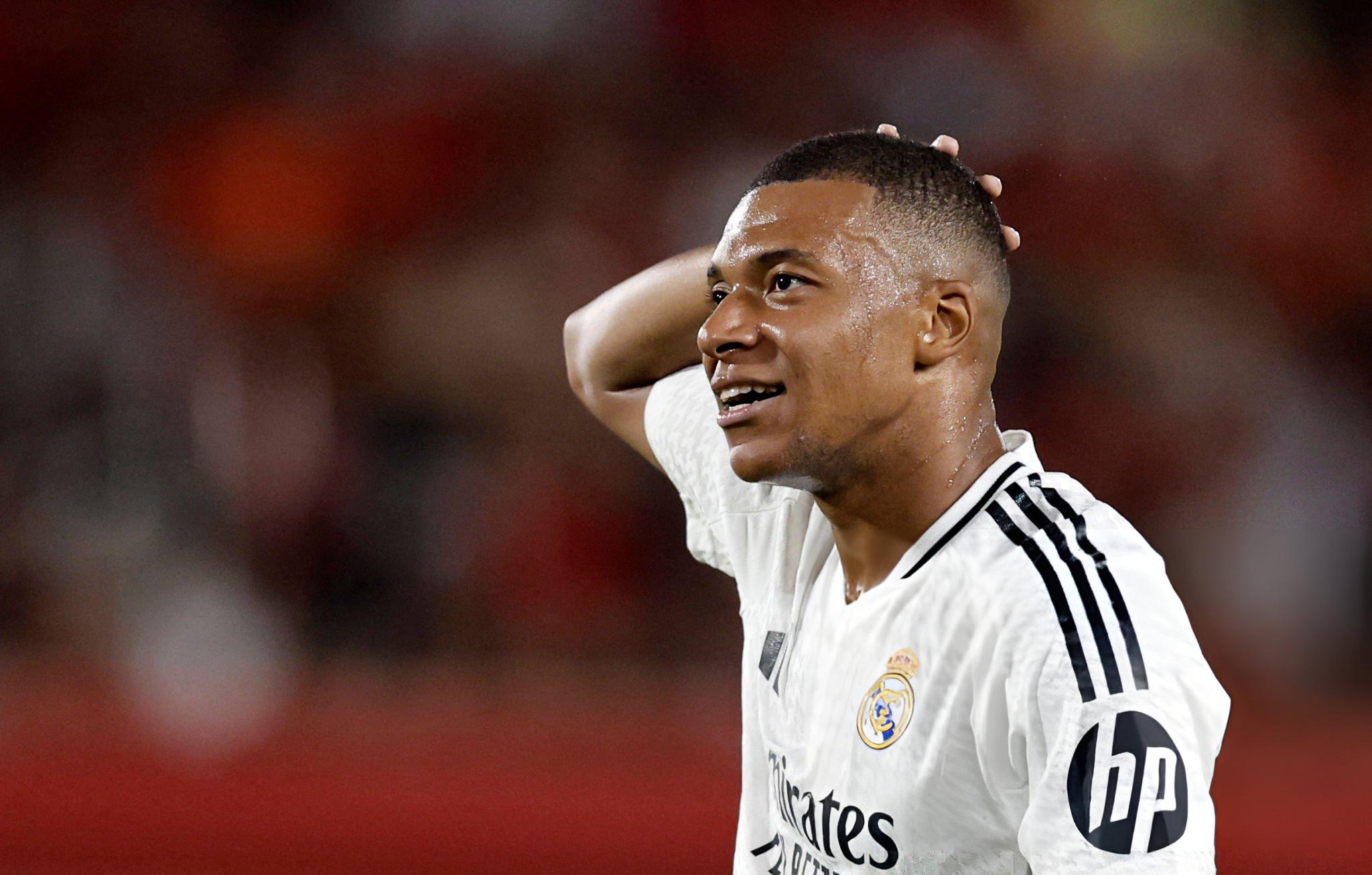
Kylian Mbappe has reportedly turned to the Moroccan national team's medical staff to address a persistent knee issue, bypassing his own club's infrastructure in a move that highlights the growing rift between elite players and team-appointed health departments. While Real Madrid and the French Federation maintain standard protocols, the world’s most expensive forward is looking toward a specific specialist with a track record of unconventional success. This isn't just about a sore joint. It is a calculated move to protect a billion-dollar career in an era where the football calendar is literally breaking the sport's biggest stars.
The decision to consult an external federation’s doctor, specifically one associated with Morocco's historic 2022 World Cup run, suggests a lack of confidence in the traditional recovery timelines provided by his domestic employers. Elite players are increasingly functioning as independent corporations. They hire their own physios, chefs, and now, their own diagnostic consultants. When the interests of the club—which needs the player on the pitch tomorrow—clash with the interests of the player—who needs his cartilage to last another decade—the player is starting to win.
The Physical Toll of the Modern Calendar
The human body was never designed to play 70 matches a year at the intensity required by the modern game. Mbappe’s knee is the canary in the coal mine. We are seeing a spike in tendon and ligament issues that can be traced directly to the lack of an off-season. When a player of this caliber seeks "off-book" medical advice, it usually means the standard rest-and-rehab cycle isn't working.
The Moroccan medical team gained global notoriety during the Qatar World Cup for keeping players on the pitch who, by all rights, should have been in surgical wards. Their approach combines traditional sports science with aggressive recovery techniques that prioritize immediate functionality. For Mbappe, whose game relies almost entirely on explosive acceleration and violent changes of direction, even a 5% drop in joint stability is a catastrophic failure.
The Mechanics of the Knee Crisis
Most elite footballers deal with "jumper’s knee" or patellar tendinitis. However, the whispers surrounding Mbappe suggest something more structural. If there is concern over the meniscus or a slight cartilage fray, the conservative approach is surgery. Surgery means months on the sidelines. It means missing the business end of the Champions League. It means a loss of momentum that a player in the hunt for the Ballon d'Or simply cannot afford.
The Moroccan staff’s expertise lies in non-invasive management. They utilize advanced biological therapies and biomechanical adjustments to offload pressure from the affected area. It is a high-wire act. You are essentially managing pain and inflammation while the underlying issue remains. If it works, you’re a genius. If the knee gives out in the 80th minute of a quarter-final, the decision-making process will be scrutinized for years.
The Breakdown of Trust in Club Medicine
Internal medical departments at major clubs face a permanent conflict of interest. They are paid by the entity that owns the player's registration. Their mandate is to get the asset back into production as quickly as possible. This "return to play" pressure often leads to the overuse of corticosteroid injections or premature clearance for full-contact training.
Players have noticed.
Mbappe’s move to consult with the Moroccan doctor is a public vote of no confidence in the "company doctor" model. By seeking a second opinion from a specialist who has no skin in the Real Madrid game, he is ensuring that his long-term health is the only priority. This is a trend that started in the NBA and has now fully migrated to European football. The player is the CEO of his own body. He is no longer willing to outsource the most important decisions to a department that reports to the manager he sees every morning.
The Diplomatic Fallout
There is also the matter of international relations. France and Morocco have a deep, complex footballing overlap. For the captain of Les Bleus to seek help from the Atlas Lions' medical camp is a narrative nightmare for the French Football Federation (FFF). It implies that the French infrastructure—widely considered among the best in the world—is somehow lacking or that their star man doesn't trust the people in Clairefontaine.
Real Madrid is unlikely to be pleased either. The club spends millions on its medical facilities at Valdebebas. To have a marquee signing looking elsewhere for answers creates a PR headache and sets a precedent that other players will likely follow. If Jude Bellingham or Vinicius Junior start seeking external consultations, the club’s authority over player fitness evaporates.
The High Cost of Longevity
We are entering an era of the "bionic" footballer. Players are using hyperbaric chambers, cryotherapy, and specialized blood work to extend their peaks. But these tools only work if the diagnosis is correct. The consultation with the Moroccan doctor likely centers on a specific type of regenerative therapy that hasn't yet been fully adopted by the conservative medical boards of La Liga.
Consider the hypothetical example of a player with a Grade 2 ligament strain. The standard manual says six weeks of rest. An aggressive, specialized doctor might suggest a regime of targeted growth factors and specific isometric loading that cuts that time to three weeks. For a player like Mbappe, those three weeks represent millions in commercial value and the difference between a trophy and a failure.
The Risk of the Short Term Fix
The danger in these external consultations is the "miracle cure" trap. Sports medicine is littered with stories of players who found a doctor who promised they could play through the pain, only to suffer a career-ending rupture later. The Moroccan team’s ability to keep players moving during a short tournament like the World Cup is one thing. Maintaining that level of intensity over an eight-month domestic season is a different beast entirely.
If Mbappe is masking a structural problem to stay on the pitch, he is gambling with his thirties. We have seen this before with players like Kaká or Michael Owen, whose careers peaked early because their bodies were pushed past the breaking point in their early twenties. Mbappe is 25. He is at the absolute zenith of his physical powers, but he is also at the point where the miles on the clock begin to show.
A New Power Dynamic
This situation marks a definitive shift in how power is wielded in the dressing room. In the past, a coach like Sir Alex Ferguson or Arsene Wenger would have strictly forbidden a player from seeing an outside doctor. Today, no manager has that kind of leverage over a superstar. The player's brand is often larger than the club itself.
Mbappe is testing the limits of this autonomy. By reaching across borders for medical advice, he is asserting that his body belongs to him, not to the badge on his shirt. This will inevitably lead to more standardized "private" medical teams for top-tier athletes, mirroring the way they currently handle their social media or legal affairs.
The Reality of the Injury
The "knee injury" remains shrouded in the vague language of "discomfort" and "fatigue." This is intentional. In the world of high-stakes sports, information is a currency. If opponents know a player has a weak left knee, they will target it. If sponsors think a player is injury-prone, the valuation of the next shoe deal drops.
The Moroccan consultation is a desperate attempt to gain clarity in a fog of conflicting advice. Mbappe is looking for a "yes" when everyone else is saying "maybe." He is looking for a way to maintain his status as the fastest, most dangerous player on the planet while his own anatomy is telling him to slow down.
The medical report from this secret meeting won't be made public, but the results will be visible every time Mbappe sprints for a loose ball. If he retains that explosive first step, the Moroccan gamble will have paid off. If he starts to look a half-step slower, or if he begins to shy away from heavy contact, we will know that even the most specialized doctors can't outrun the biological clock. The era of the club-controlled athlete is over, and the era of the independent sporting contractor has arrived, bringing with it a whole new set of risks.
You can expect more stars to follow this path, creating a shadow medical industry that operates parallel to the official team structures, forever chasing the thin margin between peak performance and physical collapse.