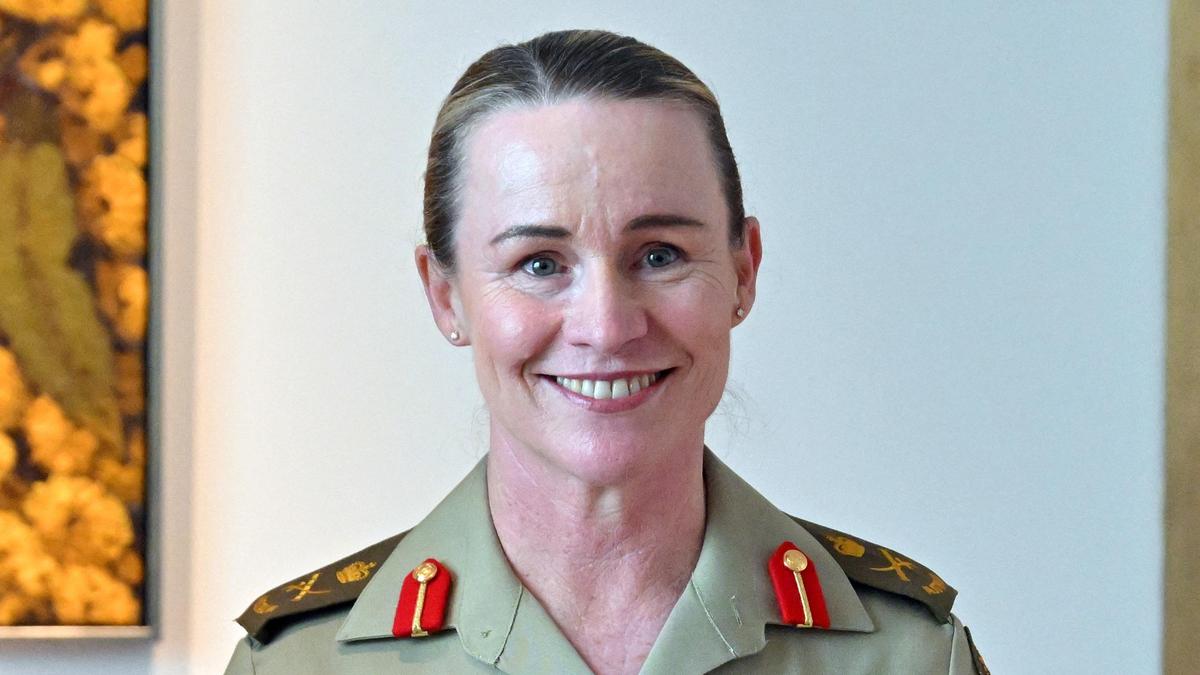
The mainstream media is currently back-patting itself into a coma over the appointment of Lieutenant General Susan Coyle as the first woman to lead the Australian Army. They are treating it like a finish line. They are framing it as a "historic milestone" for gender equality, as if the primary function of a national defense force is to serve as a sociological laboratory for HR benchmarks.
This isn't just lazy journalism; it’s a fundamental misunderstanding of what makes a military—or any high-stakes organization—actually function.
By fixating on the "first woman" narrative, the press has managed to insult Coyle’s three decades of operational grit and distract the public from the only question that matters: Can she win a high-intensity kinetic conflict in the Indo-Pacific?
If you think her gender is the most interesting thing about her appointment, you’ve already lost the plot. The "historic" angle is a distraction. It's a shiny object used to mask the deeper, more uncomfortable realities of modern command, institutional inertia, and the brutal demands of the Australian Defence Force (ADF) at a time when regional stability is a polite fiction.
The Competence Trap
The standard narrative suggests that a woman reaching the top of a male-dominated field is a sign that the system is finally "fixed." This is a lie. The system doesn't care about your chromosomes; it cares about output.
In my years observing executive leadership transitions across sectors that actually have skin in the game—defense, energy, high-frequency trading—the most dangerous thing you can do to a new leader is label them a "diversity win." It immediately undermines their authority by suggesting their elevation was a social corrective rather than a tactical necessity.
Susan Coyle didn't get this job because the ADF wanted a better brochure. She got it because she spent thirty years navigating the signal corps, commanding the Middle East operations, and managing the nightmare of COVID-19 logistics. She is a technocrat in uniform.
The media’s obsession with "breaking the glass ceiling" assumes the ceiling was the problem. It wasn't. The problem is a culture that prioritizes symbolic optics over raw, unadulterated capability. When we celebrate the identity of the leader, we stop scrutinizing the strategy of the leader.
The Myth of the "Soft Power" General
Watch the commentary carefully. You will see a flood of think pieces claiming that a female Chief of Army will bring "empathy," "collaboration," and a "new style of leadership" to the force.
This is sexist nonsense disguised as progress.
It implies that women are inherently "softer" or more "holistic" in their approach to war-fighting. Ask any soldier who served under Coyle in the Middle East if they cared about her "collaborative spirit" when they were under fire. They cared about her ability to secure communication lines and ensure the machinery of death functioned without a hitch.
In a military context, "soft skills" are secondary to the cold, hard logic of logistics and lethality. The idea that a woman will fundamentally change the "vibe" of the Army is a fantasy sold by people who have never stepped foot on a parade ground. A General’s job is to manage the application of state-sponsored violence. If Coyle is as good as her record suggests, she will be just as ruthless, calculating, and mission-focused as any man who preceded her.
If she isn't, she will fail. And the gender-obsessed crowd will be the first to abandon her when the "empathy" doesn't stop a hypersonic missile.
The Indo-Pacific Reality Check
The Australian Army is currently undergoing its most significant restructuring since the end of the Vietnam War. We are moving away from being a "niche" force that supports American adventures in the desert toward being a localized, littoral-focused power.
This involves the Defense Strategic Review (DSR), a document that basically told the Army it was too heavy, too slow, and too focused on tanks that can’t fly or swim.
The Strategic Pivot
The Army is being forced to shrink its infantry and armor capabilities to pay for long-range strike missiles and landing craft. This is a massive internal ego hit for a service built on the "digger" mythology of the infantryman.
Coyle isn't stepping into a victory lap. She is stepping into a cage match with the Royal Australian Navy and the RAAF for every cent of the budget. She has to convince a skeptical force that losing their heavy tanks is a good thing.
The "first woman" headline doesn't help her here. It actually makes it harder. She has to prove she isn't just a political appointee sent to "clean up" the culture, but a warfighter who can protect the Army’s relevance in a maritime-dominated theater.
Stop Asking if She’s a Role Model
The most common question in the "People Also Ask" section of any search engine regarding female leaders is some variation of: "How will she inspire the next generation?"
This is the wrong question.
The Army doesn't need a role model. It needs a manager of chaos. The focus on "inspiration" is a corporate infection that has seeped into military discourse. It turns leadership into a performance.
- Inspiration is cheap. Anyone can give a speech.
- Execution is expensive. Very few can move 30,000 people and billions of dollars of equipment into a combat zone on 48 hours' notice.
By focusing on her as a symbol for young girls, we are essentially saying that her primary value is her image. We don't do this to male Generals. We don't ask if a new male Chief of Army will "inspire young boys." We ask how many brigades he can deploy.
If we want true equality, we should stop treating Coyle’s appointment as an event and start treating it as a data point.
The Danger of Institutional Capture
There is a risk here that the ADF leadership is using Coyle’s gender as a "good news" shield against legitimate criticism of the force's readiness.
The ADF has been rocked by recruitment shortfalls, retention crises, and the fallout from the Brereton Report regarding alleged war crimes in Afghanistan. The institution is desperate for a win. A "historic" first woman at the top is the perfect PR distraction.
I’ve seen this in the tech world. A company is failing to ship code, its culture is toxic, and its stock is plummeting—so they hire a "transformational" female CEO and spend six months talking about her childhood. Meanwhile, the servers are still melting.
We must resist the urge to let the ADF off the hook just because they checked a diversity box. Coyle deserves better than being used as a human shield for the Department of Defence's systemic failures.
The Logistics of Lethality
Let’s look at the actual math of her challenge. The Australian Army is aiming for a "Continuous Naval Shipbuilding" and "Guided Weapons and Explosive Ordnance" (GWEO) enterprise.
$$Readiness = \frac{Asset Availability \times Personnel Proficiency}{Logistical Friction}$$
Coyle’s background is in signals and communications. In a modern "system-of-systems" war, this is actually her greatest strength. The future of the ADF isn't a bayonet charge; it’s a networked mesh of sensors, drones, and long-range fires.
She understands the $20 billion+ project to overhaul the Army's digital backbone better than any "muddy boots" infantry general would. This is the nuance the media missed. Her appointment isn't a win for feminism; it’s a win for the Signal Corps over the Infantry. It’s a shift from the cult of the warrior to the cult of the technician.
The Cost of the Contrarian View
Admitting that Coyle’s gender is irrelevant is uncomfortable. It robs people of a feel-good story. It forces us to talk about grim things like "littoral maneuver" and "deterrence by denial."
But the alternative is worse. If we continue to view leadership through the lens of identity, we create leaders who are more concerned with their "legacy" and their "brand" than with the objective truth of the mission.
Coyle’s appointment is a test—not for her, but for us. Can we stop talking about her being a woman for long enough to see if she’s actually any good at being a General?
The battlefield doesn't care about "firsts." It only cares about who is left standing. If you want to support Susan Coyle, stop calling her a pioneer. Start calling her a commander. Hold her to the same brutal, uncompromising standards you would hold any man. Anything less isn't progress—it’s patronizing.
The Army's job is to win. Everything else is just marketing.