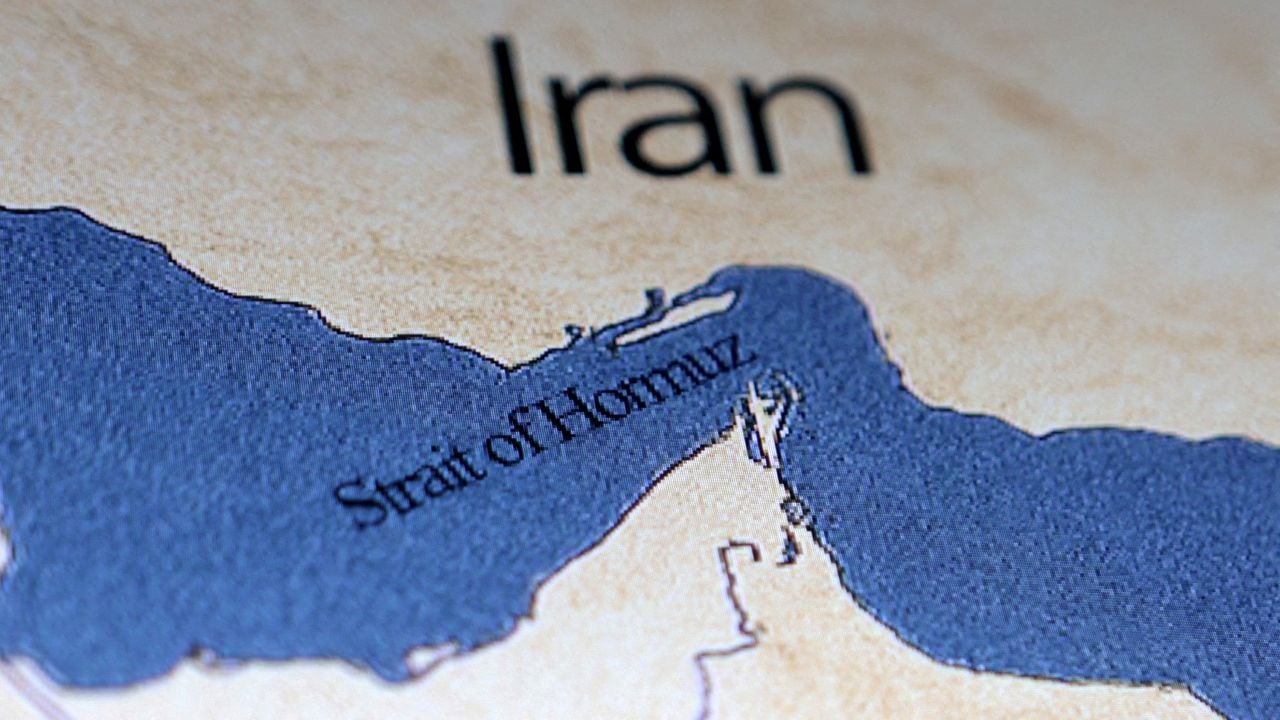
The detection of multiple waves of Iranian ballistic and cruise missiles directed toward Israeli territory marks a transition from gray-zone proxy warfare to a direct kinetic engagement characterized by high-velocity saturation tactics. This shift is not merely a change in diplomatic posture but a fundamental recalibration of the regional security architecture. Understanding the current conflict requires moving beyond "live updates" and instead analyzing the mechanical constraints of missile defense, the economic attrition of interceptor ratios, and the specific signaling embedded in flight telemetry.
The Triad of Iranian Delivery Systems
The offensive utilizes a tiered approach to penetrate multi-layered defense systems. Iran’s aerospace doctrine relies on the integration of three distinct flight profiles to overwhelm sensor arrays and deplete interceptor stockpiles. Meanwhile, you can explore similar events here: The Cold Truth About Russias Crumbling Power Grid.
- Low-Slow Saturation (LSS): Using "suicide" drones or loitering munitions, the objective is to force the activation of radar systems and the expenditure of short-range interceptors. Their low RCS (Radar Cross Section) and subsonic speeds create a high-volume "noise" environment.
- Cruise Missile Vectoring: Unlike ballistic paths, these systems follow the Earth's curvature, utilizing terrain masking to avoid early detection by ground-based radar. Their maneuverability allows for non-linear approach vectors, complicating the geometry of the "kill chain."
- Medium-Range Ballistic Missiles (MRBMs): These represent the primary lethality. Systems like the Kheibar Shekan or Fattah-1 are designed for high-reentry velocities. The primary challenge for defenders is the terminal phase, where the missile’s kinetic energy makes interception a matter of extreme precision.
The synchronization of these tiers aims to create a "saturation bottleneck." If the defense system is busy tracking 50 low-cost drones, its processing bandwidth for high-velocity ballistic threats is functionally reduced, even if only by milliseconds.
The Calculus of Interception Geometry
Israel’s defense is not a single "dome" but a vertical stack of specialized technologies. The effectiveness of this stack is governed by the laws of physics and the finite speed of light and sound. To explore the complete picture, check out the excellent analysis by BBC News.
The Arrow 3 Exo-atmospheric Tier
Operating in the vacuum of space, Arrow 3 is designed to intercept MRBMs during their mid-course phase. By neutralizing the threat outside the atmosphere, the risk of chemical or radioactive fallout is minimized. The logic here is "Hit-to-Kill" technology, requiring the interceptor to physically collide with the warhead at combined speeds exceeding Mach 10.
David’s Sling and the Maneuverability Gap
David’s Sling fills the "middle tier," targeting sophisticated cruise missiles and heavy rockets. The technical bottleneck here is the "maneuverability ratio." A cruise missile can change its flight path; an interceptor must not only match that change but exceed it by a factor of three to ensure a successful intercept.
The Iron Dome Economic Asymmetry
Iron Dome remains the final layer for short-range threats. However, a systemic vulnerability exists in the cost-exchange ratio. An Iranian-designed drone may cost $20,000, while a Tamir interceptor costs roughly $50,000 to $100,000. In a sustained war of attrition, the defender faces a "cost-function collapse" where the price of defense outstrips the economic capacity to replenish magazines.
Strategic Depth and Early Warning Constraints
The geographic distance between Iran and Israel—approximately 1,000 kilometers—provides a specific "time-of-flight" window. A ballistic missile covers this distance in 10 to 12 minutes, whereas a drone may take 6 to 9 hours.
This temporal gap creates a tiered alert cycle. The primary friction point is the "Decision-to-Launch" (DTL) window. Israeli command and control must identify the threat, categorize the payload, and assign an interceptor within seconds of the initial thermal bloom detection by infrared satellites.
The integration of US X-band radar located in the Negev desert provides a critical "look-ahead" capability. By sharing high-resolution tracking data, the system reduces the "error ellipse" of incoming projectiles, allowing interceptors to be launched on a more efficient, direct intercept course rather than a pursuit course.
The Cognitive Impact of Saturation
Military logic dictates that no defense is 100% effective. The "Leaky Defense" theory posits that in a saturation attack of 300 projectiles, even a 95% success rate allows 15 warheads to impact. Iran’s strategy hinges on these 15 impacts. The goal is not total destruction but the demonstration of "penetrative capability."
When a missile reaches a high-value target—such as an airbase or a population center—it resets the psychological deterrent. The Iranian command calculates that the political cost of a single successful strike on a sensitive facility outweighs the military cost of losing 285 missiles to interception.
Signal vs. Noise in Flight Telemetry
The specific flight paths chosen by Iran reveal their intent. Launching from sovereign Iranian soil, rather than through proxies in Lebanon or Yemen, is a deliberate escalatory signal. It establishes a "New Normal" in regional engagement rules.
- Direct Attribution: By launching from Iran, the Islamic Revolutionary Guard Corps (IRGC) removes the "plausible deniability" traditionally used in proxy conflicts.
- Target Selection: Focusing on military installations rather than civilian infrastructure suggests an attempt to maintain the conflict within the bounds of "Proportional Response" to avoid a full-scale regional conflagration.
- Intelligence Gathering: Every wave of missiles serves as a live-fire test of Israeli and Allied sensor nets. Iran is effectively "pinging" the network to map the locations of mobile radar units and battery reload times.
The Intelligence-Intercept Feedback Loop
Success in this kinetic environment is dependent on the "OODA Loop" (Observe, Orient, Decide, Act).
- Observation: Satellite constellations detect the thermal signature of a launch.
- Orientation: Radar arrays determine if the trajectory is ballistic, depressed, or lofted.
- Decision: Automated battle management systems prioritize threats based on predicted impact points (e.g., ignoring a missile headed for an empty desert).
- Action: Launch of the appropriate interceptor tier.
The bottleneck is the "re-engagement" phase. If a first interceptor misses, the time remaining to launch a second is halved. This creates a "compressed kill chain" where the defender’s margin for error approaches zero as the missile enters the terminal descent phase.
The Strategic Playbook for the Immediate Horizon
The current situation dictates a shift from defensive posturing to offensive neutralization. If the cost-exchange ratio of interception continues to favor the aggressor, the only logical military move is "Left-of-Launch" intervention. This involves targeting the launch platforms, fuel depots, and command nodes within Iranian territory before the missiles are airborne.
The immediate tactical priority for Israeli and Allied forces is the suppression of the IRGC’s "Transporter Erector Launchers" (TELs). These mobile units are difficult to track but represent the center of gravity for the Iranian missile threat. Neutralizing the TELs breaks the saturation cycle and restores the defensive equilibrium.
Further engagement will likely move toward "Cyber-Kinetic Integration." Disrupting the GPS and GLONASS guidance signals used by Iranian cruise missiles would cause them to lose terminal accuracy, rendering them ineffective without requiring the expenditure of million-dollar interceptors. The conflict has moved beyond simple "waves of missiles"; it is now a battle of signal processing, orbital mechanics, and economic endurance.