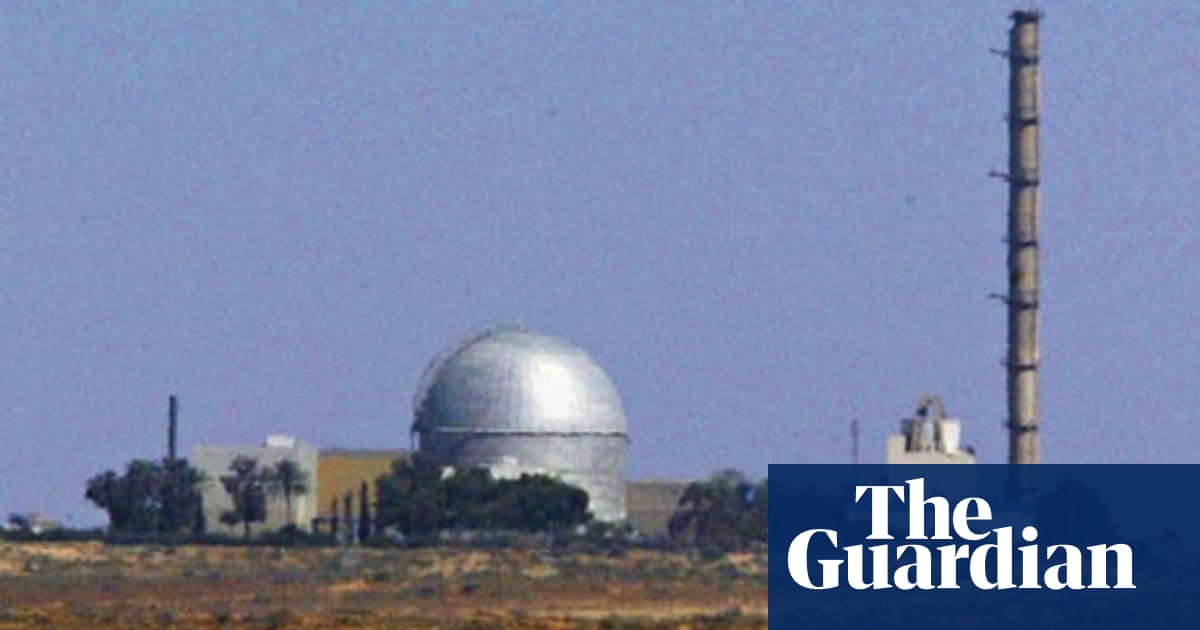
For decades, the world has played a quiet game of pretend with Israel's nuclear arsenal. Everyone knows it’s there, sitting in the Negev desert, but the official policy is "don't ask, don't tell." This strategy, known as nuclear opacity or amimut, has been the bedrock of Middle Eastern stability—or at least the illusion of it. But it's 2026, and the old rules are fraying. As regional tensions hit a fever pitch, the silence surrounding Israel's nuclear doctrine isn't just an "awkward secret" anymore. It's becoming a massive liability that could trigger the very catastrophe it was meant to prevent.
The logic of keeping a nuclear program in the shadows is simple: you get the deterrence without the diplomatic headache. By neither confirming nor denying its weapons, Israel avoided a nuclear arms race with its neighbors for years and bypassed the messy sanctions that usually hit countries outside the Nuclear Non-Proliferation Treaty (NPT). But deterrence only works if your opponent knows exactly where the "red line" is. Today, those lines are blurred, and that's exactly why we should be worried.
The Samson Option and the Logic of Last Resort
If you want to understand the darkest corner of Israeli strategic thinking, you have to look at the "Samson Option." It’s named after the biblical figure who pulled down the pillars of a temple to crush his enemies as he died. It isn't a formal, written doctrine you’ll find on a government website, but it’s the ghost that haunts every war room in the region.
The core idea is terrifyingly blunt. If Israel faces an existential threat—if its conventional defenses fail and the state is on the verge of being overrun—it will use its nuclear weapons to take its enemies down with it. It’s a "not dying alone" scenario. While most nuclear powers view their nukes as tools for "second strike" capability or "strategic stability," Israel’s posture is rooted in the deep-seated fear of total annihilation.
When a state believes it's fighting for its very survival, the threshold for pushing the button drops significantly. We aren't talking about a calculated chess move here. We’re talking about a cornered animal with a detonator. In the current 2026 landscape, where multi-front conflicts are the new normal, what defines an "existential threat" is becoming dangerously subjective. Is it a tank division crossing a border? A massive cyber-attack on the power grid? Or just a series of conventional losses that feel like the beginning of the end?
Why the World’s Silence Is No Longer Working
For a long time, the U.S. and other Western allies were happy to look the other way. They figured that as long as Israel didn't test a weapon or brag about it, the rest of the Middle East wouldn't feel pressured to build their own. That era is over. Iran's own nuclear ambitions and the recent strikes near the Dimona facility show that the "secret" has lost its magic.
The problem with opacity is that it prevents any real international oversight. Israel isn't a signatory to the NPT. Its facilities, like the Negev Nuclear Research Center, aren't subject to the same International Atomic Energy Agency (IAEA) inspections that govern other nations. We’re essentially trusting a single government to manage a stockpile estimated at anywhere from 90 to 400 warheads with zero outside accountability.
Without clear, public doctrine, miscalculation is almost guaranteed. If an adversary doesn't know what will trigger a nuclear response, they might accidentally cross that line. In the high-stakes environment of 2026, where "shock and awe" tactics are being discussed more casually by politicians, the lack of a clear "no first use" policy creates a hair-trigger environment.
The Shift in Domestic Politics
We also have to talk about what’s happening inside Israel. Strategy isn't just about missiles and maps; it’s about the people who hold the keys. Over the last few years, Israeli politics has shifted toward a more nationalist, hardline stance. The military and political leadership are under immense pressure to deliver total victories.
When "total victory" becomes the only acceptable outcome, the temptation to use every tool in the shed grows. We’ve already seen high-ranking officials make off-hand comments about the "nuclear option" during recent conflicts. These aren't just slips of the tongue. They reflect a changing internal culture where the nuclear taboo is starting to erode. Honestly, it’s naive to think that a government under extreme domestic pressure wouldn't consider the unthinkable to stay in power or "save" the nation.
Proliferation Is Already Here
The world spent decades trying to prevent a nuclear Middle East, but the "Israel Exception" has arguably made proliferation inevitable. Other regional powers look at Israel’s undeclared status and see a double standard. They see a country that has nukes, gets billions in U.S. aid, and faces no consequences for staying outside the global regulatory framework.
This isn't just a "Middle East problem." It’s a global one. Every time the international community gives Israel a pass on its nuclear doctrine, it weakens the NPT everywhere else. If one country can stay opaque and protected, why shouldn't others? The 2026 reality is that we are closer to a regional nuclear "free-for-all" than we’ve been since the Cold War.
The Cost of the Status Quo
A nuclear exchange in this part of the world wouldn't just be a local tragedy. We’re talking about radioactive fallout that could drift across Iran, Afghanistan, and Pakistan. We’re talking about global supply chain collapses and a climate shift that could trigger widespread famine. The "Samson Option" isn't just a threat to Israel's neighbors; it's a threat to anyone who breathes.
We can't afford to keep treating this like a taboo topic. The international community needs to stop enabling the silence. There needs to be a push for Israel to move toward "strategic clarity"—to define its thresholds, acknowledge its stockpile, and eventually join the global conversation on disarmament.
The first step is for global leaders to stop pretending the elephant in the room doesn't have a nuclear warhead. You can start by following the reporting from organizations like the Stockholm International Peace Research Institute (SIPRI) or the Bulletin of the Atomic Scientists. They track these numbers when governments won't. If you’re concerned about global security, the best thing you can do is demand that nuclear policy—all nuclear policy—be brought out of the shadows and into the light of public accountability.