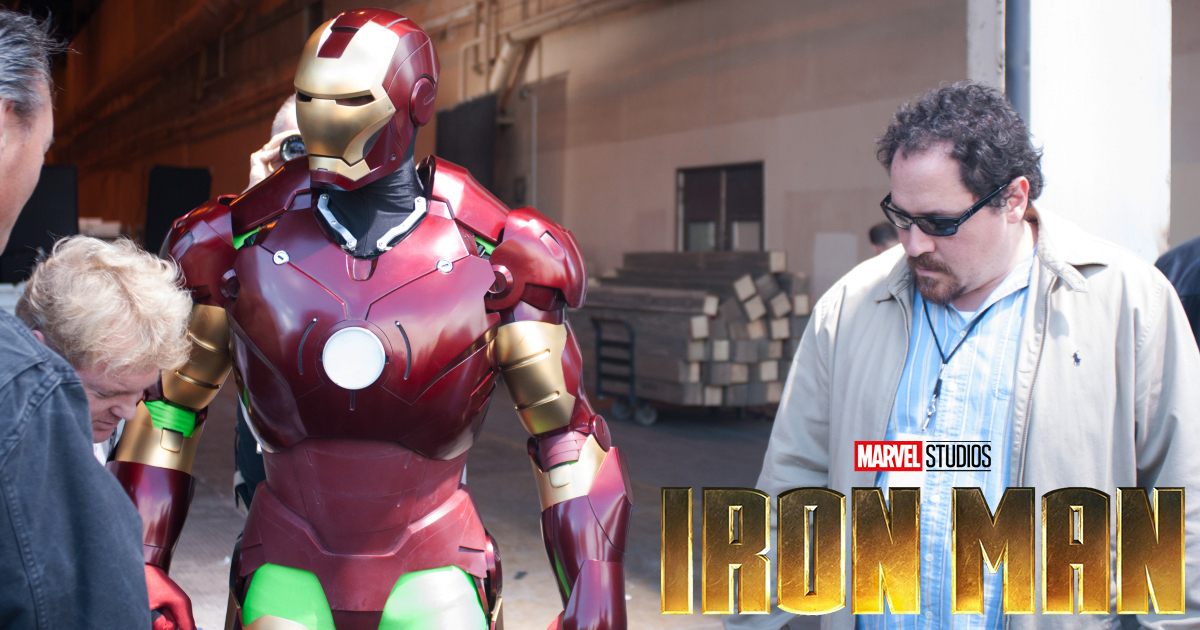
We’ve all seen the movies where Tony Stark taps a housing on his chest and suddenly he's encased in gold-titanium alloy, blasting through the stratosphere. It looks easy. It looks inevitable. But trying to build iron man armor in real life is honestly one of the most humbling engineering challenges on the planet. You’d think with all our breakthroughs in AI and robotics, we’d have a suit sitting in a garage somewhere by now. Well, we do. Sorta.
People like Richard Browning and companies like Sarcos have come incredibly close, but the reality is much messier than a Marvel montage. It's heavy. It’s loud. It’s dangerously hot. When you start digging into the physics, you realize that the "Iron Man" dream is actually a collision of four or five different scientific fields that aren't quite ready to play nice with each other yet.
The power problem is basically a brick wall
In the films, the Arc Reactor solves everything. It’s a clean, infinite power source that fits in your palm. In the real world? Power density is our biggest enemy. If you want a suit to move its own weight plus the weight of a human, you need massive actuators. Those actuators need juice.
Current lithium-ion batteries are great for your phone, but for a high-performance exoskeleton, they’re essentially heavy paperweights. If you tried to power a full-flight-capable suit with current battery tech, the batteries would be so heavy the suit couldn't lift itself. It’s a literal catch-22. This is why most "real" suits you see in testing facilities have a thick "umbilical cord" trailing behind them. They’re plugged into the wall because the onboard storage just isn't there yet.
Gravity doesn't care about your cosplay
Richard Browning, the founder of Gravity Industries, is probably the closest we’ve ever gotten to a functional Iron Man. He uses kerosene-fueled micro-gas turbines. When you watch him fly, it’s visceral. You can see the sheer physical strength required just to hold his arms in place while those engines blast downwards.
- Engine layout: He uses two engines on each arm and one on the back.
- The "Flight" experience: It’s more like incredibly controlled falling or high-speed hovering than "flying" like a jet.
- Fuel limits: You get about five to ten minutes of air time before you're out of gas.
His suit, the Daedalus, is a marvel of human grit, but it highlights the "Iron Man" gap. Tony Stark’s suit is an exoskeleton that protects and enhances. Browning’s suit is a wearable engine. If he hits a bird or an engine flames out, he’s not protected by a suit of armor; he’s a guy in a flight suit falling from the sky. We haven't figured out how to shrink the propulsion enough to put it inside an armored shell without cooking the pilot alive.
The Sarcos Guardian XO and the strength factor
While Browning is tackling the flight aspect, a company called Sarcos Robotics has been winning the "strength" side of the iron man armor in real life equation. Their Guardian XO is a full-body powered exoskeleton. It’s not meant for fighting aliens; it’s meant for moving 200-pound crates like they’re boxes of tissues.
What’s wild about the XO is the "get-out-of-the-way" control system. It doesn’t use sensors taped to your skin. Instead, it senses the minute pressure you apply when you start to move and moves the suit before you even feel resistance. It makes the operator feel like they have superhuman strength without the lag that usually plagues robotics. But again, we’re back to the power issue. The XO is incredible, but it's built for industrial warehouses and shipyards, not for soaring over Los Angeles.
Materials science is the silent killer
Movies make us think "Titanium" is the magic word. In reality, titanium is a nightmare to work with. It's expensive, hard to weld, and surprisingly brittle under certain types of stress. To make a real suit of armor that could actually stop a bullet or survive a crash, we need materials that don't really exist in bulk yet.
We’re looking at things like Carbon Nanotubes or Graphene-reinforced composites. These materials are theoretically strong enough to provide protection while staying light enough to move, but we can't manufacture them at "suit-scale" without spending billions. Plus, there's the heat. If you've got jet engines strapped to your arms, the heat soak would melt standard aluminum and burn the pilot's skin through the padding. You need aerogel insulation, which adds more bulk. The suit just keeps getting bigger and bigger until it's more of a "Mech" than a "Suit."
Hacking the human brain (Neural Links)
One thing the movies get right is that you can't control a suit like this with joysticks. There are too many variables. Balance, thrust, limb positioning—it’s too much for a human brain to manage manually. You need an interface that feels like part of your body.
Why AI is the actual JARVIS
Modern flight suits and exoskeletons use "flight controllers" similar to what you find in high-end drones. They make thousands of tiny adjustments every second to keep you upright. Without that AI layer, a human would just face-plant immediately. The next step is direct neural integration. Companies like Neuralink are looking at how to bridge the gap between thought and machine. If we can eventually "think" the suit into moving, the lag disappears. But we’re decades away from that being safe, let alone affordable.
The TALOS Project: A cautionary tale
The U.S. military actually tried this. It was called the Tactical Assault Light Operator Suit (TALOS). They spent years and millions of dollars trying to create a "bulletproof" suit for Special Operations. They wanted liquid armor that could harden in milliseconds when hit by an electrical charge.
They officially shut it down in 2019.
Why? Because the individual components worked, but they couldn't get them to work together. The armor was too heavy, the power was too low, and the thermal management was a disaster. It’s a reminder that even with the world's biggest defense budget, you can't just wish iron man armor in real life into existence.
What you can actually do today
If you’re obsessed with this, you don't have to wait for Stark Industries to become a real thing. The "Iron Man" tech is being "debundled" into different industries right now.
- Exoskeletons for health: If you want to see the most advanced "suits," look at medical rehab. Companies like Ekso Bionics are helping paralyzed people walk. These are real, functional suits that use sensors and motors to mimic human gait.
- Gravity Flight: If you have about $400,000 lying around, you can actually buy a Gravity Jet Suit. Or, more realistically, you can book a flight experience at one of their training centers in the UK or US. It’s the only way to feel that "hand-mounted thrust" sensation.
- High-End 3D Printing: Enthusiasts are using carbon-fiber-infused filaments to create "cosplay" suits that are actually structurally sound. They aren't bulletproof, but they are the proving ground for how the pieces should fit together.
- Augmented Reality: You can't get a HUD (Heads-Up Display) inside a helmet easily because of focal length issues (your eyes can't focus on a screen that close). However, using an Apple Vision Pro or a Meta Quest 3, developers are building "Iron Man" interfaces that overlay data on the real world.
The dream isn't dead; it’s just fragmented. We’re waiting for a breakthrough in solid-state batteries or compact fusion. Until then, the closest we’ll get to iron man armor in real life is a mix of loud jet engines, industrial lifting frames, and a whole lot of carbon fiber. It's not as sleek as the movies, but honestly, seeing a guy actually hover twenty feet off the ground using nothing but wearable turbines is way more impressive than CGI anyway.
The real actionable path for anyone interested in this field isn't "suit building"—it's specializing in one of the bottlenecks. Study soft robotics for better movement, power density for better batteries, or control theory for the AI that keeps the pilot from crashing. That's how the suit actually gets built.