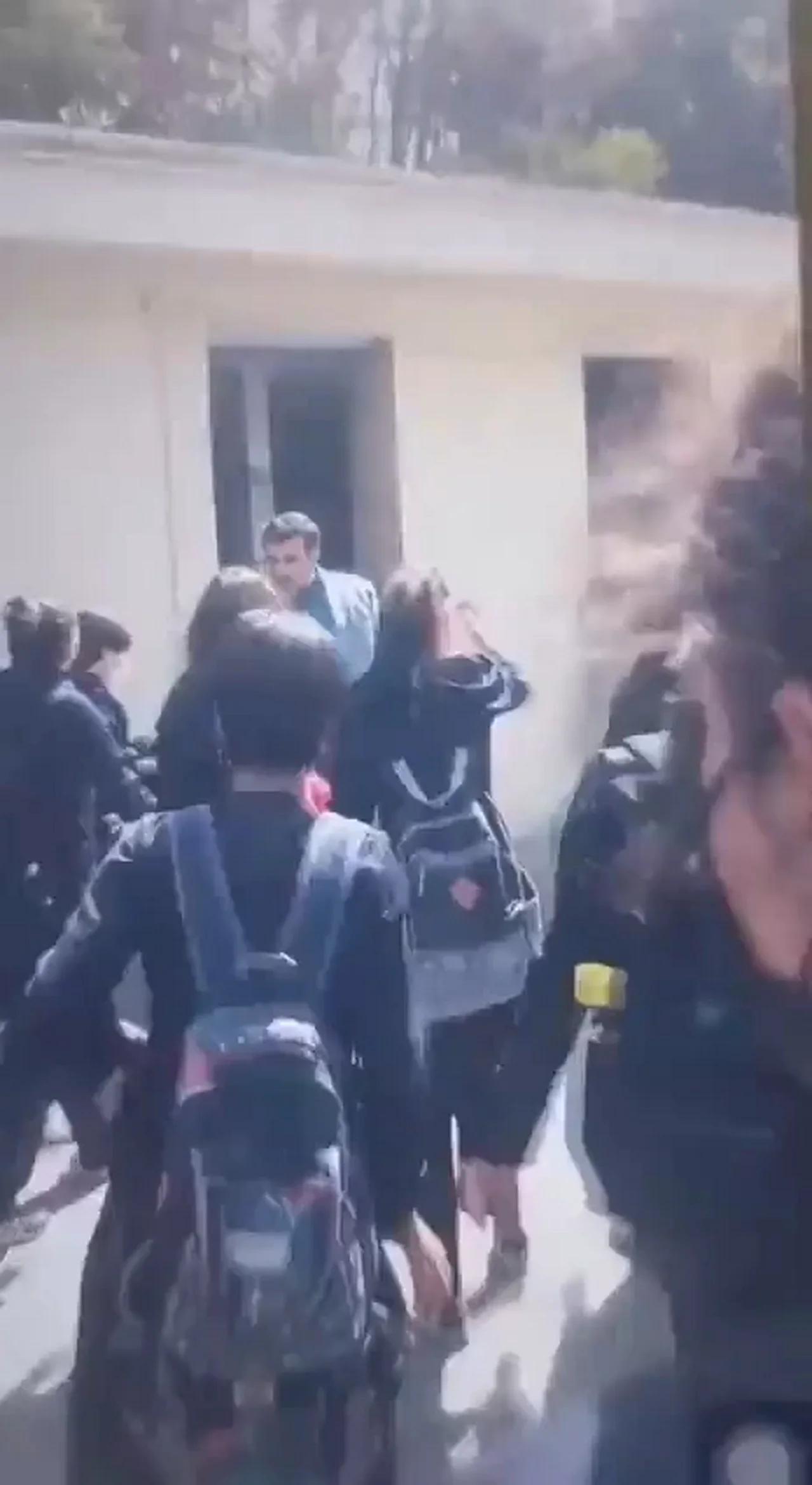
The margin for error in modern aerial warfare isn't nearly as wide as the Pentagon’s sleek press briefings suggest. We’re often told about "surgical strikes" and "high-precision munitions" that can fly through a specific window from hundreds of miles away. But the hardware is only as good as the intelligence feeding it. When that intelligence fails, the results are catastrophic. The recent revelation that an Iranian school was sitting on a formal U.S. target list isn't just a clerical error. It’s a window into how "signature strikes" and automated data analysis can turn a building full of desks into a perceived military threat.
It sounds like a dark thriller plot. A civilian structure, documented and functioning, gets flagged by an analyst or an algorithm. It gets assigned a coordinate. It becomes a legitimate target in the eyes of a superpower. If the order had been given, that school would've been gone. The U.S. military eventually acknowledged the school might've been "mistaken" for a military site, but that admission comes far too late for comfort. It raises the question of how many other "schools" or "hospitals" are currently sitting in a database with a red bullseye over them.
The failure of signature based targeting
Targeting isn't always about seeing a tank and hitting it. In modern conflict, especially when dealing with nations like Iran, the U.S. often relies on what’s called signature-based targeting. This is where analysts look for patterns. They look for specific types of security perimeters, certain communication arrays on roofs, or even just high-level vehicle traffic at odd hours. If a building looks like a command center, the logic goes, it probably is one.
The problem is that a well-funded school in a sensitive district can look remarkably like a low-level military office. High walls for privacy? Check. Secure gates? Check. A generator on the roof because the local grid is spotty? Check. To a satellite 300 miles up, or an AI program scanning thousands of images a minute, these features satisfy the "signature" of a military facility.
I’ve seen how these data sets get built. You have layers of "human intelligence" (HUMINT) and "signals intelligence" (SIGINT). If a single informant provides a bad tip—maybe they have a grudge against a school administrator or they’re just guessing—that tip gets entered into the system. Once it’s in there, it’s hard to get out. It becomes part of a "fused" intelligence product. Subsequent analysts see the flag and assume the previous person did their homework. It’s a digital game of telephone where the stakes are measured in lives.
Intelligence silos and the lack of ground truth
The U.S. doesn't have boots on the ground in Iran. We haven't for decades. This means we lack "ground truth." Everything we know comes from overhead imagery, intercepted radio chatter, or third-party sources. When you lack a person on the street who can walk by and say, "Hey, that’s actually the Al-Zahra primary school," you’re flying blind.
Military intelligence often operates in a vacuum. The teams picking targets aren't always talking to the teams who track humanitarian sites or educational infrastructure. There’s a "need to know" culture that prevents people from double-checking their work against public records. It’s absurd. You could find many of these locations on Google Maps or in local Iranian directories, yet the classified process often ignores open-source intelligence (OSINT) in favor of "secret" data that might be totally wrong.
Why the military mistake excuse doesn't hold water
Whenever these stories break, the official line is usually some variation of "the site displayed characteristics consistent with military activity." That's a classic dodge. It shifts the blame from a failure of process to a "reasonable" mistake based on visual evidence. But in a country with a complex urban fabric like Iran, everything is "consistent" with something else if you look hard enough.
- Security protocols: In Tehran, many civilian buildings have security details that look paramilitary.
- Logistics: Large deliveries of food or supplies can look like military logistics from a drone feed.
- Proximity: Many schools are located near government buildings, leading to "guilt by association" in the targeting software.
We have to stop accepting "mistaken identity" as a valid excuse for putting children's schools on a kill list. It indicates a systemic refusal to verify data through non-military channels.
The role of automated warfare and AI in targeting
We’re moving toward a reality where AI helps pick targets. Systems like "Project Maven" have been designed to process vast amounts of drone footage to identify objects of interest. While the military insists there’s always a "human in the loop," the sheer volume of data means that humans are often just rubber-stamping what the computer tells them.
If an algorithm is trained on data that says "rectangular building + 3m wall + satellite dish = insurgent hub," then every school that meets those criteria is at risk. This Iranian school is a case study in what happens when we trust the math more than the reality. Computers don't understand context. They don't know that a specific neighborhood is known for its prep schools. They just see pixels that match a threat profile.
How to fix a broken targeting process
It’s not enough to just say "sorry, our bad." The entire protocol for "No Strike Lists" needs to be overhauled. Right now, these lists are often defensive—they rely on the other side or international bodies to tell the U.S. what not to hit. That’s a backward way of doing business.
The U.S. needs to integrate OSINT specialists directly into the targeting cells. These are people who can cross-reference a set of coordinates with social media, local news, and commercial maps in seconds. If a coordinate is being considered for a strike, the first step shouldn't be "can we hit it?" it should be "what does the internet say this is?" If there’s a Foursquare check-in or a Facebook page for a school at that location, it needs to be scrubbed from the list immediately. No questions asked.
Furthermore, there needs to be a transparent audit of the "Targeting Folders" for high-tension areas. We shouldn't find out about these mistakes only when a whistleblower speaks up or a document gets leaked.
If you're following this, don't just look at this as a one-off error. Look at it as a symptom of a military-intelligence complex that has become too reliant on high-tech surveillance and too detached from the messy, human reality of the cities it watches. The next step is clear: demand a public accounting of the criteria used to verify civilian infrastructure in conflict zones. We can't keep pretending that "precision" is the same thing as "accuracy."
The real work starts with stripping the "classified" label off of basic geography. If a building is a school, it’s a school, and no amount of "military-style" architecture should change that fact on a targeting map.