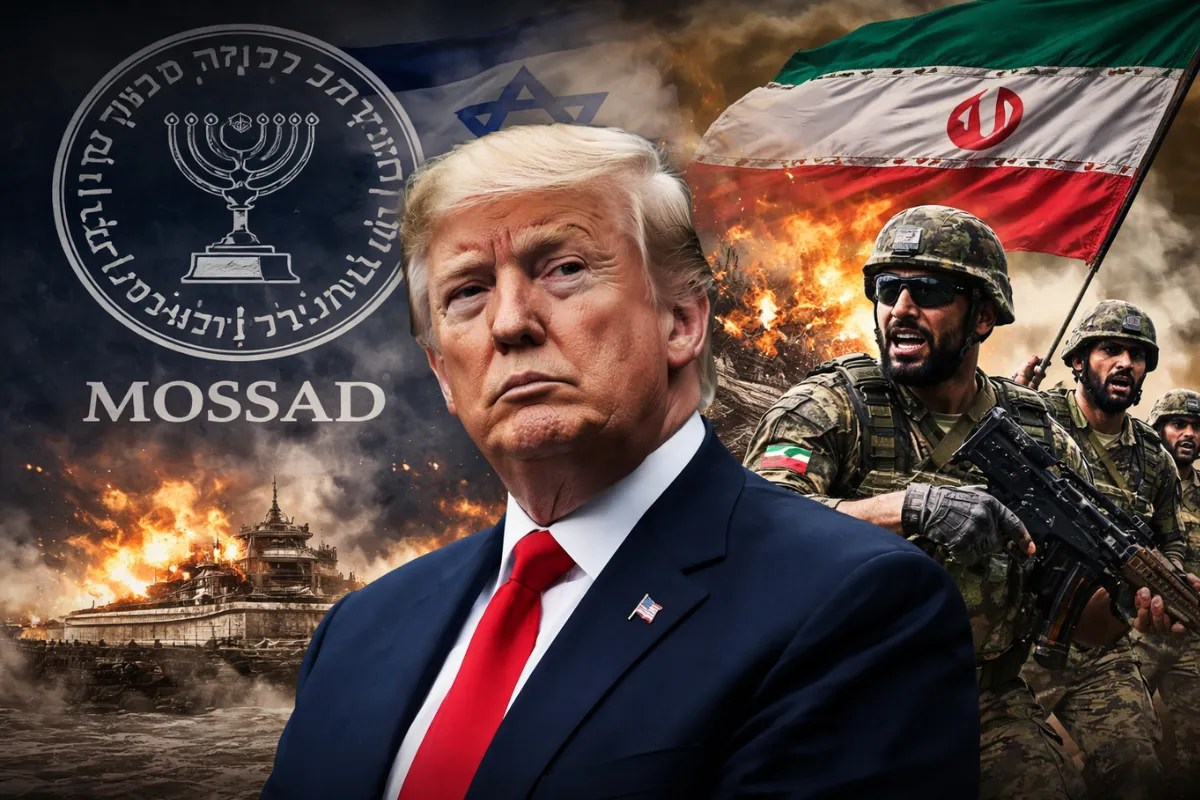
The air in Tehran and Tel Aviv feels different lately. It is a heavy, static-charged atmosphere, the kind that precedes a desert lightning storm. While diplomats in crisp suits exchange pleasantries in wood-paneled rooms, the real story—the one that dictates where the missiles point and where the money flows—is being written in shadows and server rooms.
The Iranian government recently made a claim that sounds like the plot of a spy thriller: they possess "secrets" about Donald Trump’s dependency on Israeli influence. They aren't just talking about shared policy goals. They are hinting at a deeper, more structural tethering that makes the former president’s maneuvers less about choice and more about a predetermined script. Whether this is a sophisticated psychological operation or a genuine intelligence leak remains the million-dollar question.
Politics is rarely about the "what." It is almost always about the "why."
The Architect of a New Reality
Think of a high-stakes poker game where one player isn't just betting their chips, but the security of an entire region. For years, the narrative has been simple: Trump likes Israel; Israel likes Trump. But simplicity is a lie used to keep the public from looking at the gears behind the clock face.
The Iranian narrative suggests that the pressure on Trump isn't just ideological. It is digital and financial. We live in an era where data is more valuable than oil. When Tehran claims to have "exposed a secret," they are tapping into a very real anxiety about how modern leaders are influenced. Is it possible for a superpower's foreign policy to be directed by the specific needs of a small, technologically superior ally?
Consider the Abraham Accords. To the casual observer, they were a breakthrough for peace. To a skeptic, they were a masterclass in leverage. By bringing together the tech-heavy economy of Israel and the capital-rich Gulf states, Trump didn't just move embassies. He created a new nervous system for Middle Eastern trade—one that bypassed old grievances but left the United States as the ultimate guarantor of a very expensive status quo.
The Weight of a Phone Call
Let’s step away from the abstract for a moment. Imagine a strategist sitting in a windowless room in Tehran, watching a live feed of an American rally. They aren't looking at the crowd. They are looking at the donors in the front row. They are looking at the software being used to track voter sentiment.
The Iranian claim centers on the idea that Trump’s "maximum pressure" campaign wasn't born in Washington. They argue it was delivered to him. This isn't just about Benyamin Netanyahu calling the White House. It’s about the underlying infrastructure of power. Israel’s cyber-intelligence industry is the most advanced on the planet. When a former president uses private security or high-end encryption, there is a high statistical probability that the technology originates from the very region he is trying to "fix."
Dependence is a quiet, creeping thing. It starts with a shared enemy. It evolves into shared intelligence. It ends with a reality where you cannot act without consulting the partner who holds the keys to your information.
The Cyber Frontier and the Ghost in the Machine
We often talk about war in terms of tanks and drones. That is an old way of thinking. The modern battlefield is made of code. Iran knows this better than anyone, having been on the receiving end of Stuxnet, the worm that physically destroyed their nuclear centrifuges without a single shot being fired.
When Iran talks about "secrets," they are likely talking about the digital footprints left behind during the Trump administration's most aggressive moments. Every tweet, every back-channel communication, and every sanctioned deal leaves a trace. If Tehran has managed to intercept the communications between Israeli intelligence and the Trump inner circle, the "pressure" they describe isn't just political persuasion. It’s evidence of a symbiotic relationship that might have crossed the line into a loss of American autonomy.
The fear isn't that a leader has allies. The fear is that the allies have the leader.
A Tale of Two Pressures
There is a specific kind of exhaustion that comes with being a citizen in a country caught between these giants. For the average person in Iran, the "secrets" their government claims to hold don't put food on the table. They are just more justification for a conflict that never seems to end.
But for Trump, the stakes are different. He has built a brand on being the "ultimate dealmaker," the man who can’t be bought. If the Iranian claims hold even a grain of truth, that brand is in jeopardy. Being "pressured" by a foreign power is the ultimate antithesis of the "America First" doctrine.
This creates a fascinating paradox. If Trump ignores the claims, he looks like he has something to hide. If he fights back too hard, he risks alienating the very base that sees his support for Israel as a religious and moral mandate. It is a narrow tightrope over a very deep canyon.
The Human Cost of High-Level Chess
We tend to treat these geopolitical shifts like a game of Risk. We forget that every "maximum pressure" sanction is a child in Tehran who can’t get specific medicine. We forget that every "defensive strike" is a family in a border town living in a state of permanent hyper-vigilance.
The Iranian "secret" isn't just about Trump. It’s about the fragility of global peace when it’s built on the personal whims and private debts of powerful men. If foreign policy is being dictated by the leverage one state has over a leader’s personal or political survival, then the concept of national sovereignty is an illusion.
History shows us that whenever a leader is described as being "under pressure" from an ally, the result is rarely a peaceful compromise. It usually leads to an escalation. The leader feels the need to prove they are still in charge, often by doing something drastic.
Beyond the Headlines
The truth is rarely found in a government press release. It’s found in the gaps between what is said and what is done.
Iran’s timing is surgical. By releasing these claims now, they are attempting to influence the American political cycle before it even reaches its peak. They want to plant a seed of doubt. They want the American voter to ask: "Who is really making the decisions?"
It’s a brilliant, if cynical, move. It plays on the deep-seated American fear of foreign interference—a theme that has dominated the last decade of domestic politics. Whether the "secret" is a document, a recording, or a financial trail, its power lies in its potential to disrupt the narrative of independence.
The Mirror of Influence
If we look closely, we see that this isn't just an Israel-Trump-Iran story. It’s a mirror held up to the modern world. We are all under pressure. We are all tracked by algorithms. We are all influenced by forces we can’t see and people we’ve never met.
The Iranian government is betting that we are tired of the secrets. They are betting that the "human element"—the desire for transparency and the fear of being manipulated—will outweigh the strategic benefits of the alliance.
As the dust settles on this latest claim, the missiles remain in their silos, for now. But the psychological war has already been won by whoever can convince the world that the man at the top isn't the one pulling the strings.
The shadow cast by the Mar-a-Lago towers reaches much further than the Florida coastline. It stretches across the Atlantic, over the Mediterranean, and deep into the heart of the Persian Gulf, where a different group of men are waiting to see if their latest gamble will finally tip the scales.
In this game, the facts are just the starting point. The real story is the silence that follows the revelation.