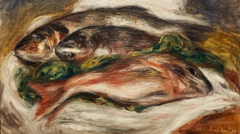
The air inside a gallery at night has a specific, heavy weight. It is thick with the scent of floor wax and the silent, judging presence of history. When the morning sun finally broke over the rooftops of Monza, Italy, it didn’t illuminate the vibrant brushstrokes of Pierre-Auguste Renoir or the structural genius of Paul Cézanne. Instead, it hit a series of pale, rectangular ghosts on the walls.
The frames were gone. The canvas was gone. The soul of the room had been surgically removed.
We often treat art theft as a plot point in a high-octane Hollywood flick. We picture laser grids, black turtlenecks, and daring escapes via paraglider. But the reality of the "Italian Job" that stripped a private collection of its Renoir, Cézanne, and Matisse masterpieces is far more chilling and grounded in a very human kind of betrayal. This wasn't a feat of acrobatics. It was a masterclass in psychological manipulation.
Imagine you are the collector. You have spent decades curating a legacy. You don't just own these paintings; you are their temporary shepherd, holding them in trust for a civilization that still finds beauty necessary. When a man walks into your life claiming to be a representative of the Israeli consulate, draped in the effortless authority of a diplomat, you don't see a thief. You see a peer. You see a bridge to a prestigious future for your collection.
That was the hook.
The Art of the Long Con
Trust is a fragile thing, yet it is the only currency that matters in the high-stakes world of fine art. The thieves didn't break a window. They didn't disable a silent alarm with a soldering iron. They simply asked for the keys.
Under the guise of a private viewing for "official" purchase, these charlatans convinced the owners to move the masterpieces to a rented office space in Monza. It was a neutral ground, or so it seemed. The setup was perfect: a quiet afternoon, a prestigious backdrop, and the promise of a multi-million dollar transaction that would cement the legacy of both the buyer and the seller.
The sellers left the room for a moment. Perhaps it was to fetch a document, or maybe just to allow the "diplomats" a moment of private reflection with the art. In those few minutes, the world changed. When the owners returned, the room was a vacuum. The paintings—Matisse’s delicate lines, Renoir’s soft-focus warmth—had vanished into the chaotic traffic of Northern Italy.
The sheer audacity of it is what lingers. It reminds us that our greatest security systems aren't made of steel or code; they are built on the social contracts we sign with every handshake. When those contracts are shredded, the damage is deeper than the monetary value. The collectors didn't just lose their investments. They lost their dignity.
Consider the "Cézanne gap," a void left in the room where the French Post-Impressionist's work once hung. Cézanne's art was a precursor to Cubism, a bridge between the soft 19th-century eye and the fractured 20th. He was a master of the "why" of a scene. He would paint a mountain hundreds of times, not to capture it perfectly, but to understand its essence.
Now, the only thing remaining of that essence in Monza is a police report and a lingering sense of violation.
The Ghostly Market
Where do these paintings go? This is the question that keeps curators and detectives awake until dawn. It is a common misconception that a stolen Renoir ends up on the black market like a stolen car or a shipment of pirated DVDs. You can’t exactly list a $10 million masterpiece on an auction site and hope for the best.
Instead, these canvases enter a strange, purgatorial state. They become "collateral." They are the currency of the underworld, traded between syndicates to settle debts or to guarantee drug shipments. Imagine a priceless Matisse, perhaps a vibrant scene of a woman at a piano, being stored in a damp basement or a nondescript shipping container. The vibrant reds and deep blues, meant to be seen under the soft glow of a gallery light, are now blanketed by dust and the smell of exhaust fumes.
The tragedy of art theft is that the art becomes a hostage.
It loses its function as a communicator of human emotion. It becomes a chip on a poker table. The thieves don’t love the art. They don’t even like it. To them, it is a bundle of fibers and pigments that happens to be worth a king’s ransom. This is the ultimate dehumanization of human achievement.
The "Italian Job" in Monza was a cold, calculated operation. The Italian police, the Carabinieri, are world-renowned for their art-crime division—the Nucleo Tutela Patrimonio Culturale. They treat these thefts like kidnappings. They track the "life" of the painting, looking for the tiny tremors in the underworld that signal a masterpiece is being moved.
But even when these pieces are recovered, they are never the same.
The physical scars might be repaired by a skilled restorer, but the aura of the object is forever altered. Every time a viewer looks at that Renoir in the future, they won’t just see the light on a young girl's hair. They will see the headline. They will see the empty frame. They will see the "diplomat" who was actually a ghost.
The theft in Monza isn't just a story about a crime. It is a story about the fragile nature of our cultural memory. We assume these things are permanent, that once they are painted, they belong to the world forever. We are wrong. They are held in place by a thin thread of trust, and when that thread is cut, we all lose a piece of our history.
A Renoir, a Cézanne, and a Matisse are gone. The walls are bare. The ghosts remain.
Somewhere, in a dark, cold place, a woman at a piano is waiting for the light to come back.


