A quiet hum vibrates through a nondescript data center in Northern Virginia. It is a sound most people would ignore, the mechanical respiration of thousands of servers stacked like library books in the dark. But inside those stacks, a silent, digital alchemy is occurring. Information is being forged into intelligence. Power is being consolidated. And for the first time in decades, the rules governing that power are being rewritten in a single, sweeping stroke from the highest levels of American government.
We often talk about artificial intelligence as if it were a ghost in the machine—an abstract, ethereal force that exists somewhere in the "cloud." That is a mistake. AI is as physical as a coal mine and as strategic as a carrier strike group. It is built on tangible things: specialized chips, massive electrical grids, and, most importantly, a labyrinth of bureaucratic permissions. For years, those permissions were a mess. One agency would say go, another would say stop. Developers were left navigating a thicket of contradictory red tape while a shadow loomed from across the Pacific.
That shadow has a name. Beijing.
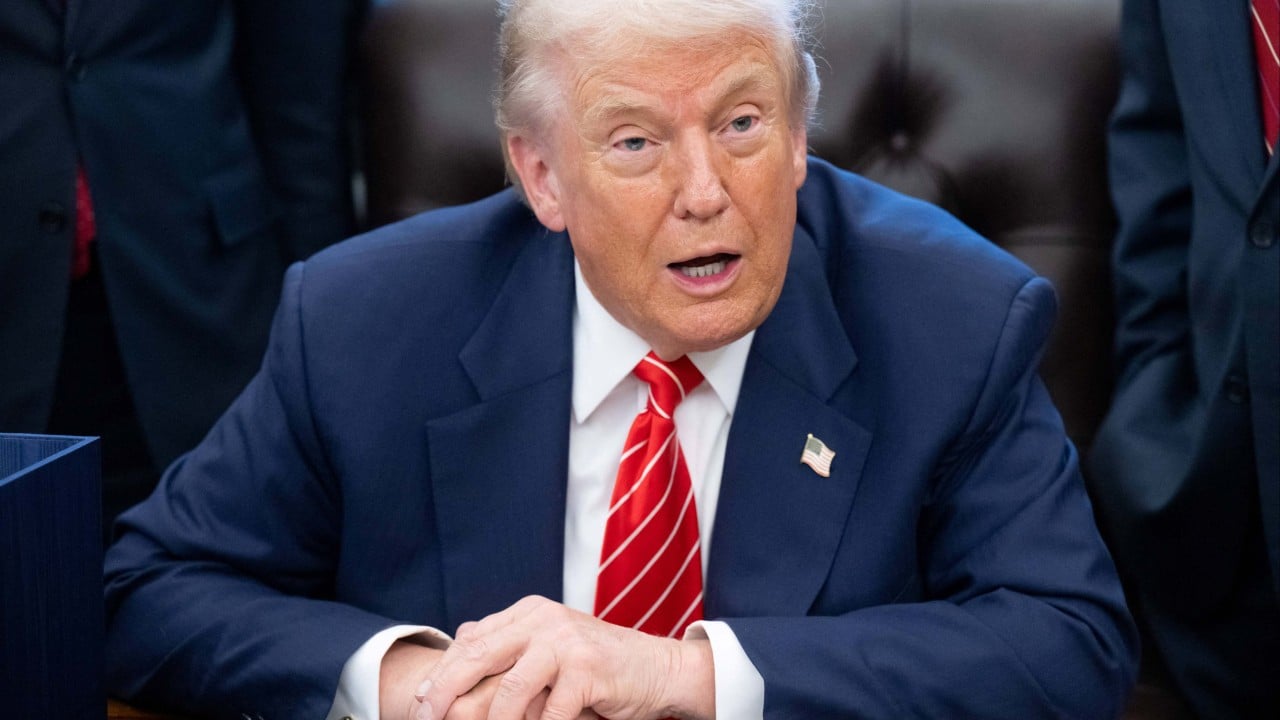
The Trump administration’s recent push to unify AI regulations and sharpen the American edge over China isn't just about "policy coordination." It is a declaration of digital sovereignty. It is an admission that in the modern world, the nation that masters the algorithm dictates the terms of global trade, speech, and security.
The Architect in the Basement
Consider Sarah. She is a hypothetical engineer, but her frustrations are shared by thousands in the trenches of Silicon Valley and the research corridors of the East Coast. Sarah spent three years developing a diagnostic tool—an AI capable of spotting early-stage lung cancer with a precision that defies human capability.
In a world of clear rules, Sarah’s tool would already be in hospitals. Instead, she spent eighteen months trapped in a purgatory of "regulatory uncertainty." The Department of Health had one set of standards for data privacy. The Department of Commerce had another for export controls. The White House had a series of non-binding "guidelines" that shifted with the political winds.
While Sarah filled out forms, her counterparts in Shenzhen were moving at the speed of light. In China, the distinction between private enterprise and state ambition doesn't exist. There is no friction. There is only the directive: Win.
The new move to centralize and streamline AI rules is designed to kill the friction that held Sarah back. By creating a unified framework, the administration is effectively clearing the runway. They are betting that if you remove the bureaucratic drag, American ingenuity will naturally outpace any state-directed competitor. It is a gamble on the power of the individual over the collective, provided the individual isn't being tripped up by their own government.
The Geopolitical Chessboard
This isn't merely about helping startups. It is about the "edge." In the language of Washington, "edge" is a polite word for dominance.
For the last century, the world was shaped by the internal combustion engine and the mastery of oil. The next century will be shaped by the mastery of "compute"—the raw processing power required to train massive neural networks. China has made no secret of its desire to lead the world in AI by 2030. They see it as a "leapfrog" technology, a way to bypass traditional American military and economic strengths.
If China wins the race to a more advanced, more efficient AI, they don't just get better chatbots. They get the ability to crack any encryption. They get autonomous weapons systems that can out-maneuver human pilots. They get the power to influence global discourse through hyper-personalized disinformation at a scale we cannot fathom.
The administration’s move to bolster this edge involves two distinct but connected motions. First, the internal unification: making sure every part of the U.S. government is pulling in the same direction. Second, the external hardening: ensuring that the vital components of AI—the high-end GPUs and the specialized software—don't end up in the hands of adversaries.
It is a digital iron curtain.
Some critics argue that this approach is too aggressive. They worry that by tightening the screws on exports and centralizing power, we risk stifling the very openness that made the American tech sector great. They fear we are becoming the thing we are trying to defeat.
But talk to anyone who has seen the data on how often American intellectual property is siphoned off, and the tone changes. The vulnerability is real. The stakes are existential. We are no longer in a period of peaceful discovery; we are in a period of strategic defense.
The Human Cost of High Tech
Behind the talk of "bolstering edges" and "unified rules," there is a very human fear. It’s the fear of being left behind.
This isn't just about the engineers or the generals. It’s about the factory worker whose job might be automated by an AI developed in a country with no labor protections. It’s about the student whose future career depends on whether their country remains the center of global innovation.
When the government moves to "unify" AI rules, they are attempting to answer a fundamental question: Who do we want running the systems that will eventually manage our power grids, our financial markets, and our healthcare?
If the rules are too lax, we risk a "race to the bottom" where safety is sacrificed for speed, leading to biased algorithms or catastrophic system failures. If the rules are too fractured, we lose the race to China by default, handing over the keys of the future to an authoritarian regime.
The administration is trying to find the "Goldilocks" zone—the perfect middle ground where regulation ensures safety without suffocating growth.
The Language of Power
We must be honest about what this looks like on the ground. It looks like more scrutiny on foreign investments in tech companies. It looks like a massive infusion of capital into domestic chip manufacturing. It looks like the federal government becoming a much more active participant in the tech industry, rather than a passive observer.
The days of "move fast and break things" are over. They have been replaced by "move fast and protect things."
This shift is uncomfortable for many. We like to think of technology as something that transcends borders, a universal language of progress. But the reality is that the code we write carries the values of the culture that created it. American AI reflects American values: a preference for individual rights, a skepticism of centralized authority, and a messy, vibrant marketplace of ideas. Chinese AI reflects Chinese values: stability, collective harmony, and state oversight.
When we fight for the "edge," we are fighting to ensure that the AI of the future speaks the language of liberty rather than the language of control.
The New Frontier
The hum in that Virginia data center hasn't changed, but the world around it has.
The unification of AI rules marks the end of the beginning. We are moving out of the Wild West phase of digital intelligence and into an era of organized, national competition. It is a time of immense risk and staggering potential.
We are building a new kind of infrastructure. It is invisible, it is fast, and it is incredibly powerful. It will change how we work, how we fight, and how we understand ourselves.
The administration’s maneuvers are an attempt to build a foundation for that infrastructure that can withstand the pressures of a century defined by competition. It is a quiet, bureaucratic revolution, fought in briefing rooms and through executive orders, but its impact will be felt in every home, every office, and every classroom for generations to come.
There is no turning back. The silicon has been cast. The only question left is whether we have the resolve to see the transformation through, or if we will let the future be written by someone else, in a language we don't understand, under a shadow we can't escape.
The servers continue to hum. The lights on the racks blink in a rhythmic, cryptic code. The race isn't just starting; it is reaching its first great crescendo. And in the silence of those data centers, the future is being decided, one line of unified code at a time.