The legal ivory tower is obsessed with a question that doesn't matter: Is a blockade of the Strait of Hormuz legal?
Lawyers love to cite the UN Charter and the 1982 Law of the Sea Convention (UNCLOS) like they are holy incantations that can stop a destroyer in its tracks. They argue about "innocent passage" versus "transit passage" as if the commander of an Iranian Kilo-class submarine or a US Carrier Strike Group is checking footnotes before they arm a torpedo.
Here is the truth that international law experts hate to admit: law is a lagging indicator of power. In the Strait of Hormuz, the law isn't a fence; it’s a scoreboard that gets filled out after the game is over.
The Myth of Universal Jurisdiction
Most analysts start with the premise that UNCLOS governs everything. They’ll tell you that because the Strait of Hormuz consists of the territorial waters of Iran and Oman, ships have an "unimpeded right of transit passage."
They forget—or ignore—that the United States has never ratified UNCLOS.
Washington treats most of the treaty as "customary international law," a convenient legal fiction that allows the US to cherry-pick the rules it likes while ignoring the ones that restrict its sovereignty. On the other side, Iran has signed but not ratified the treaty. Tehran argues that the "transit passage" rules don't apply to them, insisting instead on "innocent passage."
What’s the difference? Under innocent passage, a coastal state can suspend transit if it deems the ship a threat to its security.
If you’re waiting for a court to decide who is right, you’ve already lost the plot. The "legality" of a blockade is decided by the navy that can sustain it, not the jurist who can define it.
Why "Legality" is a Distraction
Focusing on the legality of a blockade is like asking if a punch is legal in a street fight. By the time the punch is thrown, the rules of the ring are irrelevant.
A US-led blockade would likely be framed as "collective self-defense" or a "maritime intercept operation" to circumvent the nasty PR of the word "blockade." We’ve seen this before. During the Cuban Missile Crisis, the Kennedy administration didn’t call it a blockade—which is an act of war. They called it a "quarantine."
It was a linguistic trick to bypass international law while achieving the exact same kinetic result.
Modern blockades won't look like a line of ships stretching across the horizon. They will be digital, financial, and kinetic in ways that the 19th-century authors of the London Declaration never imagined.
- Digital Blockades: Disabling the port management software of Omani or Emirati hubs.
- Insurance Warfare: The London insurance market (Lloyd’s) can kill traffic through the Strait faster than a minefield simply by declaring the zone uninsurable.
- Precision Attrition: Not stopping every ship, but using drone swarms to target specific tankers associated with "hostile" entities.
When people ask "Is it legal?" they are usually asking "Will there be consequences?" In the Strait of Hormuz, the consequences are measured in barrels of oil and insurance premiums, not UN resolutions.
The Strait is a Chokepoint for Reality
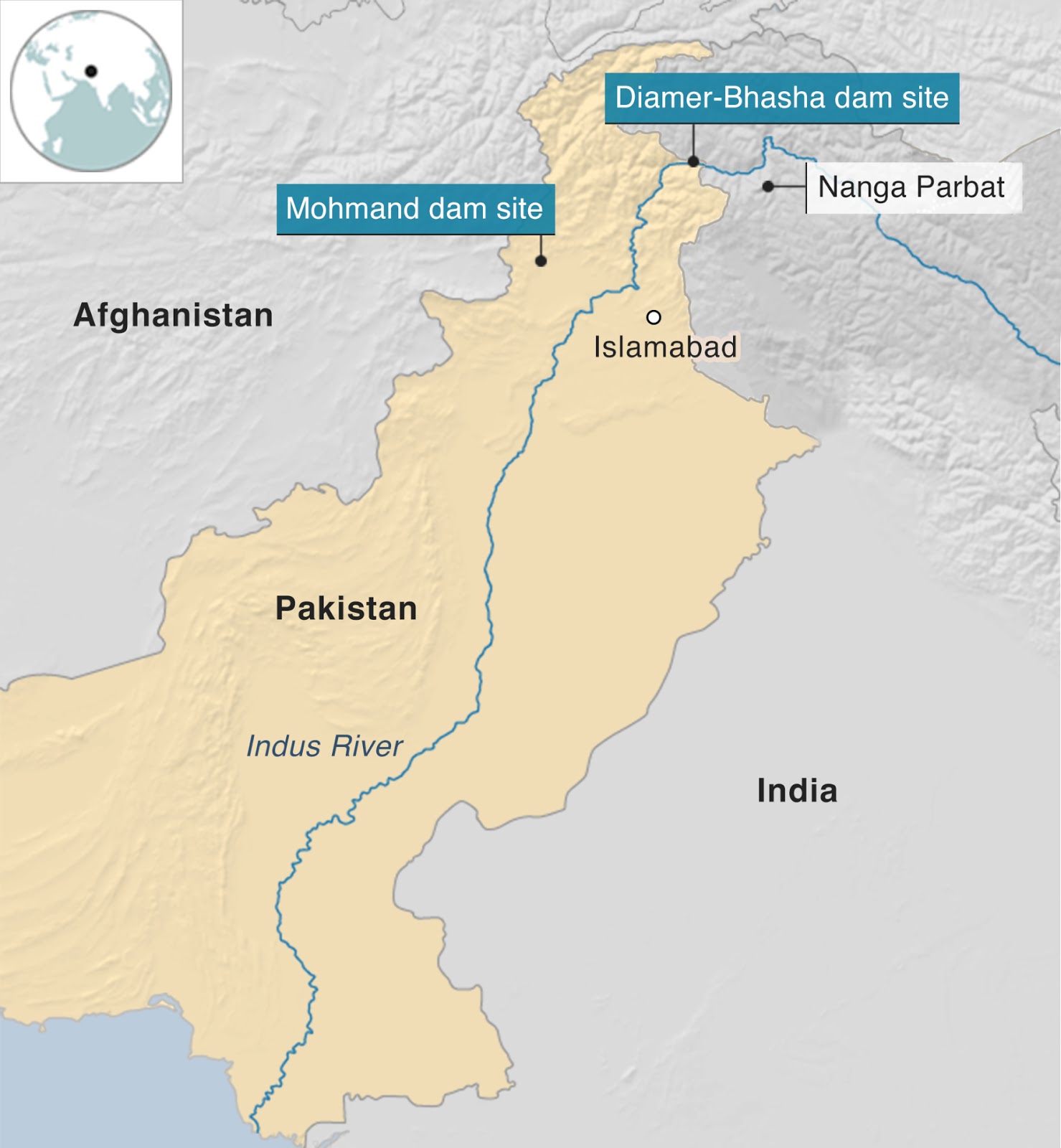
Every day, roughly 21 million barrels of oil flow through that 21-mile-wide gap. That’s 20% of global consumption. The "consensus" view is that a blockade would lead to a global economic collapse, so "nobody would ever do it."
That is lazy thinking. It assumes all actors are rational economic players.
History is a graveyard of "rational" economic players who started wars anyway. If Tehran feels its regime survival is at stake, the global price of Brent crude is a secondary concern. If Washington decides that containing a nuclear-capable Iran requires a total maritime embargo, the "legal" protests of European allies will be treated as background noise.
The Failed Logic of "Innocent Passage"
Let’s look at the actual mechanics. Article 19 of UNCLOS defines "innocent passage." It says passage is not innocent if the ship engages in "any act aimed at collecting information to the prejudice of the defense or security of the coastal State."
In a world of AEGIS combat systems and advanced electronic warfare, every US destroyer is "collecting information."
Under a strict reading of Iranian "law," almost no Western warship has a right to be there. Under the US reading, they have every right to be there.
This isn't a legal disagreement; it’s a fundamental clash of worldviews. You cannot "lawyer" your way out of a geography where two enemies claim the same water for opposite reasons.
The Insurance Market: The Only Court That Matters
If you want to know if a blockade is "legal," don't check the UN. Check the Joint War Committee (JWC) in London.
The JWC represents the hull war underwriters. When they add the Persian Gulf or the Gulf of Oman to their "Listed Areas," the cost of shipping spikes. If they decide the risk is too high to cover, the Strait is effectively blocked, regardless of what the US Navy says or what the Iranian Revolutionary Guard Corps (IRGC) does.
A "legal" blockade by the US would be an attempt to provide a framework for these commercial entities to keep moving. An "illegal" blockade (as defined by the opposition) would aim to make the risk so high that the commercial world self-regulates into a standstill.
In this environment, "legal" is just another word for "subsidized."
Why Sanctions are Just Blockades in Suits
We are already in a state of semi-blockade. The US uses the SWIFT banking system and secondary sanctions to prevent Iranian oil from hitting the global market.
What is the difference between a ship stopping a tanker and a bank freezing the payment for that tanker's cargo?
The result is identical: the goods do not move, or the seller does not get paid. Yet, we call one "international diplomacy" and the other "an act of war." This is the height of intellectual dishonesty. We have already disrupted the "freedom of navigation" through financial architecture. A physical blockade is just the kinetic manifestation of a policy that has been in place for decades.
The Coming Tech Disruption of Maritime Law
The law assumes we can identify who owns a ship and what it’s carrying. But the "dark fleet"—tankers with obscured ownership, disabled AIS transponders, and ship-to-ship transfers—has made a mockery of maritime transparency.
As AI-driven surveillance and satellite constellations make it impossible to hide, the "dark fleet" will have to evolve. We are moving toward a period where the "legality" of a ship’s presence is determined by its digital signature.
If your digital credentials don’t match the "allowed" list of the power controlling the Strait, your ship is effectively a pirate vessel.
The Brutal Truth for Investors and Policy Makers
Stop asking if a blockade is legal. Start asking who has the endurance to maintain it.
- Geography is destiny: You cannot move the Strait. Iran sits on the "high ground" of the northern shore. They don't need a blue-water navy to block the Strait; they need land-based anti-ship missiles and cheap mines.
- The US is an outside power: No matter how many carriers the US sends, it is operating thousands of miles from home. Iran is playing on its front porch.
- The Law is a Weapon: Both sides will use "International Law" as a psychological operations tool. They will produce "legal briefs" to justify sinking ships. Don’t mistake the brief for the reality.
If you are waiting for a clear legal verdict before you hedge your energy exposure or reroute your supply chain, you are the mark.
The Strait of Hormuz is not a legal jurisdiction. It is a physical reality that ignores the signatures of diplomats. The only law that matters in the Strait is the law of the last man standing.
Everything else is just academic theater.
Get out of the classroom and look at the water. The ships aren't waiting for a judge; they're waiting for the first explosion.
If you think a piece of paper from 1982 will protect the global economy, you’ve never seen how fast a treaty burns at sea.
Stop asking if it’s legal. Ask if you’re ready for it to happen.
The era of "freedom of navigation" was a historical anomaly provided by a single superpower's dominance. That dominance is being challenged. When the power fades, the "law" it enforced evaporates.
The Strait is closing, whether a lawyer says so or not.