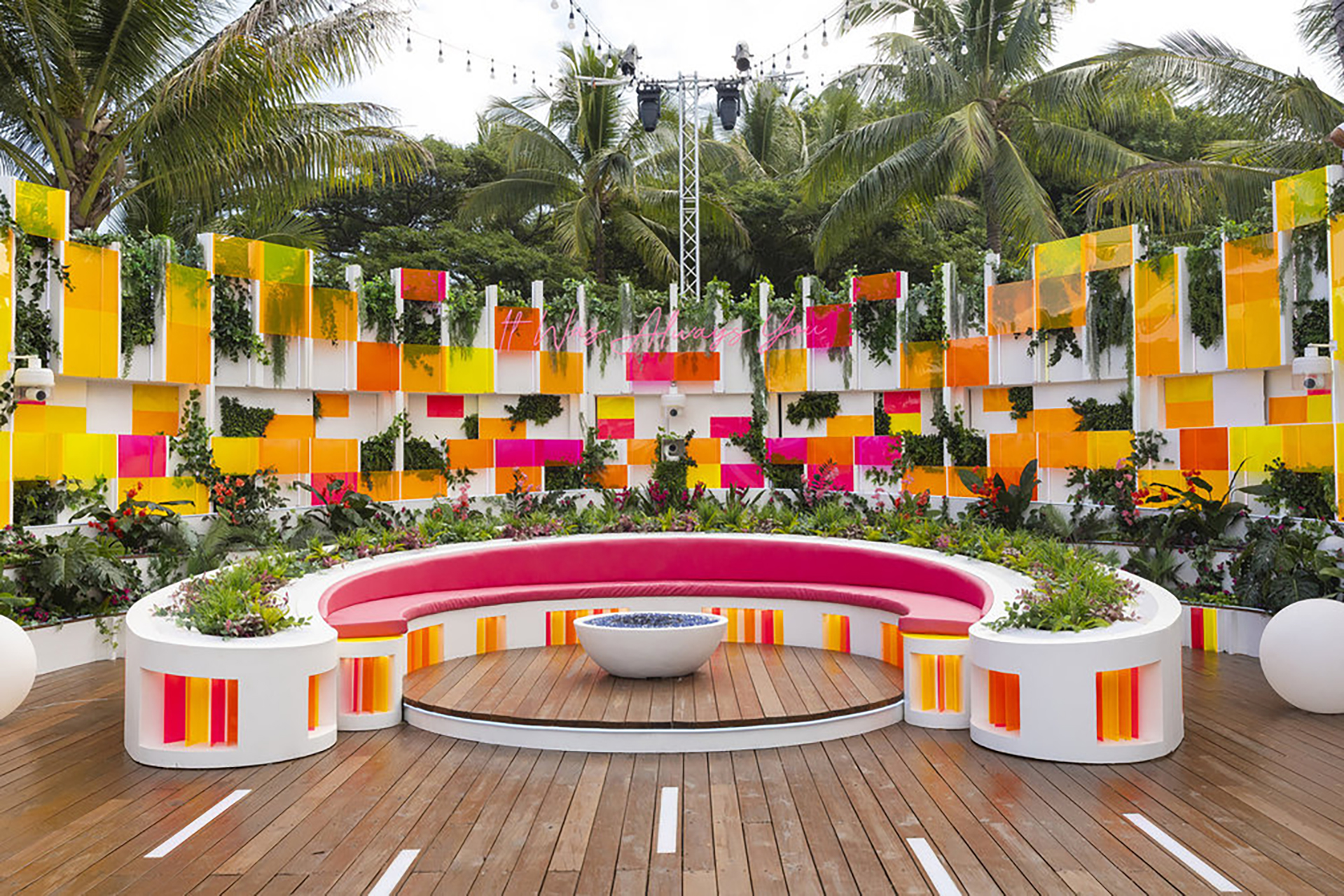
The neon lights are back.
If you've spent any time on Peacock lately, you know that the setting of the show isn't just a background. It's a character. For the Love Island USA Season 7 villa, the production team didn't just find a house; they basically built a sprawling, neon-soaked fever dream in the heart of Fiji. Honestly, after the success of the previous season, the stakes for the architecture were sky-high. Fans don't just want drama; they want to see that drama unfold in a place that looks like a high-end boutique hotel met a candy shop.
It's massive. Seriously.
The villa is located on the Mamanuca Islands. This isn't some soundstage in Los Angeles or a rented mansion in Vegas. It’s a custom-built environment designed specifically to facilitate "propinquity"—that fancy sociological term for how being physically close to someone makes you more likely to fall for them. Or fight with them. Usually both.
What People Get Wrong About the Love Island USA Season 7 Villa Layout
Most viewers think the villa is just one big open space where everyone sees everything. It’s actually the opposite. The designers, led by folks like Richard Jensen who have worked on these international sets for years, specifically create "blind spots."
Think about the kitchen. In the Love Island USA Season 7 villa, the kitchen island is huge. It’s the hub. But it’s positioned in a way that if you’re making a "morning coffee" for a crush, you can’t necessarily see who is whispering by the firepit. This is intentional. The architecture is a chess board.
The bedroom remains the most controversial part of the layout. You have twelve people sleeping in a single room. It's loud. It's cramped. It smells like a mix of expensive perfume and bronzer. People often ask why they don't just give them private rooms. Well, if they had privacy, we wouldn't have the show. The lack of walls in the sleeping quarters is the primary engine for the "he said, she said" drama that fuels the 9:00 PM time slot.
The Infinity Pool and the "Hideaway"
Every year, the Hideaway gets a makeover. For Season 7, the vibe shifted toward a more "tropical maximalist" aesthetic. We’re talking deep textures, velvet that probably shouldn't be in a humid climate, and lighting that makes everyone look like a filtered Instagram post.
The pool this year is an architectural feat in itself. It's an infinity edge that looks out over the Pacific, but it’s surrounded by "daybeds" that are strategically bolted to the ground. Why? So the camera crews always know exactly where the islanders will be sitting. It's a mix of luxury and a literal panopticon.
Why Fiji Matters More Than You Think
Location is everything. When the show was in Las Vegas during the pandemic, the energy was... weird. It felt like a fever dream in a neon box. Moving back to Fiji for the Love Island USA Season 7 villa changed the physical behavior of the contestants.
In a hot, humid, tropical environment, people move slower. They lounge more. They talk more.
The heat is a factor. When it’s 90 degrees with 80% humidity, tempers flare faster. You see it in the way the islanders interact near the outdoor gym. It’s not just about getting "shredded" for the beach; it’s a high-stress environment disguised as a vacation. Real experts in reality TV production often point out that "environmental stress" is a key ingredient in getting authentic emotional reactions. If they were in a climate-controlled house in the suburbs, the stakes would feel lower.
- The firepit is the heart of the "ceremonial" villa.
- The "Beach Hut" is actually a small, cramped shed tucked away from the main house.
- Most of the "walls" you see are actually just high-end plywood with incredible paint jobs.
The Logistics of 100 Cameras
You don't see them, but they see you. The Love Island USA Season 7 villa is rigged with over 100 cameras. Some are "robos"—remote-operated cameras that can spin 360 degrees. Others are hidden behind two-way mirrors.
Ever notice how the islanders never look at the cameras? That’s because the mirrors are integrated into the decor. There are "camera runs" or dark hallways behind the walls where operators sit in the dark, following the islanders around. It’s a massive operation. The villa isn't just a home; it's a functioning television studio that just happens to have a 5-star kitchen and a lot of bikinis.
It’s actually kinda wild when you think about the plumbing. You have dozens of people—islanders, production staff, cleaners—all living on a remote part of an island. The infrastructure required to keep that villa running is equivalent to a small village.
The Secret "Off-Camera" Areas
There’s a misconception that the islanders stay in the villa 24/7. While they are mostly confined, there are "holding areas" for when the crew needs to reset a challenge or fix a lighting rig.
During these times, the islanders are often told "no talk." They have to sit in silence so they don't have important conversations off-camera. Imagine being stuck in the Love Island USA Season 7 villa, surrounded by people you're dating or hating, and being told you can't speak for an hour while a technician fixes a lightbulb. That’s where the real tension builds. It’s a pressure cooker.
The "makeup room" is another area that rarely gets enough credit. It is the only place with consistent, heavy air conditioning. Because of that, it becomes the unofficial gossip headquarters. People linger there not just to fix their lashes, but to escape the Fiji sun.
Design Choices That Influence Behavior
The colors aren't accidental. The Season 7 villa uses a lot of "high-arousal" colors—bright pinks, electric blues, and vibrant yellows. These colors keep the heart rate up. They prevent the islanders (and the viewers) from getting too relaxed.
Contrast this with the "Soulman's Corner" or the smaller seating nooks. Those areas usually have softer lighting and more natural tones. The producers are literally signaling to the islanders: "This is where you go to have a serious conversation."
Architecture as a nudge. It’s brilliant.
If you’re looking to recreate the vibe, you’re basically looking for "Outdoor Glam." It’s about taking things that usually belong inside—like rugs, plush sofas, and intricate chandeliers—and putting them under a pergola. But for the Love Island USA Season 7 villa, it’s dialed up to eleven.
Practical Takeaways for Fans
If you're watching the season and want to understand the "game" better, watch the background. The villa tells you who is in trouble.
When an islander is consistently shown alone on the "perch" (the high seating area overlooking the pool), they are being framed as an outsider. When a couple moves to the "daybeds" furthest from the villa, they’re usually trying to have a private conversation that they know will be harder for the "robos" to pick up clearly.
- Watch the shadows: The villa is lit for nighttime. If a scene looks grainy, they’re likely in a corner the producers didn't expect them to use.
- The Kitchen Rule: Pay attention to who cooks. The kitchen in the villa is the ultimate power spot. Controlling the food is a subtle way islanders assert dominance in the group hierarchy.
- The Wardrobe: The dressing room in Season 7 is notoriously tight. The chaos of that room often leads to the "borrowing" of clothes that causes friction later.
The Love Island USA Season 7 villa is more than just a pretty house in Fiji. It is a meticulously designed psychological landscape. From the lack of clocks (to keep them disoriented and focused on each other) to the strategically placed mirrors, every inch of that property is built to maximize "the feels."
If you want to understand the drama, you have to understand the floor plan. The house doesn't just hold the contestants; it shapes them. As the season progresses, the wear and tear on the villa usually mirrors the emotional state of the islanders. By the finale, both the house and the people in it usually look like they've been through a beautiful, neon-colored war.
To truly appreciate the scale of the production, look for the wide aerial "drone" shots during the transitions. You’ll see the main house, but also the sprawling network of shipping containers and production tents just a few hundred yards away. That is the "brain" of the villa, where hundreds of people work in shifts to turn 24 hours of lounging into 44 minutes of gold.