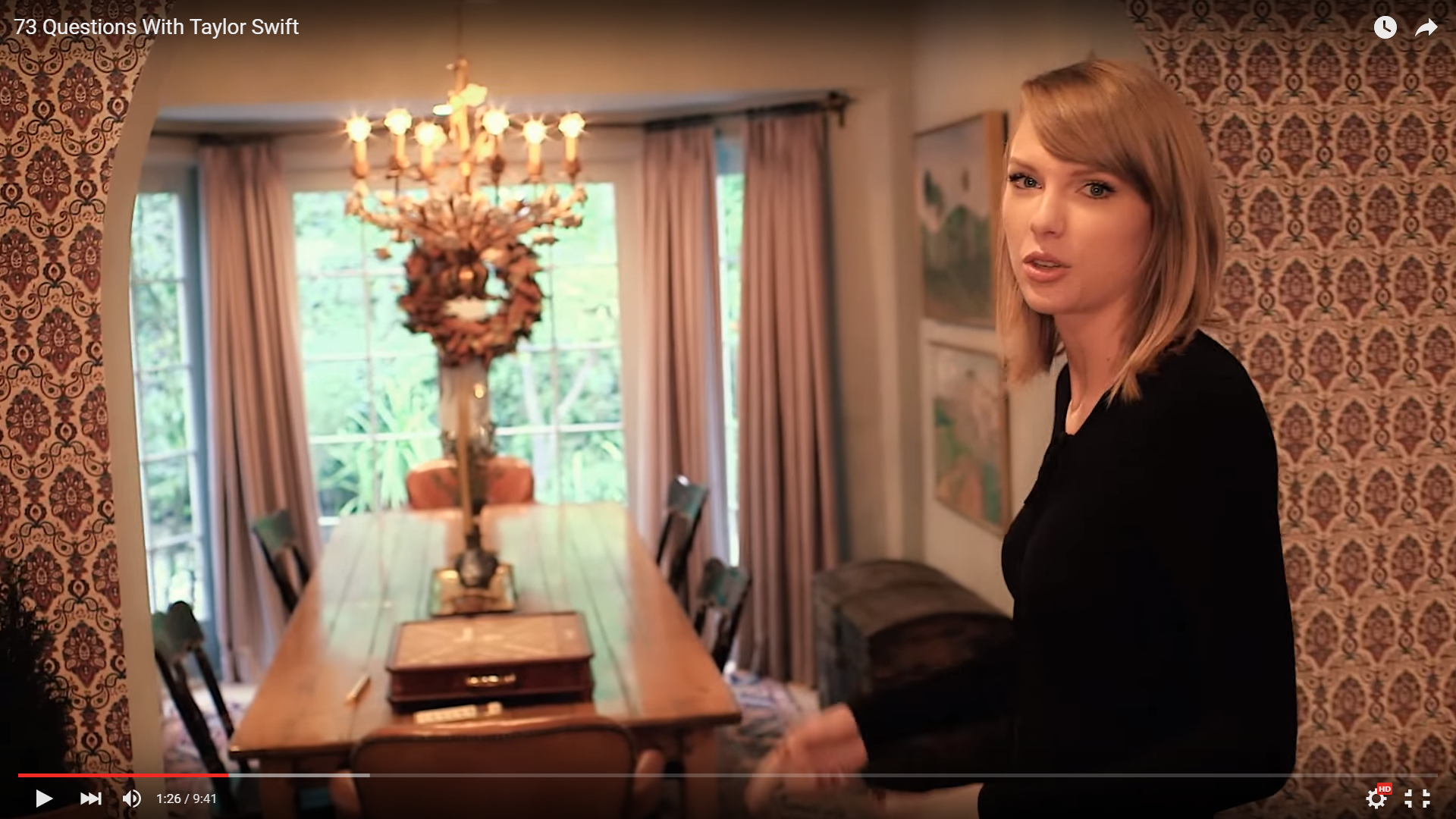
You’ve probably seen the grainy paparazzi shots of Taylor Swift darting into a black SUV outside a Tribeca cobblestone building or the sweeping drone footage of a massive mansion perched on a Rhode Island cliffside. But what’s actually happening behind those high-security doors? Exploring the Taylor Swift house inside experience isn’t just about looking at expensive wallpaper or infinity pools; it’s a masterclass in how a woman who lives under the world's most intense microscope carves out a sense of "home."
She isn't just a pop star. She's a real estate mogul.
Honestly, the sheer scale of her holdings is dizzying. We’re talking about roughly $150 million spread across Nashville, New York, Rhode Island, and Los Angeles. Most celebrities buy a "starter" mansion and move up. Taylor? She buys the building. She buys the lot next door. She builds walls—literal and metaphorical—to protect a life that everyone wants a piece of.
The Nashville "Girl at Home" Beginnings
Nashville is where it started. It’s the baseline. In 2009, a 19-year-old Taylor bought a penthouse at the Adelicia in Midtown Nashville. It was a massive deal at the time.
If you stepped into that Taylor Swift house inside back then, you’d see what she famously described as "shabby chic Alice in Wonderland." Think birdcages, mismatched colors, and a literal human-sized birdcage in the living room where guests could sit. It was whimsical. It was very "Speak Now" era.
But then there's Northumberland Estate.
This is the Greek Revival mansion she bought for her parents (and herself) in 2011. It’s 5,600 square feet of pure Southern elegance. Unlike the quirky penthouse, this place features massive vaulted ceilings, a sun-drenched conservatory, and a guest house that is larger than most people’s primary residences. It’s tucked away in Forest Hills, a neighborhood where the trees are tall enough to hide you from the world. It’s quiet. It’s the kind of place where you’d imagine "The Best Day" was written, even if it wasn't.
The Tribeca Fortress: A Neighborhood Within a Building
New York is where the narrative shifts.
Taylor didn't just buy an apartment in NYC; she effectively colonized a corner of Franklin Street in Tribeca. In 2014, she bought two adjacent penthouses from Lord of the Rings director Peter Jackson and combined them.
The Taylor Swift house inside the Tribeca hub is a 10-bedroom, 10-bathroom beast. It’s got exposed brick—because, obviously, it’s New York—and wide-plank wood floors that look like they’ve been there since the 19th century.
Then things got interesting. She bought the townhouse next door for $18 million. Then she bought another unit on the second floor.
Why? Privacy.
By owning the townhouse, she could build an internal garage. This allows her to drive a car into the building, close the door, and walk directly into her living room without a single lens capturing her face. It’s architectural armor. Inside, the vibe is reportedly "industrial cozy." High ceilings, velvet sofas, and bookshelves that actually look like they’ve been read. There are photos of her "squad" hangouts here—Lana Del Rey, Blake Lively, Gigi Hadid—sprawled out on rugs that probably cost more than a mid-sized sedan.
High Watch: The Rhode Island Legend
If you’re a fan, you know Holiday House. You know the Fourth of July parties.
High Watch is the 11,000-square-foot mansion in Watch Hill, Rhode Island. It sits on the highest point in town. It’s a white, imposing structure that looks out over 700 feet of private shoreline.
This is the house that inspired "The Last Great American Dynasty."
Walking into this Taylor Swift house inside would feel different than the others. It’s breezy. It’s got eight fireplaces. It’s got a kitchen that looks like it belongs in a Nancy Meyers movie. When she bought it for about $17.75 million in cash (yes, cash), it sent the town into a bit of a frenzy.
The interior design here leans into the history of the previous owner, Rebekah Harkness. It’s grand. It’s "old money" without being stuffy. You can almost smell the salt air through the massive windows. It’s a fortress of solitude in the winter and a chaotic playground in the summer.
The Samuel Goldwyn Estate: Preserving Hollywood History
While the other homes are about her personality, her Los Angeles home is about her respect for the craft.
In 2015, she bought the Samuel Goldwyn Estate in Beverly Hills. Goldwyn was a founding father of Hollywood (the "G" in MGM). Instead of tearing it down or "modernizing" it into a white glass box—which is the current, boring trend in LA—Taylor went the opposite direction.
She applied for, and won, landmark status for the house.
She spent years restoring it to its 1934 glory. The Taylor Swift house inside the Goldwyn estate features a sweeping curved staircase, a wood-paneled library, and a formal dining room that feels like it’s waiting for Clark Gable to walk in. It’s a museum you can sleep in.
It’s also where she reportedly did a lot of work on the Folklore and Evermore projects. There’s a certain weight to the walls there. It’s not just a place to stay while she’s filming a music video; it’s a tether to the history of the industry she now dominates.
The Architecture of Privacy
One thing people often get wrong about her real estate is thinking it’s all about vanity. It’s actually about security.
In the late 2010s, Taylor dealt with multiple stalking incidents. People tried to climb her fences; people tried to break into her Tribeca front door. This changed how she views "the inside."
- Security Tech: Most of her homes are fitted with state-of-the-art facial recognition and thermal imaging.
- Acoustics: Many of her living spaces are designed with soundproofing that rivals professional recording studios.
- Safe Rooms: It is widely reported that her major properties contain reinforced safe rooms with independent communication lines.
Deciphering the "Swiftian" Interior Aesthetic
What does a Taylor Swift room actually feel like?
Based on the glimpses we’ve seen in the Miss Americana documentary and her own social media posts, she’s a maximalist. She likes "clutter" but the expensive kind.
There are candles everywhere—usually Santal 26 or something equally smoky and sophisticated. There are cats. Obviously. Meredith, Olivia, and Benjamin have the run of these multimillion-dollar estates.
The furniture isn't minimalist. You won't find much "sad beige" in a Taylor Swift house inside. You’ll find deep teals, burnt oranges, and rich textures. She likes tapestries. She likes gold-framed mirrors. She likes things that feel lived-in. It’s a stark contrast to the sterile, museum-like homes of many of her peers. It feels like a place where you could actually drink a glass of wine and not worry about staining the sofa, even though that sofa costs $20,000.
The Financial Genius of Her Portfolio
Let’s be real for a second: Taylor Swift is a savvy investor.
She didn't just buy these houses to have a place to put her Grammys. She bought them in neighborhoods that have seen explosive growth. Her Tribeca holdings alone have appreciated significantly since 2014.
She tends to buy properties with history. Historical properties, especially those with landmark status like her Beverly Hills home, hold value differently than new builds. They are "limited editions."
Furthermore, her strategy of buying adjacent properties—like she did in Nashville and New York—increases the total value of the "compound." It’s much harder for a developer to buy out a block if Taylor Swift owns the middle of it. She’s essentially her own HOA.
What Can We Learn From Taylor’s Homes?
You might not have $150 million to drop on a coastal mansion, but the way she approaches her space is actually pretty relatable if you look past the price tag.
1. Privacy is the ultimate luxury. Taylor spends millions to ensure no one can see her through a window. For the average person, this translates to creating boundaries in our own lives—digital and physical.
2. Lean into your era. Her homes evolved with her music. The "shabby chic" Nashville penthouse was the "You Belong With Me" era. The sophisticated, landmarked Beverly Hills estate is the "Midnights" and "Tortured Poets" era. Our homes should reflect who we are now, not who we were five years ago.
3. Respect the bones. Whether it’s a 1930s Hollywood estate or an 1800s NYC townhouse, she doesn't gut the history out of her homes. She works with it. There’s a lesson there about sustainability and honoring the stories of the places we live.
Actionable Insights for the Aspiring Collector
If you're looking to bring a bit of the Taylor Swift house inside vibe to your own space, start with the details that don't require a stadium tour budget.
- Invest in "Tactile" Comfort: Swap out modern, hard-edged furniture for velvet or textured fabrics. Swift’s aesthetic is built on things that feel good to touch.
- The "Library" Vibe: Even if you don't have a wood-paneled room, floor-to-ceiling bookshelves (even the IKEA variety) filled with actual books creates that "grounded" feeling her homes are known for.
- Lighting over Fixtures: Switch to warm-toned bulbs and use lamps instead of overhead "big lights." In every video she’s filmed at home, the lighting is amber and soft.
- Personal Curation: Display items that have a story. Taylor’s homes are filled with awards, but also weird antiques and gifts from friends. It’s the "curated mess" that makes a house a home.
Ultimately, the most fascinating thing about Taylor Swift’s real estate isn't the square footage. It’s the fact that despite her global fame, she has managed to create spaces that feel intensely private and remarkably human. She doesn't just live in these houses. She inhabits them. And in an age where everything is for sale and everyone is watching, having a place to truly disappear is the biggest flex of all.